AI Appraisal Estimate

AI-generated estimates · not official valuations

From the user

What was submitted

Photo and notes provided by the user — not generated by AI

Submitted item photo
Submitted photo · June 20, 2026

User's notes

No additional notes provided.

AI analysis below

AI appraisal

AI analysis & estimate

AI-Generated · Verify before acting

Everything below is generated by AI for informational purposes only. AI can make mistakes — the AI may misidentify items or misattribute them (artist, maker, brand, designer, origin, era). This is not an official valuation and should not be used for insurance, sale, tax, estate, legal, or lending purposes — or any decision requiring a certified appraisal. It is not an authoritative claim about any person, brand, or rights holder — do not share or rely on it as a factual statement about a third party. Always consult qualified professionals before making financial decisions.

Read the full disclaimer

AI Identification

·Not independently authenticated·Verify before acting

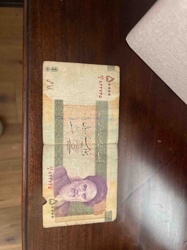
Central Bank of Kuwait Half Dinar Banknote

Numismatics / Currency

AI Estimated Value

·Not an official valuation·Verify before acting

$5.00 - $12.00

As of June 20, 2026

AI Item Analysis

·AI can make mistakes·Verify before acting
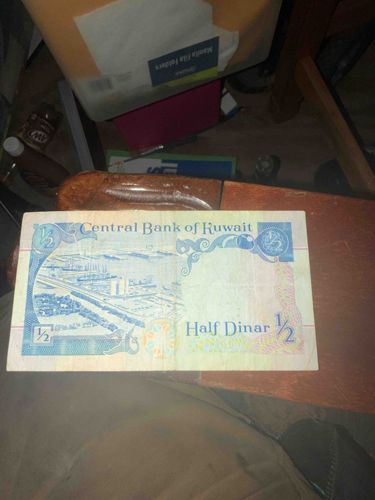
This is a 1/2 Dinar banknote issued by the Central Bank of Kuwait, likely from the third series (issued 1980-1991). The note features a predominantly blue, light green, and brown color palette over a cream-colored security paper base. The obverse side (partially visible) typically depicts the Kuwaiti coat of arms and various industrial motifs. The reverse side shown here prominently displays the text 'Central Bank of Kuwait' and 'Half Dinar' in English. The graphic illustration on this side showcases the Shuaiba Oil Refinery, an important industrial landmark reflecting Kuwait's economic history. Subtle patterns underprinting the note include complex guilloché work and geometric flourishes designed to prevent counterfeiting. In terms of condition, the note exhibits visible signs of circulation. There is a prominent vertical fold down the center, suggesting it spent time in a wallet. The paper shows general softening and light staining or discoloration along the top and bottom edges, likely from handling or age-related oxidation. The corners appear slightly rounded and worn, though there are no immediate signs of large tears or significant missing pieces. This specific series is historically notable for its replacement by a new series following the Gulf War, as many notes from this era were declared invalid after being looted during the Iraqi occupation, though they remain popular items for numismatists.
AI Appraisal Report

·AI can make mistakes·Verify before acting
I have examined the digital representation of this Central Bank of Kuwait 1/2 Dinar, identified as part of the Third Issue (Series 1980). My visual inspection confirms the Shuaiba Oil Refinery motif and the traditional guilloché security patterns. The note exhibits signs of significant circulation, including a heavy center fold, rounded corners, and 'softening' of the paper substrate. I classify this note in 'Fine' to 'Very Fine' (VF) condition under the IBNS grading standards. It lacks the crispness and sharp edges required for a 'Uncirculated' premium. Market demand for Kuwaiti notes from this era remains steady among thematic collectors focusing on oil industry motifs or Middle Eastern history. While this series was famously demonetized following the 1990 invasion, it was printed in high volumes, making it common in the current numismatic market. Comparables for circulated examples consistently fall in the modest $5 to $12 range, whereas Uncirculated (UNC) specimens command significantly more. Limitations: This appraisal is based solely on digital images. I cannot verify the presence of the falcon head watermark or the subtle 'feel' of the intaglio printing, both of which are critical for confirming authenticity against contemporary forgeries. A physical examination is required to check for 'pinholes' (common in this region due to banking practices), chemical washing, or artificial flattening which would decrease value. Furthermore, a check of the serial number prefix against known stolen ranges from the 1990 invasion would be necessary to establish its specific historical context.

Get your items appraised

Instant estimates of your treasures with AI-powered appraisals

Browse More Appraisals