AI estimate as of September 22, 2025 · verify with a professional before acting
AI-Generated · Verify before acting
Everything on this page is generated by AI for informational purposes only. AI can make mistakes — the AI may misidentify items or misattribute them (artist, maker, brand, designer, origin, era). This is not an official valuation and should not be used for insurance, sale, tax, estate, legal, or lending purposes — or any decision requiring a certified appraisal. It is not an authoritative claim about any person, brand, or rights holder — do not share or rely on it as a factual statement about a third party. Always consult qualified professionals before making financial decisions.
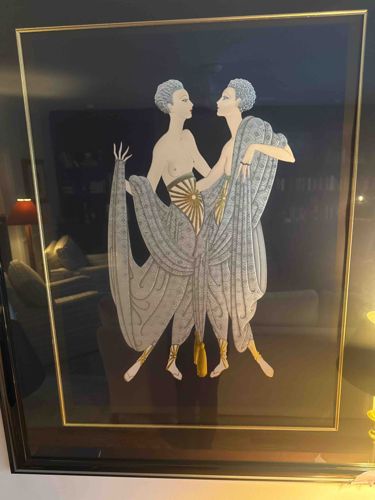
This is a framed illustration featuring two stylized female figures, rendered in a distinctive Art Deco aesthetic. The piece is set against a dark background, possibly black or a very dark brown, which enhances the vibrancy of the figures. Each figure is depicted with fair skin, delicate features, and short, curly, silvery-grey hair. They gaze towards each other in an engaging, almost dance-like pose. Their attire consists of flowing, patterned fabric in shades of light grey, blue, and possibly lavender, detailed with intricate lines and folds suggesting a rich texture. Gold accents are prominent, appearing as sashes, ankle wraps, and a fan-like embellishment on the lower torso of the left figure. The figures' hands are elegantly positioned, with the left figure showcasing strikingly long, almost skeletal fingers. The overall composition suggests movement and grace. The artwork is presented within a multi-layered frame: an inner thin gold-toned metallic border, followed by a wider black or very dark wood mat, and finally an outer black frame. The reflection visible on the glass indicates that the piece is glazed. No overt condition issues such as tears, significant discoloration, or damage to the frame are immediately discernible from the image, suggesting good preservation. This piece likely dates from the late 20th century, drawing inspiration from the early 20th-century Art Deco movement, known for its geometric patterns, luxurious materials, and stylized forms. The quality of the illustration appears refined, with clean lines and careful detailing indicative of skilled craftsmanship, possibly a serigraph or high-quality print.
AI Appraisal Report
Upon examining the provided image of the Framed Art Deco Style 'Twin Figures' Illustration, I assess it to be in very good to excellent condition. The colors are vibrant, the lines are sharp, and the frame assembly, including the multi-layered matting and glazing, appears intact and well-preserved. There are no visible signs of foxing, water damage, or significant wear.
The piece is a clear homage to the Art Deco movement of the 1920s and 1930s, likely created in the late 20th century. The style is reminiscent of artists like Erté, but it is most likely a high-quality decorative print or serigraph by a contemporary artist working in that revivalist style, rather than a period original. The lack of a visible signature or edition number in the image prevents a definitive artist attribution.
Market demand for well-executed Art Deco revival pieces remains strong. Similar signed or limited-edition serigraphs from this era by known artists can sell for several hundred dollars, while unsigned decorative prints have a more modest value. The quality of the custom framing adds to its decorative appeal and marketability.
The primary factor limiting the value is its likely status as a reproduction or revivalist print rather than a period piece by a master like Erté. My valuation is based on its decorative quality and comparables in the art print market.
It is crucial to note the limitations of this appraisal. Without a physical inspection, I cannot confirm the medium (e.g., serigraph, giclée, lithograph), inspect for a watermark, or examine the back for framer's labels or provenance. Full authentication would require de-framing the piece to search for a signature, edition marks, or publisher's information, and potentially comparing it against known catalogues raisonnés if an artist could be identified.