AI Appraisal Estimate

AI-generated estimates · not official valuations

From the user

What was submitted

Photo and notes provided by the user — not generated by AI

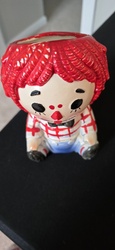
Submitted item photo
Submitted photo · June 18, 2026

User's notes

No additional notes provided.

AI analysis below

AI appraisal

AI analysis & estimate

AI-Generated · Verify before acting

Everything below is generated by AI for informational purposes only. AI can make mistakes — the AI may misidentify items or misattribute them (artist, maker, brand, designer, origin, era). This is not an official valuation and should not be used for insurance, sale, tax, estate, legal, or lending purposes — or any decision requiring a certified appraisal. It is not an authoritative claim about any person, brand, or rights holder — do not share or rely on it as a factual statement about a third party. Always consult qualified professionals before making financial decisions.

Read the full disclaimer

AI Identification

·Not independently authenticated·Verify before acting

Satsuma-style polychrome ceramic vase

Decorative Ceramics

AI Estimated Value

·Not an official valuation·Verify before acting

$100 - $250

As of June 18, 2026

AI Item Analysis

·AI can make mistakes·Verify before acting
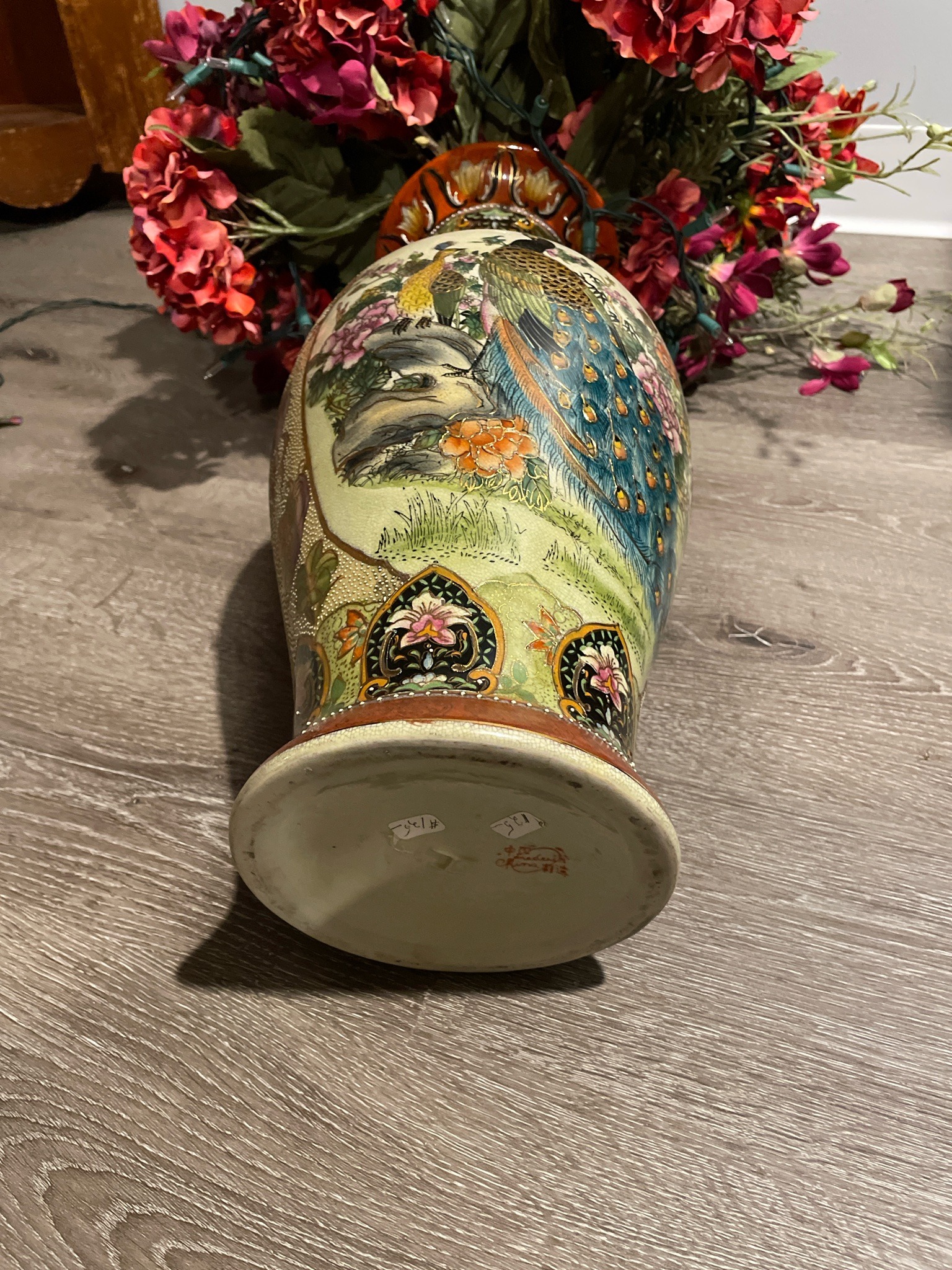
This appears to be a large ceramic floor vase featuring a highly decorative polychrome design stylistically consistent with Japanese Satsuma ware. The vase is shaped with a flared rim, a tapered neck, and an ovoid body, resting on a wide circular base. The main decorative frieze depicts a pair of peacocks perched on rocky outcrops amidst blooming peonies and lush greenery, painted in vibrant shades of blue, green, and orange. The background has a pale yellowish-green tint, accented with fine gold-tone raised detailing (moriage style) and a crackle glaze. The neck and foot are bordered by intricate geometric and floral patterns in rust-red and black. The base of the vase bears a red stamp that appears to read 'Made in China' alongside Asian characters, suggesting this is likely a mid-to-late 20th-century decorative export piece rather than a 19th-century Japanese origin. Two small adhesive price or inventory stickers are visible on the bottom, marked with '125-' and '#125-'. The crazing in the glaze appears intentional for the style. While no damage is immediately apparent, physical inspection would be required to rule out minor chips or hairline fractures obscured by the dense patterns. The use of 'Satsuma-style' reflects that while the aesthetic cues are Japanese, the mark indicates Chinese manufacture.
AI Appraisal Report

·AI can make mistakes·Verify before acting
Based on my visual examination of the provided images, this ceramic floor vase reflects a decorative style commonly associated with Japanese Satsuma ware but appears to be a 20th-century Chinese export. I can observe a 'Made in China' mark and characters on the underside, which suggests the piece is a Satsuma-style reproduction rather than a 19th-century Japanese artifact. While the moriage detailing and polychrome peacock motifs are visually appealing, the mark suggests the item was produced as a mass-market decorative object. From the photo, I can see intentional crazing in the glaze, which is stylistic; however, I cannot verify the presence of hairline fractures, professional repairs, or minor chips that might be hidden by the dense patterns and would require a physical inspection to rule out. The value estimate is based on the working hypothesis that this is a mid-to-late 20th-century decorative piece. In the current secondary market, there is a consistent but modest demand for large-scale floor vases of this type. If the piece were of 19th-century Japanese origin with documented provenance and a verified artist signature, the value could increase significantly. Conversely, if physical inspection reveals structural damage or signs of modern resin-based materials, the value would likely fall toward the lower end of the range. To advance beyond a hypothetical attribution, an in-person examination by a specialist in Asian ceramics would be necessary to confirm the manufacturing techniques and glaze composition.

Get your items appraised

Instant estimates of your treasures with AI-powered appraisals

Browse More Appraisals