AI identification & appraisal estimate

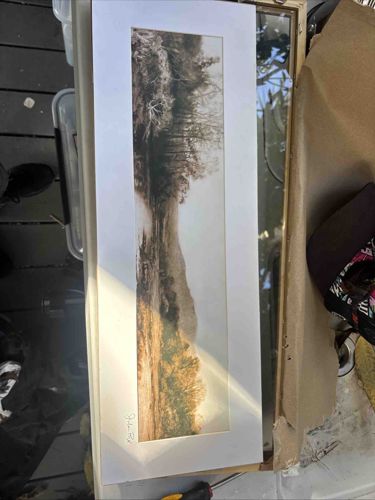
Julian Walbridge Rix Tonalist Landscape Print or Original

Submitted photo of Julian Walbridge Rix Tonalist Landscape Print or Original
Photo submitted by the user — not generated by AI

User's notes

Landscape art signed by Julian Rix

These notes were written by the person who submitted this item. Appraiser.AI has not verified them, and the AI's identification and estimate may rely on them.

AI Estimated Value

Not an official valuation

$400 - $700

AI estimate as of January 15, 2026 · verify with a professional before acting

AI-Generated · Verify before acting

Everything on this page is generated by AI for informational purposes only. AI can make mistakes — the AI may misidentify items or misattribute them (artist, maker, brand, designer, origin, era). This is not an official valuation and should not be used for insurance, sale, tax, estate, legal, or lending purposes — or any decision requiring a certified appraisal. It is not an authoritative claim about any person, brand, or rights holder — do not share or rely on it as a factual statement about a third party. Always consult qualified professionals before making financial decisions.

This analysis also relies on unverified notes provided by the user, which may be incomplete or inaccurate and could affect the result.

Read the full disclaimer

AI Item Analysis

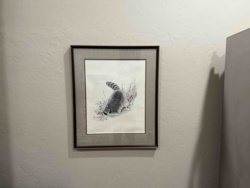
This item is a panoramic landscape work attributed to Julian Walbridge Rix (1850-1903), a prominent American artist associated with the Tonalist school and the Barbizon influence in California. The composition features a serene wilderness scene, likely a riverbank or wooded marshland, rendered in a muted, monochromatic, or sepia-toned palette typical of late 19th-century Tonalism. The artwork displays a vertical, narrow aspect ratio, showcasing tall, skeletal trees against a soft, atmospheric sky and a reflective water surface. The craftsmanship highlights Rix's characteristic use of shadow and light to create a moody, poetic environment. The piece is hand-signed 'Julian Rix' in the lower margin. It is currently housed in a simple white matboard, separate from its original frame which appears nearby. The paper shows signs of age-related toning and potential light foxing or staining consistent with a late 19th or early 20th-century origin. The condition suggests it has been stored outside of a protective frame for some time, with visible dust and debris on the mounting. Such works often used etching, photogravure, or watercolor techniques to achieve their soft, hazy aesthetic.

AI Appraisal Report

Based on my examination of the submitted item, I have assessed this monochromatic landscape signed by Julian Walbridge Rix (1850-1903). The piece exemplifies the Tonalist tradition with its atmospheric depth and focus on 'mood' over literal representation. Visually, the piece presents as a late 19th-century photogravure or etching, likely part of an edition rather than an original painting, given the monochromatic palette and the signature placement in the margin. The condition shows significant age-related challenges. I noted visible foxing, overall paper toning, and dust accumulation, which suggest prolonged exposure to high humidity or non-archival storage. These factors detract from the value as professional conservation would be required to stabilize the paper. The market for Rix remains steady among collectors of the California Barbizon school; however, prints typically command a fraction of the value of his oils, which can reach several thousand dollars. Authenticity cannot be definitively confirmed through digital imagery. The signature appears consistent with known Rix examples, but a physical inspection is required to determine the medium—specifically to check for a plate mark or dot patterns under magnification. To confirm this as an original work or a lifetime print, I would need to examine the paper’s watermark, the presence of an artist's seal, and any available provenance documentation from its original framing. Due to the high number of reproductions from the early 20th century, distinguishing a lifetime impression from a later decorative copy is critical for valuation. In its current state, the value is reflective of a high-quality period print with noted condition issues.

Keep exploring

More fine art - prints & drawings appraisals

Get your items appraised

Instant AI-powered appraisal estimates from a photo

Browse More Appraisals