AI estimate as of August 28, 2025 · verify with a professional before acting
AI-Generated · Verify before acting
Everything on this page is generated by AI for informational purposes only. AI can make mistakes — the AI may misidentify items or misattribute them (artist, maker, brand, designer, origin, era). This is not an official valuation and should not be used for insurance, sale, tax, estate, legal, or lending purposes — or any decision requiring a certified appraisal. It is not an authoritative claim about any person, brand, or rights holder — do not share or rely on it as a factual statement about a third party. Always consult qualified professionals before making financial decisions.
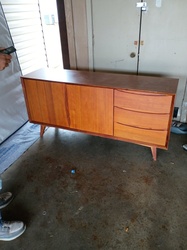
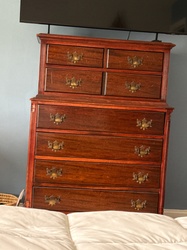
The item appears to be a tall, narrow wooden display cabinet or curio cabinet, likely crafted from a medium-toned hardwood, possibly oak or mahogany, given its warm reddish-brown hue. It features a predominantly rectangular form, with a slightly wider base. The cabinet has at least two doors visible, one solid wooden panel door on the left and a glass-paned door to its right. The solid door is adorned with a raised, carved wooden accent panel that incorporates a stylized, elongated 'S' or scroll-like design, above which is a simple, rectangular pull handle. The glass door appears to have a decorative etched or frosted pattern, possibly depicting floral or geometric motifs, adding a touch of elegance. This glass door is equipped with a small, circular metal knob. Above the doors, there is a decorative wooden molding, featuring a repetitive small bead or dentil pattern, indicating a certain level of craftsmanship. The overall construction suggests a sturdy, well-built piece. There are no obvious signs of significant damage such as deep scratches, cracks, or missing pieces, but the lighting makes it difficult to assess minor wear or patina that would be expected on a used item. The style suggests it could be from the mid-20th century to late 20th century, leaning towards a traditional or transitional aesthetic. The quality indicators point to mass-produced but still respectable furniture.
AI Appraisal Report
Based on my visual examination of the image provided, this wooden display cabinet appears to be a sturdy, well-constructed piece, likely from the mid to late 20th century. The warm, reddish-brown hue suggests a hardwood like oak or mahogany, typical of traditional furniture. The condition seems good, with no obvious major damage such as significant cracks, deep scratches, or missing components. The decorative carved panel on the solid door and the etched/frosted glass on the other add aesthetic appeal. The dentil molding above the doors indicates a reasonable level of craftsmanship.
In terms of market conditions, mass-produced traditional-style furniture from this era generally has a moderate demand. While not rare, pieces in good condition like this can appeal to buyers looking for functional and decorative storage. Comparables in the secondary market (e.g., online marketplaces, consignment shops) for similar display cabinets in good condition typically range from $200-$500 depending on region, material, and origin. This particular cabinet's decorative elements might place it on the higher end of that range. Factors impacting value include its overall condition, visual appeal, and the current trend towards traditional furnishings.
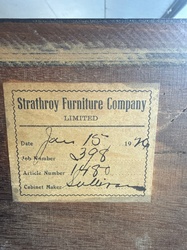
Limitations regarding authenticity and material verification exist from image-only examination. I cannot definitively confirm the specific wood type, joinery methods, or internal construction without physical inspection. Minor wear, patina, and internal damage cannot be assessed visually. Full authentication, including precise dating and material verification, would require in-person examination to check construction details, a close inspection for manufacturer's marks, and possibly scientific testing of the wood or finishes. Provenance documentation would also be crucial to verify its history and origin.