AI Appraisal Estimate

AI-generated estimates · not official valuations

From the user

What was submitted

Photo and notes provided by the user — not generated by AI

Submitted item photo
Submitted photo · May 26, 2026

User's notes

No additional notes provided.

AI analysis below

AI appraisal

AI analysis & estimate

AI-Generated · Verify before acting

Everything below is generated by AI for informational purposes only. AI can make mistakes — the AI may misidentify items or misattribute them (artist, maker, brand, designer, origin, era). This is not an official valuation and should not be used for insurance, sale, tax, estate, legal, or lending purposes — or any decision requiring a certified appraisal. It is not an authoritative claim about any person, brand, or rights holder — do not share or rely on it as a factual statement about a third party. Always consult qualified professionals before making financial decisions.

Read the full disclaimer

AI Identification

·Not independently authenticated·Verify before acting

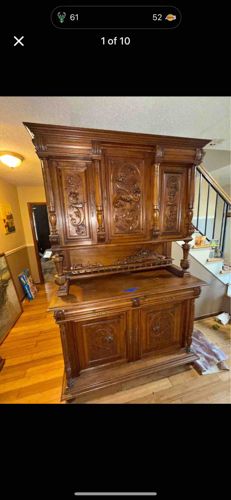
French Renaissance Revival Carved Oak Buffet à Deux Corps

Antique Furniture

AI Estimated Value

·Not an official valuation·Verify before acting

$4,500 - $6,500

As of May 26, 2026

AI Item Analysis

·AI can make mistakes·Verify before acting
This is a monumental 19th-century French Renaissance Revival buffet à deux corps, or 'buffet in two bodies,' constructed primarily of robust, dark-stained oak. The upper section is highly architectural, featuring three vertically orientated cupboards adorned with deep high-relief carvings of mythical figures, foliage, and medallions. Decorative turned balusters and fluted pilasters support a heavy, tiered crown molding at the top. The open recessed mid-section features a carved backsplash and is supported by elegant turned supports, leading down to a wide buffet surface. The lower cabinet features two large doors with intricate circular relief carvings and sits upon a substantial plinth base. The craftsmanship is evident in the depth of the hand-carved details and the use of joinery typical of the Henry II or Henri II style popular in the late 1800s. Condition-wise, the piece appears to possess a rich, aged patina with minor surface abrasions, particularly on the lower molding and the serving surface, consistent with age and domestic use. There are no visible major structural repairs, though some minor wood shrinkage may be present in the door panels. This piece represents a high-quality example of the historicism prevalent in French furniture making during the late 19th century.
AI Appraisal Report

·AI can make mistakes·Verify before acting
Based on my visual examination of this monumental 19th-century French Renaissance Revival buffet à deux corps, the piece exhibits the high-quality craftsmanship characteristic of the Henri II historicism style prevalent circa 1870-1890. The deep high-relief oak carvings, architectural fluted pilasters, and tiered crown molding suggest a luxury commission rather than mass-produced furniture of the period. The patina appears authentic, showing appropriate oxidation and wear patterns, specifically the surface abrasions on the serving area and lower molding which indicate domestic utility over time. Structurally, the alignment of the doors and the observed wood shrinkage in the panels are consistent with aged solid oak joinery. This style remains desirable for interior designers looking for 'statement' pieces, though the market for large-scale brown furniture has stabilized after a period of decline. Comparables for similar high-relief carved oak pieces currently realize mid-four to low-five figures at specialized auctions. The primary value drivers here are the density of the hand-carving and the preservation of the original silhouette. However, an image-based appraisal has inherent limitations. A physical inspection is required to verify the presence of modern glues or mechanical saw marks that would indicate a later reproduction. Authentic 19th-century construction should feature hand-cut dovetails and hand-forged hardware. To achieve a full authentication, I would need to examine the backboards, drawer interiors, and underside for tool marks, and review any available provenance or original purchase records to confirm the regional origin within France.

Get your items appraised

Instant estimates of your treasures with AI-powered appraisals

Browse More Appraisals