AI Appraisal Estimate

AI-generated estimates · not official valuations

From the user

What was submitted

Photo and notes provided by the user — not generated by AI

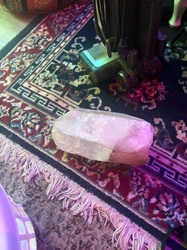
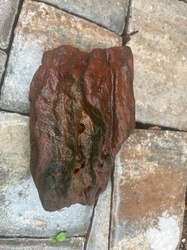
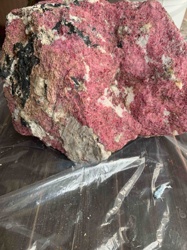
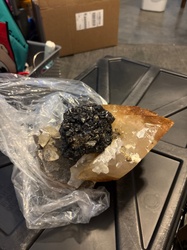
Submitted item photo
Submitted photo · June 3, 2026

User's notes

No additional notes provided.

AI analysis below

AI appraisal

AI analysis & estimate

AI-Generated · Verify before acting

Everything below is generated by AI for informational purposes only. AI can make mistakes — the AI may misidentify items or misattribute them (artist, maker, brand, designer, origin, era). This is not an official valuation and should not be used for insurance, sale, tax, estate, legal, or lending purposes — or any decision requiring a certified appraisal. It is not an authoritative claim about any person, brand, or rights holder — do not share or rely on it as a factual statement about a third party. Always consult qualified professionals before making financial decisions.

Read the full disclaimer

AI Identification

·Not independently authenticated·Verify before acting

Mottled Green and White Rough Mineral Specimen

Mineral Specimen

AI Estimated Value

·Not an official valuation·Verify before acting

$40-$65

As of June 3, 2026

AI Item Analysis

·AI can make mistakes·Verify before acting
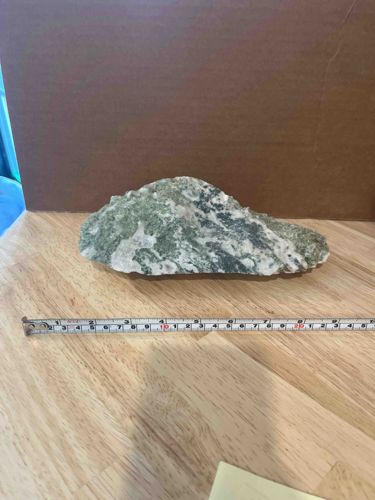
The item is a raw, unpolished mineral specimen, possibly a type of serpentine or marble, due to its characteristic mottled green and white coloration. Its overall shape is irregular and somewhat elongated, resembling a natural stone found in the outdoors. The surface exhibits a rough, unworked texture with visible variations in topography, including protruding areas and natural fissures. The predominant colors are shades of dark forest green, pale sage green, and off-white to cream, with the colors intermingling to form a chaotic, organic pattern. Some areas show a higher concentration of the lighter material, appearing as veins or larger patches against the darker green matrix. The size of the specimen can be estimated by the presence of a measuring tape in the foreground, which suggests the stone is approximately 8 to 9 inches in length. There are no apparent signs of significant damage such as fractures or chips, nor any visible repairs. The specimen appears to be in its natural state with no discernible manufacturing marks, signatures, or purposeful alterations. The rugged appearance and natural blend of colors point towards a geological origin, perhaps a rough cut from a larger deposit or a naturally detached piece. The quality is indicative of a raw, geological sample, valued more for its natural aesthetic and mineralogical properties rather than polished craftsmanship. Its age is geological, though its extraction or collection period is unknown.

AI Appraisal Report

·AI can make mistakes·Verify before acting
Based on my visual examination of the provided image, this item is a rough, unpolished mineral specimen, approximately 8-9 inches in length. The mottled green and white coloration and texture are consistent with serpentine group minerals (such as lizardite or antigorite) or potentially a type of marble. The specimen appears to be in its natural, unaltered state, with a rough texture and organic shape, free from major chips or fractures. Its primary value lies in its decorative potential as a raw geological sample. The market for such rough mineral specimens is primarily driven by hobbyists, lapidary artists, and decorators. Given its size and aesthetic qualities, it is a decent decorative piece. Rarity is difficult to assess without knowing the specific mineralogy and origin, but common serpentine or marble rough of this size is not exceptionally rare. Comparables on the market for similar raw serpentine or marble specimens of this size and unexceptional quality typically sell for modest amounts. The lack of polishing or shaping into a more functional or artistic form limits its value. It is crucial to note the limitations of this appraisal. Authenticity and specific mineral identification cannot be definitively confirmed from an image alone. An in-person examination would be required to test for hardness, specific gravity, and luster. For full authentication and to rule out imitations or less valuable minerals, non-invasive scientific testing such as X-ray diffraction (XRD) or Raman spectroscopy would be necessary to identify the exact mineral composition. Without such tests or provenance, my valuation is based on the assumption it is a common variety of serpentine or marble.

Get your items appraised

Instant estimates of your treasures with AI-powered appraisals

Browse More Appraisals