AI Appraisal Estimate

AI-generated estimates · not official valuations

From the user

What was submitted

Photo and notes provided by the user — not generated by AI

Submitted item photo
Submitted photo · June 4, 2026

User's notes

No additional notes provided.

AI analysis below

AI appraisal

AI analysis & estimate

AI-Generated · Verify before acting

Everything below is generated by AI for informational purposes only. AI can make mistakes — the AI may misidentify items or misattribute them (artist, maker, brand, designer, origin, era). This is not an official valuation and should not be used for insurance, sale, tax, estate, legal, or lending purposes — or any decision requiring a certified appraisal. It is not an authoritative claim about any person, brand, or rights holder — do not share or rely on it as a factual statement about a third party. Always consult qualified professionals before making financial decisions.

Read the full disclaimer

AI Identification

·Not independently authenticated·Verify before acting

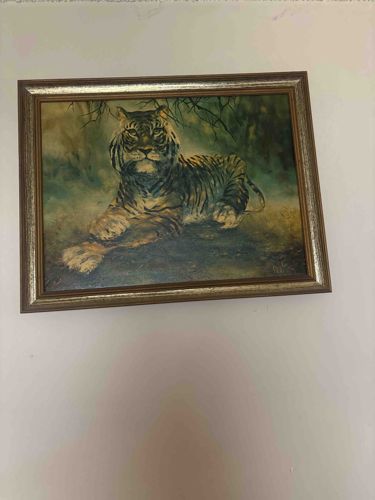
Framed Tiger Painting

Fine Art

AI Estimated Value

·Not an official valuation·Verify before acting

$150-300

As of June 4, 2026

AI Item Analysis

·AI can make mistakes·Verify before acting
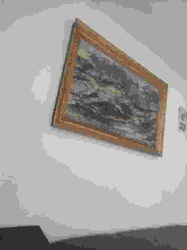
This item is a framed painting depicting a tiger at rest. The artwork is characterized by a realistic, yet somewhat stylized, portrayal of the tiger, which is shown lying on what appears to be a natural ground surface. The tiger’s fur exhibits a classic striped pattern in shades of orange, black, and cream, rendered with visible brushstrokes suggesting either oil or acrylic paint. The background of the painting is dark and moody, primarily in greens and muted yellows, with some dark, bare branches visible above the tiger, suggesting a dense jungle or forest environment. The overall color palette is somewhat subdued, focusing on natural tones. The painting is housed within a gold-toned wooden frame that features a lightly textured or carved pattern, adding a traditional aesthetic. The frame appears to be in good condition with no obvious chips or damage, though it has an aged patina consistent with its style. There is a discernible artist's signature or initials in the lower right corner of the painting, though it is not clearly legible from the provided image. The painting style, with its realistic subject and somewhat dramatic lighting, suggests a mid-20th century to contemporary period. The craftsmanship of both the painting and the frame indicates a commercially produced decorative art piece, possibly mass-produced, rather than a unique, high-art masterpiece, though the quality of the tiger's depiction is quite good.

AI Appraisal Report

·AI can make mistakes·Verify before acting
Based on my visual examination of the provided image, this framed tiger painting appears to be in good overall condition. The painting itself shows no obvious signs of damage, such as cracks, fading, or paint loss, and the colors seem well-preserved. The gold-toned wooden frame also appears robust, with an aged patina that is consistent with its style, and no visible chips or significant damage. Authenticity, when assessing from an image alone, is always limited. While there is a discernible signature in the lower right, its illegibility prevents identification of the artist, which is crucial for establishing provenance and true authenticity. The painting's realistic yet stylized depiction of the tiger, coupled with its somewhat dramatic lighting, suggests a decorative art piece from the mid-20th century to contemporary period. The quality of the tiger's rendering is good, but the overall style and craftsmanship appear to be that of a commercially produced item rather than a unique fine art masterpiece. In the current market, decorative art pieces of this nature, especially without a known artist or significant provenance, tend to have moderate demand. Comparables for such works typically fall within the lower range of the art market. Factors significantly impacting its value are the lack of artist identification and the likelihood of it being a mass-produced piece. Rarity is not a factor here. For full authentication and a more precise valuation, an in-person examination would be essential. This would allow for a detailed inspection of the paint medium, brushwork, and surface condition, as well as a professional examination of the signature. High-resolution images of the signature and any labels on the reverse of the frame or canvas would also aid in further research. Without these, any authenticity verification remains speculative.

Get your items appraised

Instant estimates of your treasures with AI-powered appraisals

Browse More Appraisals