AI Appraisal Estimate

AI-generated estimates · not official valuations

From the user

What was submitted

Photo and notes provided by the user — not generated by AI

Submitted item photo
Submitted photo · June 12, 2026

User's notes

No additional notes provided.

AI analysis below

AI appraisal

AI analysis & estimate

AI-Generated · Verify before acting

Everything below is generated by AI for informational purposes only. AI can make mistakes — the AI may misidentify items or misattribute them (artist, maker, brand, designer, origin, era). This is not an official valuation and should not be used for insurance, sale, tax, estate, legal, or lending purposes — or any decision requiring a certified appraisal. It is not an authoritative claim about any person, brand, or rights holder — do not share or rely on it as a factual statement about a third party. Always consult qualified professionals before making financial decisions.

Read the full disclaimer

AI Identification

·Not independently authenticated·Verify before acting

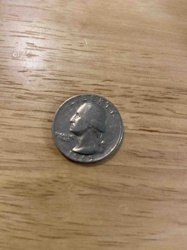
1776-1976 D Bicentennial Washington Quarter

Numismatics / US Coins

AI Estimated Value

·Not an official valuation·Verify before acting

$0.25 - $1.00

As of June 12, 2026

AI Item Analysis

·AI can make mistakes·Verify before acting
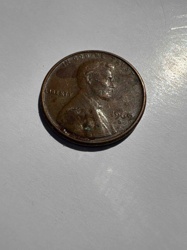
This is a United States circulation-strike quarter dollar commemorating the United States Bicentennial. The coin features a dual-date '1776-1976' on the obverse, replacing the standard single date. The obverse displays the classic profile of George Washington, designed by John Flanagan, with the 'D' mint mark clearly visible to the right of Washington's ponytail, signifying its production at the Denver Mint. The coin is composed of a copper-nickel clad material (75% copper, 25% nickel over a pure copper core), yielding a silver-tone metallic appearance with a reeded edge. In terms of physical condition, this specimen shows signs of moderate circulation, categorized likely in the 'About Uncirculated' to 'Extremely Fine' range. There are numerous small contact marks, hairline scratches, and bag marks across the fields and on the high points of Washington's face and hair. The surfaces exhibit a duller luster typical of a coin that has spent time in commerce, and there is visible grime or light toning along the rim and within the recessed lettering of 'LIBERTY' and the motto 'IN GOD WE TRUST'. Despite the wear, the striking remains relatively sharp with clear definition in the hair details and the dual dates. This specific design was minted in high volume during 1975 and 1976, making it a common but historically significant numismatic item.
AI Appraisal Report

·AI can make mistakes·Verify before acting
I have examined the digital representation of this 1776-1976 D Bicentennial Washington Quarter. Based on the visual evidence, the coin appears to be an authentic circulation-strike specimen from the Denver Mint. The surfaces exhibit the expected dull luster and mechanical wear consistent with a coin graded in the EF (Extremely Fine) to AU (About Uncirculated) range. I observed numerous contact marks in the fields and visible high-point wear on Washington's hair and cheek, which confirms it has been in general circulation. From a market perspective, this is one of the most common commemorative issues in U.S. history. Over 860 million were struck at the Denver Mint alone. Because this specimen displays clear evidence of circulation and lacks the 'MS' (Mint State) preservation required to interest high-end collectors, its market value is essentially its face value. While specimens in pristine MS67 or higher grades can command premiums, circulated copper-nickel clad examples remain abundant in change and dealer bulk bins. Limitations of this appraisal include the inability to verify the coin’s exact weight, metallic composition, or edge profile through a screen. Authentic verification would require an in-person examination using a precision scale and a high-power loupe to rule out clever contemporary counterfeits or alterations. Furthermore, while the 'D' mint mark appears genuine, physical inspection would be necessary to confirm the absence of any rare 'doubled die' varieties which are difficult to spot via standard imagery. For a definitive numismatic certification, the item would need to be submitted to a third-party grading service such as PCGS or NGC.

Get your items appraised

Instant estimates of your treasures with AI-powered appraisals

Browse More Appraisals