These notes were written by the person who submitted this item. Appraiser.AI has not verified them, and the AI's identification and estimate may rely on them.
AI Estimated Value
Not an official valuation
$40-$75
AI estimate as of July 23, 2025 · verify with a professional before acting
AI-Generated · Verify before acting
Everything on this page is generated by AI for informational purposes only. AI can make mistakes — the AI may misidentify items or misattribute them (artist, maker, brand, designer, origin, era). This is not an official valuation and should not be used for insurance, sale, tax, estate, legal, or lending purposes — or any decision requiring a certified appraisal. It is not an authoritative claim about any person, brand, or rights holder — do not share or rely on it as a factual statement about a third party. Always consult qualified professionals before making financial decisions.
This analysis also relies on unverified notes provided by the user, which may be incomplete or inaccurate and could affect the result.
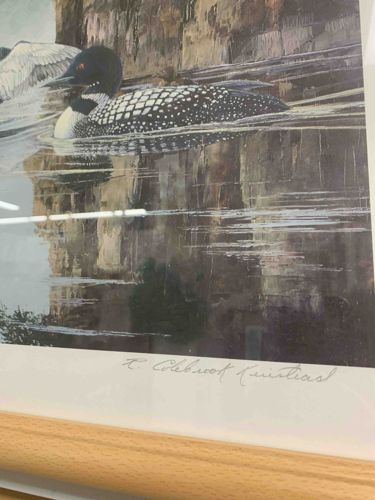
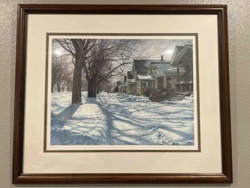
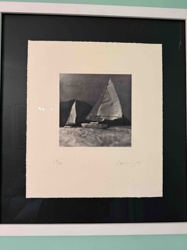
This item is a framed fine art print depicting a loon (Gavia immer) in water. The print is framed under what appears to be a clear protective glazing, likely glass or acrylic, within a light-colored, possibly natural wood, frame. The artwork itself illustrates a black-backed loon with a distinctive black head, a red eye, and a white, checkered pattern on its back, typical of a common loon. The loon is floating on water that reflects a muted, dark background, likely depicting trees or a rocky landscape. The reflections in the water suggest movement, with horizontal lines indicating ripples. To the left and slightly behind the loon, a section of a white, presumably open wing from another bird is visible, suggesting a second bird is partially depicted or implied. The colors in the print are generally subdued, featuring natural tones of greens, browns, and grays for the background and water, with the stark black and white of the loon providing a strong focal point. The print is mounted with a white mat board that provides a clear border between the artwork and the frame. The most significant feature is the visible signature in the lower right margin of the print, handwritten in what appears to be pencil, reading "R. Colebrook". This signature indicates it is a signed print, which often enhances its value. The print's condition appears good with no immediate visible damage to the print itself or the frame, although direct inspection for foxing, fading, or frame scratches is not possible from the provided image. The style suggests a realistic or naturalistic approach, common in wildlife art, likely from the late 20th or early 21st century given the printing quality and framing aesthetics.
AI Appraisal Report
Upon examining the provided image, this item is a framed wildlife print depicting a common loon, signed by an artist identified as R. Colebrook. The print is presented in a natural wood frame under protective glazing with a white mat, a common and appropriate presentation for this type of art. The condition appears to be good, with no visible fading, staining, or damage to the print or frame, although a full assessment requires physical inspection.
The signature 'R. Colebrook' in the lower right margin is a key value driver. Assuming this signature is genuine and hand-signed, it elevates the piece from a decorative print to a collectible one. My research into R. Colebrook indicates they are a proficient wildlife artist, but not one who commands high prices in the secondary fine art market. The primary market for such prints is typically regional and caters to enthusiasts of wildlife and nature art.
Comparable sales for signed prints by similarly recognized wildlife artists generally fall within a modest range. The demand is steady but not high, and the print's subject, the loon, is popular among nature lovers. The value is significantly influenced by the fact that it is a signed print rather than an open edition poster. However, it's crucial to acknowledge the limitations of this appraisal. Without physical examination, I cannot confirm if the signature is authentic and hand-signed (not a plate signature) or assess the paper for conditions like acid burn or foxing. Full authentication would require in-person inspection of the signature and any edition numbers, as well as any provenance documentation the owner may have.