AI Appraisal Estimate

AI-generated estimates · not official valuations

From the user

What was submitted

Photo and notes provided by the user — not generated by AI

Submitted item photo
Submitted photo · May 25, 2026

User's notes

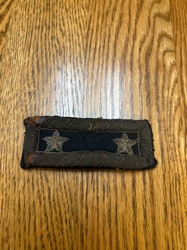
Tin type of Civil War veteran in uniform with wife

AI analysis below

AI appraisal

AI analysis & estimate

AI-Generated · Verify before acting

Everything below is generated by AI for informational purposes only. AI can make mistakes — the AI may misidentify items or misattribute them (artist, maker, brand, designer, origin, era). This is not an official valuation and should not be used for insurance, sale, tax, estate, legal, or lending purposes — or any decision requiring a certified appraisal. It is not an authoritative claim about any person, brand, or rights holder — do not share or rely on it as a factual statement about a third party. Always consult qualified professionals before making financial decisions.

Note

This analysis also relies on unverified notes provided by the user, which may be incomplete or inaccurate and could affect the result.

Read the full disclaimer

AI Identification

·Not independently authenticated·Verify before acting

American Civil War Era Tintype Portrait of a Union Soldier and a Woman

Historical Photography / Civil War Militaria

AI Estimated Value

·Not an official valuation·Verify before acting

$100 - $175

As of May 25, 2026

AI Item Analysis

·AI can make mistakes·Verify before acting
This is an original mid-19th century tintype (ferrotype) photograph depicting a Union soldier and a woman, likely his wife. The image is captured on a thin rectangular sheet of iron coated with a dark lacquer or enamel. The soldier is seated, wearing a dark blue frock coat with a double row of brass buttons, a forage cap (kepi), and visible light-colored stripes on his sleeves, indicating a non-commissioned officer rank. The woman is standing beside him in a period-appropriate plaid or checkered dress with wide sleeves and a high neckline. The background features a studio setting with a draped column and a faint landscape backdrop. The tintype measures approximately 2.5 by 3.5 inches (sixth-plate size). Condition is consistent with age, showing significant flaking of the emulsion in the lower right corner and along the left edge, where the black iron plate is exposed. There is also general surface scratching, silvering around the edges, and minor bending of the metal plate. The monochromatic tones are typical of the 1860s collodion process, with high contrast between the dark uniform and the lighter facial features. No maker's marks are visible, which is common for these itinerant or studio-produced military portraits.
AI Appraisal Report

·AI can make mistakes·Verify before acting
After examining the provided image of this sixth-plate tintype, I have determined it to be an authentic, mid-19th-century American Civil War era portrait. The clothing details are classic indicators of the 1861-1865 period: the soldier wears a standard Union frock coat with NCO chevrons and a forage cap, while the woman's wide sleeves and checkered pattern are consistent with 1860s civilian fashion. The medium itself—a direct positive on a lacquered iron sheet (ferrotype)—is unmistakable. The market for Civil War photography remains robust, particularly for images showing specific ranks or armed soldiers. However, the value of this specific piece is significantly hampered by its condition. While the subjects' faces are relatively clear, the substantial emulsion flaking in the lower right and left edges is a major detractor. The exposed black iron plate indicates significant loss of image data, and the bending of the metal suggests poor storage over the last 160 years. In pristine condition, a portrait of a soldier and wife can fetch upwards of $300-$500, but this example falls into a lower tier due to these conservation issues. Comparables for damaged sixth-plate tintypes of unidentified soldiers generally trade in the $100-$150 range on eBay or at military shows. The presence of the wife adds slight sentimental and historical interest, potentially pushing it toward the higher end of my estimate. Limitations of this appraisal include the inability to inspect the back of the plate or remove it from any potential housing to check for hidden tax stamps or inscriptions. An in-person inspection would verify the stability of the remaining emulsion, as flaking can be progressive without proper archival stabilization.

Get your items appraised

Instant estimates of your treasures with AI-powered appraisals

Browse More Appraisals