AI estimate as of August 30, 2025 · verify with a professional before acting
AI-Generated · Verify before acting
Everything on this page is generated by AI for informational purposes only. AI can make mistakes — the AI may misidentify items or misattribute them (artist, maker, brand, designer, origin, era). This is not an official valuation and should not be used for insurance, sale, tax, estate, legal, or lending purposes — or any decision requiring a certified appraisal. It is not an authoritative claim about any person, brand, or rights holder — do not share or rely on it as a factual statement about a third party. Always consult qualified professionals before making financial decisions.
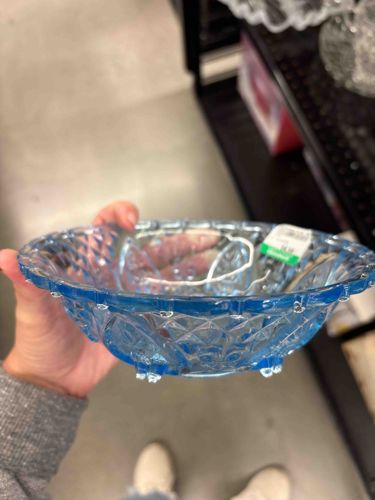
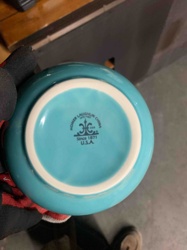
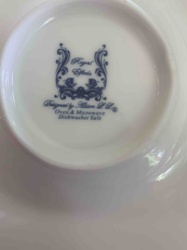
This item is a small, round, light blue glass bowl, likely made of depression-era pressed glass or a modern reproduction. Its color appears to be a distinctive "fired-on" blue or a light aqua. The bowl features a decorative, geometric pattern, specifically a diamond cross-hatch or waffle design, molded into its outer surface, providing both texture and visual interest. The rim of the bowl has a scalloped or gently undulating edge, adding to its ornamental appeal. A notable structural feature is the presence of three small, molded feet on the base, lifting the bowl slightly off the surface and enhancing its stability; one of these feet appears to have a small chip or imperfection. The glass exhibits a translucent quality, allowing light to pass through and highlight its blue hue. The bowl's size suggests it might be used for serving small side dishes, nuts, candies, or as a decorative trinket dish. A retail tag, partially visible on the interior edge, indicates it is a pre-owned item, possibly from a thrift store or consignment shop. Given the typical characteristics of such glass, it likely dates from the early to mid-20th century if authentic Depression glass, or more recently if a reproduction. The overall condition, besides the one visible chip on a foot, appears relatively good with typical signs of wear for a used glass item, such as minor surface scratches or scuffs, but no significant cracks or fractures are immediately discernible from the image.
AI Appraisal Report
Based on my visual examination of the provided image, this Blue Depression Glass Footed Bowl with Diamond Pattern appears to be a charming decorative or functional piece. The color, geometric pattern, scalloped rim, and three molded feet are consistent with characteristics often found in Depression-era glass or its reproductions. The “fired-on” blue or light aqua hue is attractive and typical of such items.
From the image, the condition appears generally good, though I've noted a chip on one of the three feet, which will detract from its value. Minor surface scratches or scuffs are expected for an item of this vintage and use. The partially visible retail tag suggests it's been through a secondary market, likely a thrift or consignment store.
Regarding authenticity, accurately determining if this is genuine Depression glass (circa 1920s-1940s) or a more modern reproduction is challenging from an image alone. Many reproductions mimic older patterns and colors. Factors impacting value significantly include its authenticity, the extent of the chip, and overall condition. Genuine Depression glass in excellent condition can fetch higher prices, but this piece, even if authentic, has a visible flaw.
Market-wise, these types of smaller Depression-era glass bowls are relatively common. Demand is steady among collectors and those looking for vintage decor, but it's not considered rare. Comparables would include similar footed bowls made by companies like Federal Glass, Hocking, or MacBeth-Evans, none of which typically command extraordinarily high prices unless exceptionally rare patterns or colors. The chip on the foot will unfortunately limit its appeal to serious collectors. Consequently, its value is modest.
For full authentication, an in-person examination would be crucial to assess the glass quality, mold lines, pontil marks (if any), and thickness, all of which can provide clues to its age and manufacturing origin. Scientific testing, such as UV light testing to detect manganese (common in older glass), could also help. Without physical inspection or provenance documentation, definitively confirming its age and manufacturer is impossible. My appraisal is based on its visual appeal as a functional or decorative piece with a known flaw.