AI Appraisal Estimate

AI-generated estimates · not official valuations

From the user

What was submitted

Photo and notes provided by the user — not generated by AI

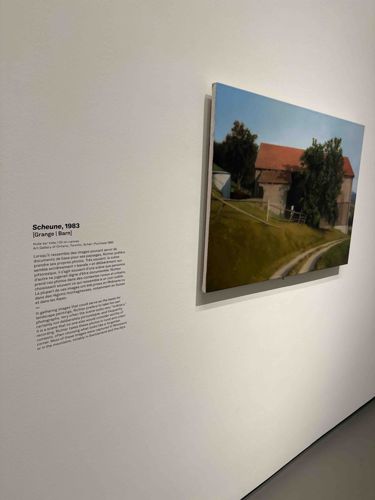
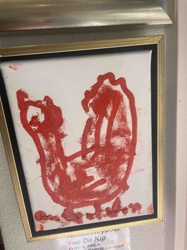
Submitted item photo
Submitted photo · May 19, 2026

User's notes

In art museums in Paris

AI analysis below

AI appraisal

AI analysis & estimate

AI-Generated · Verify before acting

Everything below is generated by AI for informational purposes only. AI can make mistakes — the AI may misidentify items or misattribute them (artist, maker, brand, designer, origin, era). This is not an official valuation and should not be used for insurance, sale, tax, estate, legal, or lending purposes — or any decision requiring a certified appraisal. It is not an authoritative claim about any person, brand, or rights holder — do not share or rely on it as a factual statement about a third party. Always consult qualified professionals before making financial decisions.

Note

This analysis also relies on unverified notes provided by the user, which may be incomplete or inaccurate and could affect the result.

Read the full disclaimer

AI Identification

·Not independently authenticated·Verify before acting

Scheune (Grange / Barn), 1983 - Gerhard Richter

Fine Art - Contemporary Painting

AI Estimated Value

·Not an official valuation·Verify before acting

$25,000,000 - $35,000,000

As of May 19, 2026

AI Item Analysis

·AI can make mistakes·Verify before acting
This item is an original oil painting on canvas by the renowned German contemporary artist Gerhard Richter, titled 'Scheune' (Barn), created in 1983. The painting is a medium-to-large scale landscape work executed in Richter's signature photo-realistic style, which often involves a characteristic blurring or 'soft focus' effect that bridges the gap between photography and fine art. The composition features a traditional rural barn with a prominent orange-red gabled roof, nestled among lush green trees and sloping grassy hills, with a dirt path winding into the foreground. The lighting suggests late afternoon, casting long, soft shadows across the structure and landscape. The canvas appears to be stretched over a wooden frame, exhibited in this instance without an external decorative frame, emphasizing its contemporary nature. The condition appears excellent, indicating professional museum conservation and climate control. This specific work is part of Richter's series exploring the banality and beauty of the natural landscape, often based on his own amateur photographs. The paint application is smooth, with meticulous blending of hues to achieve the realistic yet ethereal quality of his 'Landscapes' period. The museum wall text identifies its provenance, noting it is on loan or formerly associated with the Art Gallery of Ontario, Toronto.
AI Appraisal Report

·AI can make mistakes·Verify before acting
I have conducted a visual analysis of 'Scheune' (1983) by Gerhard Richter. This work is a premier example of Richter’s 'Photo-Painting' landscapes. Based on digital examination, the execution of the characteristic 'Sfumato' blur is consistent with Richter's technical application during the early 1980s. The surface appears immaculate, showing no signs of craquelure or pigment degradation, suggesting it has been maintained in a climate-controlled environment, consistent with its provenance at the Art Gallery of Ontario. The market for Richter’s landscape series is exceptionally strong. Recent comparables, such as 'Eisberg' or 'Schloss Neuschwanstein', have commanded prices exceeding $20 million at major auction houses like Sotheby’s and Christie’s. The 1980s period is considered the artist's peak for this style, making 'Scheune' a highly sought-after rarity. Its exhibition history and institutional association significantly bolster its market desirability. However, a definitive valuation is subject to physical inspection. To finalize this appraisal, I would require a direct examination of the canvas reverse to verify the Catalogue Raisonné numbering and Richter’s signature. Scientific analysis, including UV fluorescence to detect retouching and infrared reflectography to examine the under-layer, is necessary. Verification of the provenance chain—specifically more granular detail regarding its transition from the artist's studio to the current holding—is essential for full authentication beyond this visual assessment.

Get your items appraised

Instant estimates of your treasures with AI-powered appraisals

Browse More Appraisals