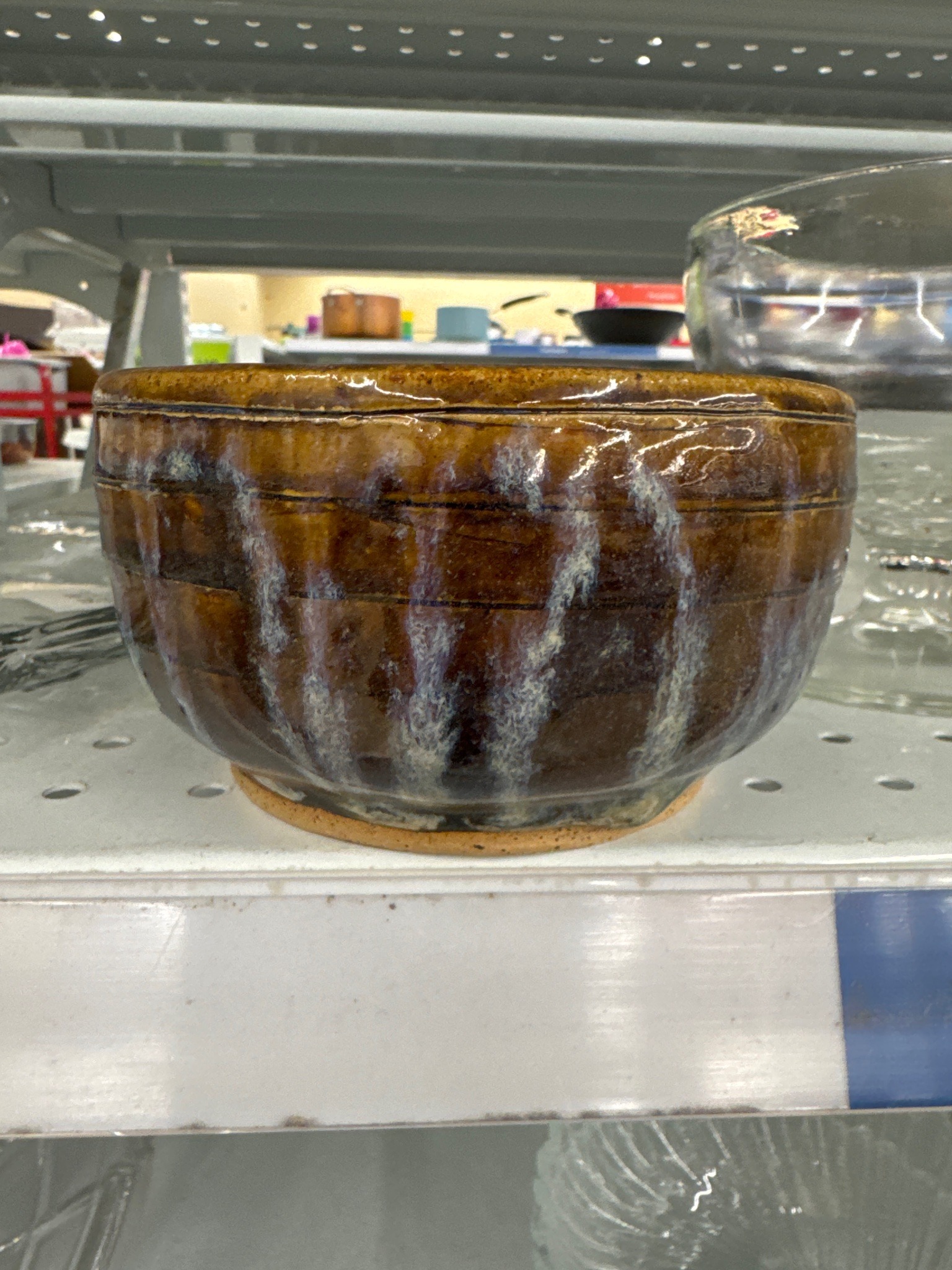
Studio Pottery Drip Glazed Ceramic Bowl
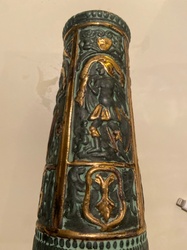
This is a wheel-thrown ceramic bowl, likely a studio pottery piece of mid-to-late 20th-century origin. The bowl features a high-gloss, brown-toned lead or tenmoku-style glaze as its base. A distinctive decorative element is the vertical white-to-light-blue drip or rutile glaze trailing down the outer walls, creating a variegated, frothy texture against the dark background. The bowl's exterior is further defined by horizontal incised lines (throwing rings or decorative ribbing) circling the upper and middle portions. The construction shows a slightly inward-curving rim and a tapered body that leads to an unglazed, light-orange clay foot, characteristic of stoneware. Condition-wise, the piece appears well-preserved with no large chips or cracks visible on the exterior; however, the irregular surface of the glaze suggests a handmade quality with minor pitting and uneven glaze distribution that adds to its artisan character. The style suggests an American or European craft movement influence, prioritizing organic forms and experimental glaze applications. The craftsmanship is evident in the uniform thickness of the walls and the intentional application of the drip-and-wash technique, which creates a dynamic visual rhythm around the vessel.
AI-Generated Appraisal Disclaimer
Estimated Value
$45.00 - $75.00
Basic Information
Category
Ceramics & Pottery
Appraised On
April 17, 2026
Estimated Value
$45.00 - $75.00
Item Description
This is a wheel-thrown ceramic bowl, likely a studio pottery piece of mid-to-late 20th-century origin. The bowl features a high-gloss, brown-toned lead or tenmoku-style glaze as its base. A distinctive decorative element is the vertical white-to-light-blue drip or rutile glaze trailing down the outer walls, creating a variegated, frothy texture against the dark background. The bowl's exterior is further defined by horizontal incised lines (throwing rings or decorative ribbing) circling the upper and middle portions. The construction shows a slightly inward-curving rim and a tapered body that leads to an unglazed, light-orange clay foot, characteristic of stoneware. Condition-wise, the piece appears well-preserved with no large chips or cracks visible on the exterior; however, the irregular surface of the glaze suggests a handmade quality with minor pitting and uneven glaze distribution that adds to its artisan character. The style suggests an American or European craft movement influence, prioritizing organic forms and experimental glaze applications. The craftsmanship is evident in the uniform thickness of the walls and the intentional application of the drip-and-wash technique, which creates a dynamic visual rhythm around the vessel.
Get Your Items Appraised
Instant estimates of your treasures with AI-powered instant appraisals