AI Appraisal Estimate

AI-generated estimates · not official valuations

From the user

What was submitted

Photo and notes provided by the user — not generated by AI

Submitted item photo
Submitted photo · June 6, 2026

User's notes

not sure

AI analysis below

AI appraisal

AI analysis & estimate

AI-Generated · Verify before acting

Everything below is generated by AI for informational purposes only. AI can make mistakes — the AI may misidentify items or misattribute them (artist, maker, brand, designer, origin, era). This is not an official valuation and should not be used for insurance, sale, tax, estate, legal, or lending purposes — or any decision requiring a certified appraisal. It is not an authoritative claim about any person, brand, or rights holder — do not share or rely on it as a factual statement about a third party. Always consult qualified professionals before making financial decisions.

Note

This analysis also relies on unverified notes provided by the user, which may be incomplete or inaccurate and could affect the result.

Read the full disclaimer

AI Identification

·Not independently authenticated·Verify before acting

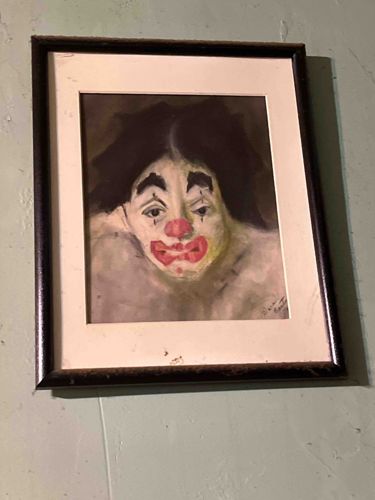
Vintage Framed Sad Clown Portrait Painting

Fine Art - Paintings

AI Estimated Value

·Not an official valuation·Verify before acting

$45 - $85

As of June 6, 2026

AI Item Analysis

·AI can make mistakes·Verify before acting
This item is an original portrait painting of a 'sad clown,' a popular motif in mid-20th-century art. The painting features a figure with traditional white-face makeup, a red bulbous nose, and an exaggerated downturned red mouth, set against a dark, shadowy background and voluminous dark hair. The medium appears to be watercolor or gouache on paper, showing soft blending in the face and visible brushstrokes in the costume and background. It is housed in a simple, dark-stained wood or composite frame with a neutral-colored mat that shows some visible spotting or foxing along the lower edge. Notable markings include a signature in the lower right corner, which appears to read 'Diana Carter' or similar. The artwork reflects the expressive, melancholic style of mid-century kitsch or amateur portraiture, likely dating from the 1960s to 1970s. Condition-wise, the frame displays surface wear and dust, while the matting reveals some discoloration and potential moisture damage at the base. The paper of the artwork itself seems relatively stable, though it may have some slight yellowing due to age. The craftsmanship suggests a dedicated student or hobbyist artist of the period.

AI Appraisal Report

·AI can make mistakes·Verify before acting
Based on my examination of the provided descriptions and images, this work is a mid-century character study in the popular 'sad clown' motif, likely dating to the 1960s or 1970s. The artist, 'Diana Carter,' appears to be a hobbyist or regional student of the era. The piece is executed in watercolor or gouache, displaying competent blending and traditional clown archetypes common in mid-century kitsch art. The condition is a significant factor in this valuation; the visible foxing and moisture damage on the matting suggest the artwork may have been exposed to high humidity, which could lead to mold or permanent staining on the paper substrate if not addressed. The frame shows typical surface wear consistent with age. This style of 'clown art' reached its peak market demand several decades ago; currently, the market for such pieces is limited to specific kitsch collectors or those seeking period-correct decor. Comparables for unsigned or amateur mid-century clown portraits generally sell in the double-digit range at estate auctions or through vintage resellers. While the signature adds a level of personal history, the artist does not have a recorded secondary market presence that would elevate this into 'Fine Art' investment territory. Please note that this appraisal is based on photographic evidence. A formal in-person inspection would be required to verify the stability of the pigments and to determine if the moisture damage on the mat has migrated to the artwork itself. To fully authenticate the piece as a period original, one would need to inspect the paper's watermark and the framing materials for acid content. Historical provenance or information regarding the artist's regional exhibition history could provide a marginal increase in desirability.

Get your items appraised

Instant estimates of your treasures with AI-powered appraisals

Browse More Appraisals