AI Appraisal Estimate

AI-generated estimates · not official valuations

From the user

What was submitted

Photo and notes provided by the user — not generated by AI

Submitted item photo
Submitted photo · June 1, 2026

User's notes

No additional notes provided.

AI analysis below

AI appraisal

AI analysis & estimate

AI-Generated · Verify before acting

Everything below is generated by AI for informational purposes only. AI can make mistakes — the AI may misidentify items or misattribute them (artist, maker, brand, designer, origin, era). This is not an official valuation and should not be used for insurance, sale, tax, estate, legal, or lending purposes — or any decision requiring a certified appraisal. It is not an authoritative claim about any person, brand, or rights holder — do not share or rely on it as a factual statement about a third party. Always consult qualified professionals before making financial decisions.

Read the full disclaimer

AI Identification

·Not independently authenticated·Verify before acting

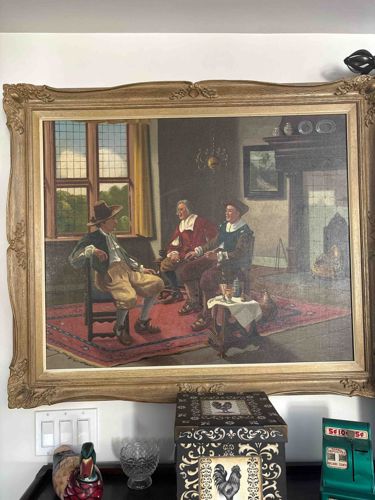
Framed Genre Painting of Three Men in a Tavern interior

Wall Art & Paintings

AI Estimated Value

·Not an official valuation·Verify before acting

$450 - $700

As of June 1, 2026

AI Item Analysis

·AI can make mistakes·Verify before acting
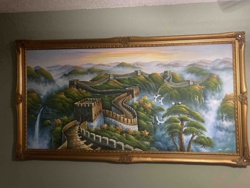
This item is a large-format genre painting, likely oil on canvas or a high-quality textured print on board, depicting a narrative scene of three men in 17th-century style costume interior. The figures are seated in a rustic but well-appointed room featuring a prominent fireplace, a leaded glass window, and a red patterned rug. The man on the left wears a brown wide-brimmed hat and yellow breeches, while the two men on the right are dressed in red and blue doublets with white collars. The composition suggests a social gathering, possibly reflecting Dutch Golden Age or Romanticist revival influences. The art is housed in an ornate, Victorian-style rococo gilt frame with floral scrolling at the corners and a burnished gold finish. The frame shows minor signs of aging with a slight patina and small abrasions consistent with mid-20th-century decorative pieces. The canvas/surface appears stable with no major flaking or visible restoration. The quality of the brushwork and the detailed interior elements (including metalware on the mantel and a separate landscape painting on the wall within the scene) point to a mass-produced or studio-style decorative work from the mid-to-late 20th century intended for a traditional home library or study.
AI Appraisal Report

·AI can make mistakes·Verify before acting
Upon visual examination of this large-format genre painting, I have identified it as a mid-20th-century decorative work executed in the 'Old Master' revival style, popular for traditional interior design. The scene, depicting cavaliers in a tavern, mimics 17th-century Dutch genre painting but lacks the nuanced glaze layering and fine craquelure typically associated with period works. The ornate Rococo-style gilt frame is a significant value driver here; it shows minor abrasions and a characteristic vintage patina that suggests it was manufactured between 1950 and 1970. The canvas surface appears stable with no evidence of significant pigment loss or historical restoration. The market for mid-century decorative oil paintings remains steady for those seeking a specific aesthetic for libraries or studies, though they do not command the prices of fine art with established provenance. Demand is primarily driven by the 'decorator' value of the frame and the scale of the piece rather than the prestige of a specific artist. Comparables in antique malls and secondary markets typically fluctuate based on frame condition. Limitation on Authenticity: This appraisal is based solely on digital images. Without a physical inspection, I cannot confirm if this is an original oil on canvas or a sophisticated lithographic transfer on board with 'impasto' brushstroke highlights. To definitively establish value, an in-person examination is required to inspect the verso (back) for aging of the stretchers and canvas, as well as ultraviolet (UV) light testing to identify any hidden overpainting or signatures. Documentation regarding the piece's history or purchase location would also be necessary to elevate it from a decorative object to a fine art classification.

Get your items appraised

Instant estimates of your treasures with AI-powered appraisals

Browse More Appraisals