AI Appraisal Estimate

AI-generated estimates · not official valuations

From the user

What was submitted

Photo and notes provided by the user — not generated by AI

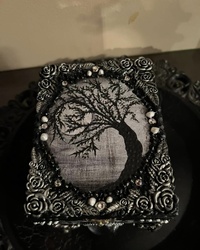
Submitted item photo
Submitted photo · June 4, 2026

User's notes

No additional notes provided.

AI analysis below

AI appraisal

AI analysis & estimate

AI-Generated · Verify before acting

Everything below is generated by AI for informational purposes only. AI can make mistakes — the AI may misidentify items or misattribute them (artist, maker, brand, designer, origin, era). This is not an official valuation and should not be used for insurance, sale, tax, estate, legal, or lending purposes — or any decision requiring a certified appraisal. It is not an authoritative claim about any person, brand, or rights holder — do not share or rely on it as a factual statement about a third party. Always consult qualified professionals before making financial decisions.

Read the full disclaimer

AI Identification

·Not independently authenticated·Verify before acting

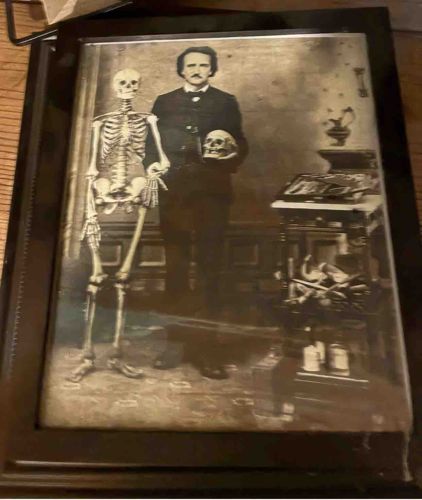
Edgar Allan Poe Macabre Portrait Tintype Reproduction

Decorative Art / Gothic Home Decor

AI Estimated Value

·Not an official valuation·Verify before acting

$25.00 - $45.00

As of June 4, 2026

AI Item Analysis

·AI can make mistakes·Verify before acting
This item is a framed decorative art piece featuring a composite image that depicts the famous American author Edgar Allan Poe standing next to a full human skeleton. Poe is shown in his iconic mid-19th-century attire, holding a human skull, while the background is filled with morbid artifacts, including jars and medical implements on a side table. The image is rendered in a monochromatic, sepia-toned finish designed to mimic the aesthetic of a 19th-century tintype or daguerreotype. Physically, the artwork is housed in a modern, dark-stained wooden or composite frame with a simple bevel. The 'photo' itself appears to be a digital print on a flat substrate, likely metal or high-gloss cardstock, as evidenced by the sharp contrast and the artificial 'distressed' edges and scratches intended to simulate aged patina. There are visible scuffs and lint particles on the surface of the glass or protective layer, but the underlying print appears in stable condition. This piece is likely a contemporary novelty item, possibly from a gothic decor brand (such as those sold during the Halloween season or by specialized 'curiosity' shops), created within the last 10-20 years. Despite the antique subject matter, the crispness and composition indicate a modern photographic manipulation rather than an authentic Victorian-era artifact.
AI Appraisal Report

·AI can make mistakes·Verify before acting
I have conducted a visual examination of the framed 'Edgar Allan Poe Macabre Portrait.' My assessment confirms this is a contemporary reproduction designed for the 'dark academia' or gothic home decor market. While the composition utilizes 19th-century aesthetics, the digital sharpness and artificial weathering patterns—such as the uniform 'scratches' and 'oxidized' edges—are consistent with modern inkjet or sublimation printing on metal or cardstock rather than a chemical tintype process. The frame appears to be a mass-produced contemporary wooden or composite molding with standard glazing. The market for this specific type of novelty decor is saturated, with similar items frequently sold through retailers like Spirit Halloween, Etsy, or boutique curiosity shops. These items hold decorative value rather than investment value. Comparables for framed digital prints of this size and subject matter typically sell within the $20 to $50 range at secondary marketplaces or retail outlets. The rarity is low, as these are produced in high volumes. Factors impacting value include the physical condition of the frame and the lack of a verified limited edition signature. While the image shows minor surface scuffs, the overall structural integrity remains sound for decorative use. Limitations of this appraisal: This evaluation is based solely on digital imagery. A definitive identification of the substrate (metal vs. paper) and the printing technique requires a physical inspection under magnification to check for halftone patterns or silver mirroring. To elevate this from a 'decorative reproduction' status, provenance documentation or a forensic analysis of the emulsion would be required to rule out an authentic 19th-century composite—though the composition itself is historically inconsistent with Victorian-era studio photography.

Get your items appraised

Instant estimates of your treasures with AI-powered appraisals

Browse More Appraisals