AI Appraisal Estimate

AI-generated estimates · not official valuations

From the user

What was submitted

Photo and notes provided by the user — not generated by AI

Submitted item photo
Submitted photo · May 27, 2026

User's notes

I’m in in

AI analysis below

AI appraisal

AI analysis & estimate

AI-Generated · Verify before acting

Everything below is generated by AI for informational purposes only. AI can make mistakes — the AI may misidentify items or misattribute them (artist, maker, brand, designer, origin, era). This is not an official valuation and should not be used for insurance, sale, tax, estate, legal, or lending purposes — or any decision requiring a certified appraisal. It is not an authoritative claim about any person, brand, or rights holder — do not share or rely on it as a factual statement about a third party. Always consult qualified professionals before making financial decisions.

Note

This analysis also relies on unverified notes provided by the user, which may be incomplete or inaccurate and could affect the result.

Read the full disclaimer

AI Identification

·Not independently authenticated·Verify before acting

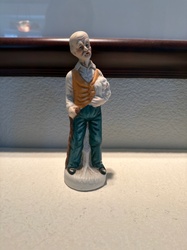
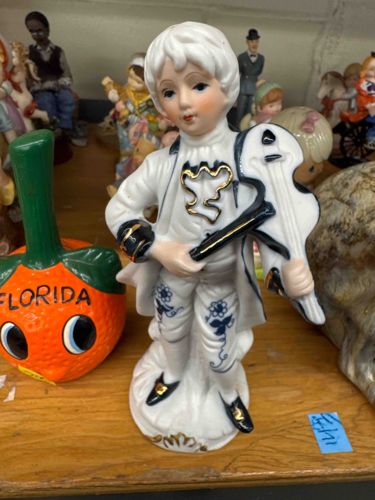
Porcelain Musician Figurine of a Boy with Cello

Collectible Figurines / Porcelain Decor

AI Estimated Value

·Not an official valuation·Verify before acting

$25.00 - $45.00

As of May 27, 2026

AI Item Analysis

·AI can make mistakes·Verify before acting
This item is a decorative porcelain figurine depicting a young boy in 18th-century Rococo-style attire, standing while holding a stringed instrument, likely a cello or viola da gamba. The piece is constructed from white glazed porcelain, standing approximately 6 to 8 inches tall. The color palette is minimal, utilizing a traditional white base accented with underglaze cobalt blue floral patterns on the trousers and dark blue outlines on the instrument. Significantly, the figurine features hand-applied gold gilt accents on the shoes, lapels, and instrument, which provide a sense of mid-20th-century decorative charm. The boy is characterized by a youthfully sculpted face with hand-painted blue eyes and rosy cheeks, topped with a molded white wig. Structurally, the figurine is attached to an integral circular mound base. Regarding condition, the glaze appears intact with no immediate visible cracks, though slight thinning of the gold gilding on high-friction areas like the shoes suggests minor age-related wear. This style is consistent with mid-century mass-market porcelain 'curio' items, often produced in Japan or Occupied Japan for the Western market, mimicking European Meissen or Dresden styles. While no specific maker's mark is visible from the front view, the overall craftsmanship indicates it was a standardized giftware item rather than an artisan studio piece.
AI Appraisal Report

·AI can make mistakes·Verify before acting
I have completed a visual assessment of the porcelain musician figurine. The item is a mid-20th-century decorative piece, likely manufactured in Japan or Continental Europe (specifically West Germany or Italy) between 1945 and 1960. While it seeks to emulate the 'Blue Onion' or Meissen Rococo aesthetic, the simplified molding and stencil-style underglaze application indicate it was produced for the mass-market giftware trade rather than as an artisan studio piece. The condition appears 'Good' to 'Very Good,' with minor gilt loss on the shoes, which is expected for its age. The market for mid-century porcelain 'curios' is currently saturated, with high supply and low demand from younger collectors, keeping values modest. Similar items without a prestigious mark (such as Meissen's crossed swords or Royal Copenhagen) frequently sell in the $20 to $50 range at regional auctions and online marketplaces. The absence of a visible manufacturer's mark on the base traditionally limits the upside potential for this specific item. Please note that this appraisal is based on photographic evidence and descriptions. A definitive valuation would require an in-person inspection to verify the presence of a 'cold stamp' or impressed numbers on the bottom of the base. To fully authenticate the piece as a specific maker's work, provenance documentation or a physical inspection under UV light to check for professional repairs (invisible to the naked eye) would be required. Without a verifiable maker’s mark, the value remains primarily decorative rather than investment-grade.

Get your items appraised

Instant estimates of your treasures with AI-powered appraisals

Browse More Appraisals