AI estimate as of September 24, 2025 · verify with a professional before acting
AI-Generated · Verify before acting
Everything on this page is generated by AI for informational purposes only. AI can make mistakes — the AI may misidentify items or misattribute them (artist, maker, brand, designer, origin, era). This is not an official valuation and should not be used for insurance, sale, tax, estate, legal, or lending purposes — or any decision requiring a certified appraisal. It is not an authoritative claim about any person, brand, or rights holder — do not share or rely on it as a factual statement about a third party. Always consult qualified professionals before making financial decisions.
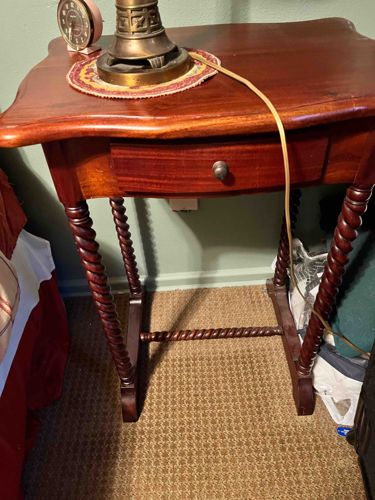
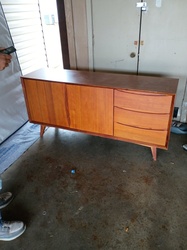
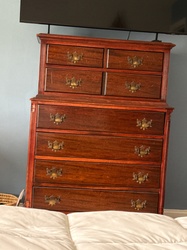
This item is an antique or vintage end table, likely constructed from mahogany or a similar dark, reddish-brown hardwood. The top of the table features a rectangular shape with gently serpentine or scalloped edges, adding a decorative touch. The surface exhibits a polished, lustrous finish, indicative of a well-maintained piece, though some minor surface wear such as light scratches or scuffs might be present consistent with age and use, though not clearly discernible from the provided image. A single drawer is integrated into the apron of the table, featuring a simple, round metal pull knob, possibly brass or patinated iron. The most distinctive characteristic of this table is its four turned legs, which are carved in a barley twist or spiral design. These legs terminate at the bottom into splayed feet, and are connected by a lower stretcher, also fashioned with the barley twist motif, contributing to the table's structural integrity and aesthetic appeal. The overall color is a rich, deep reddish-brown with visible wood grain. The style suggests an influence from Victorian or perhaps early 20th-century furniture design, often associated with a period favoring intricate turning and decorative elements. There are no clear manufacturer's marks or signatures visible, but the craftsmanship appears to be of good quality, with attention to detail in the turning work.
AI Appraisal Report
Having carefully examined the provided image of this Mahogany End Table with Barley Twist Legs, I assess its condition as good vintage. The polished, lustrous finish suggests good maintenance over time, though I anticipate minor surface wear such as light scratches or scuffs, consistent with age and use, that are not clearly discernible in the image. Authenticity, based solely on visual cues, points to a piece from the late Victorian to early 20th-century period, given the distinctive barley twist legs, serpentine top edges, and overall design aesthetic. The craftsmanship, particularly in the turning, appears solid. However, without physically examining the joinery, drawer construction, and wood grain up close, I cannot definitively confirm its age or construction quality. The metal pull knob, while simple, seems appropriate for the period.
Market conditions for antique and vintage occasional tables of this type are generally stable but not experiencing significant spikes in demand unless provenance or exceptional craftsmanship is present. Comparable sales of similar mahogany or dark wood end tables with turned or barley twist legs typically fall within the $200-$500 range, depending heavily on condition, exact age, and origin. This particular table’s rich color and serpentine top add to its aesthetic appeal, which can slightly elevate its desirability. The single drawer is a practical feature, enhancing its functionality. Rarity is moderate; while barley twist designs were popular, finding pieces in good, usable condition is always a factor.
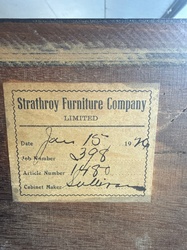
The primary factors impacting value are the good apparent condition and classic, decorative styling. Limitations in authenticity verification from images alone are significant; I cannot rule out later reproduction without inspecting the wood type, patina, and construction methods. For full authentication, I would need an in-person examination to assess wood species, joinery, and patination, and to look for manufacturer’s marks or labels that might be hidden or faint. Verification of the wood type (e.g., solid mahogany versus mahogany veneer over secondary wood) would also require a physical inspection.