AI Appraisal Estimate

AI-generated estimates · not official valuations

From the user

What was submitted

Photo and notes provided by the user — not generated by AI

Submitted item photo
Submitted photo · June 8, 2026

User's notes

Dragon Vase

AI analysis below

AI appraisal

AI analysis & estimate

AI-Generated · Verify before acting

Everything below is generated by AI for informational purposes only. AI can make mistakes — the AI may misidentify items or misattribute them (artist, maker, brand, designer, origin, era). This is not an official valuation and should not be used for insurance, sale, tax, estate, legal, or lending purposes — or any decision requiring a certified appraisal. It is not an authoritative claim about any person, brand, or rights holder — do not share or rely on it as a factual statement about a third party. Always consult qualified professionals before making financial decisions.

Note

This analysis also relies on unverified notes provided by the user, which may be incomplete or inaccurate and could affect the result.

Read the full disclaimer

AI Identification

·Not independently authenticated·Verify before acting

Ceramic Dragon Pot / Planter

Decorative Arts

AI Estimated Value

·Not an official valuation·Verify before acting

$60-90

As of June 8, 2026

AI Item Analysis

·AI can make mistakes·Verify before acting
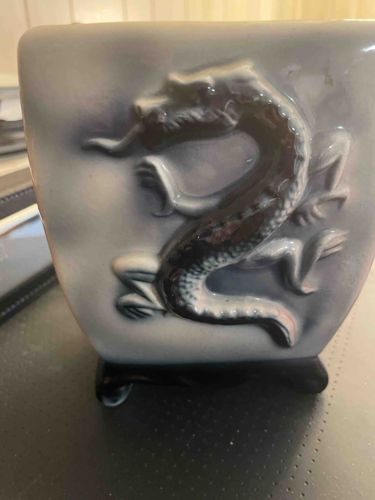
This is a ceramic decorative pot or planter, possibly a brush pot or small vase, featuring a prominent three-dimensional relief of a dragon. The item is square or rectangular in shape, with a distinctly grayish-blue or periwinkle base color that appears to have an iridescent or mottled quality, suggesting a special glaze, possibly celadon-like. The dragon motif is highly sculptural, executed in a darker shade of blue or black with lighter highlights, providing significant contrast and depth. The dragon's scales are intricately detailed, and its form suggests movement, with claws and limbs clearly visible. The overall surface exhibits a glossy finish. The base of the pot incorporates four squat feet, raising it slightly off the surface. There are no immediate visible signs of extensive damage such as large chips or cracks, though subtle crazing or minor surface wear associated with age and handling may be present upon closer inspection. The craftsmanship indicates a molded or slip-cast production with hand-applied details for the dragon, typical of items from the mid-20th century. Without visible maker's marks, precise manufacturing details are difficult to ascertain, but the style points towards an East Asian influence, likely Chinese or Japanese, or a Western interpretation of such motifs. The quality is indicative of mass-produced decorative ceramics rather than fine art pottery, but its thematic ornamentation provides a unique aesthetic appeal.
AI Appraisal Report

·AI can make mistakes·Verify before acting
Upon examination of the provided images, this ceramic pot, described as a 'Dragon Vase,' presents as a decorative planter or brush pot. The item's primary value lies in its striking visual appeal, characterized by a three-dimensional, high-relief dragon rendered in a dark glaze against a mottled, grayish-blue body. The form is likely slip-cast, with the dragon motif possibly hand-finished before glazing and firing. This production method, combined with the stylistic interpretation of the dragon, suggests a mid-20th-century origin, likely produced for the decorative export market in East Asia or by a Western manufacturer imitating Asian styles. The condition appears good from the images, with no major chips or cracks visible. However, the glossy glaze may hide fine crazing or surface scratches that would be apparent upon physical inspection. The value is primarily driven by its decorative quality rather than its age or rarity. The market for mid-century ceramics with Chinoiserie or Japanese-inspired motifs is steady, with collectors and decorators seeking visually interesting pieces. This pot fits well within that category. A significant limitation of this appraisal is the inability to physically inspect the piece. A hands-on examination would allow for the identification of any maker's marks, an assessment of the piece's weight and clay body, and a closer look at the glaze quality and any potential repairs. Without provenance or markings, its attribution remains speculative. Full authentication would require identifying a maker's mark or finding exact comparables in past auction records. Despite these limitations, it is a well-executed decorative object.

Get your items appraised

Instant estimates of your treasures with AI-powered appraisals

Browse More Appraisals