AI estimate as of October 19, 2025 · verify with a professional before acting
AI-Generated · Verify before acting
Everything on this page is generated by AI for informational purposes only. AI can make mistakes — the AI may misidentify items or misattribute them (artist, maker, brand, designer, origin, era). This is not an official valuation and should not be used for insurance, sale, tax, estate, legal, or lending purposes — or any decision requiring a certified appraisal. It is not an authoritative claim about any person, brand, or rights holder — do not share or rely on it as a factual statement about a third party. Always consult qualified professionals before making financial decisions.
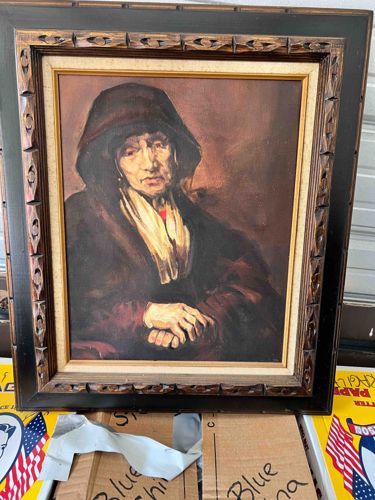
This item is a framed oil painting depicting a portrait of an elderly woman. The woman is rendered with a somber and aged expression, her face showing visible signs of wrinkles and a lifetime of experience. She is wearing a dark, possibly brown or deep red, hooded garment that casts shadows over her head and shoulders, contributing to a sense of antiquity or humble origins. A lighter-colored scarf or shawl, perhaps an off-white or cream, is visible around her neck, adding a subtle contrast to her dark attire. Her hands, clasped together at the bottom center of the painting, also appear aged and somewhat gnarled, painted in a soft, warm tone. The background of the portrait is a muted, reddish-brown, creating a sense of depth without distracting from the subject. The brushwork appears somewhat loose and expressive, characteristic of oil painting, with visible texture in the paint application. The painting is housed within a two-tiered wooden frame. The inner frame is a plain, light-colored wood, possibly gilded or simply natural wood. The outer frame is significantly wider and darker, featuring carved or molded decorative elements along its inner edge, resembling a repeating pattern of stylized floral or geometric motifs. The overall aesthetic suggests a traditional, possibly academic or genre painting style, likely from the mid-20th century or earlier. There are no obvious signs of significant damage such as tears or major paint loss visible in the image, though the overall condition of the frame and painting cannot be fully assessed without closer inspection. The dark patina on the outer frame suggests age and possibly some wear consistent with a vintage item. The craftsmanship of the painting appears competent, focusing on capturing the emotional depth of the subject.
AI Appraisal Report
Based on my visual examination of the provided image, this framed oil painting depicting an elderly woman in a hood appears to be in good overall condition for its age. There are no obvious signs of significant paint loss, tears, or major damage to the canvas that can be discerned from the photograph. The two-tiered wooden frame also appears sturdy, with a dark patina suggesting age and some wear consistent with a vintage item. The craftsmanship of the painting is competent, focusing on emotional depth in the subject's expression and aged features. This style, with its somewhat loose and expressive brushwork and traditional subject matter, suggests it is likely a mid-20th century genre or academic piece, possibly by an amateur or regional artist.
Market conditions for unsigned or unattributed portraits of this nature tend to be moderate. While there is a consistent demand for evocative portraiture, the lack of a known artist significantly impacts its investable value. Comparable sales for similar unsigned oil portraits from the mid-20th century typically fall within the $200-$600 range, depending on quality, size, and condition. The decorative, period frame adds some aesthetic appeal but does not dramatically increase the value unless it is an antique in its own right.
Factors limiting the higher end of the appraisal include the absence of a signature, provenance, or artist attribution. Without these, it remains a decorative piece rather than a collectible work of art by a recognized hand.
It is crucial to note that this assessment is based solely on the provided image. A full authentication would require an in-person examination to inspect the canvas, stretcher, and paint layers for signs of age and technique, and to search for any faint signatures. Scientific testing could verify paint composition and age. Provenance documentation, such as bills of sale or exhibition history, would be essential to establish a definitive attribution and potentially significantly increase its value.