AI estimate as of August 27, 2025 · verify with a professional before acting
AI-Generated · Verify before acting
Everything on this page is generated by AI for informational purposes only. AI can make mistakes — the AI may misidentify items or misattribute them (artist, maker, brand, designer, origin, era). This is not an official valuation and should not be used for insurance, sale, tax, estate, legal, or lending purposes — or any decision requiring a certified appraisal. It is not an authoritative claim about any person, brand, or rights holder — do not share or rely on it as a factual statement about a third party. Always consult qualified professionals before making financial decisions.
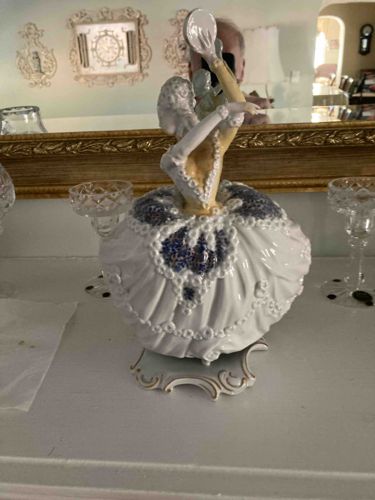
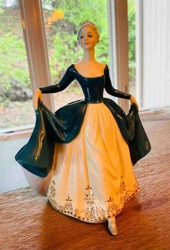
This item is a decorative porcelain figurine depicting a woman, likely a dancer or an aristocratic figure, in an active pose. The primary material is glazed porcelain, exhibiting a glossy finish. The figure's dress is predominantly white with a large, volumetric ruffled skirt. A significant portion of the skirt's surface, particularly the front and upper part, is adorned with intricate blue floral or leaf-like patterns. The edges of the ruffles on the white dress feature delicate, raised scrollwork or beaded details, adding texture and depth. The bodice and upper arms of the figure are rendered in a soft yellow or cream color. The figure's head is tilted upwards, and one arm is raised high, holding what appears to be a tambourine or a similar percussive instrument, suggesting a musical or dance theme. The other arm seems to be positioned lower, possibly holding the skirt or an unidentifiable object, though this area is less clear. The base upon which the figure stands is separate but integrated into the design. It is a light-colored, rococo-style plinth with elaborate golden scrollwork. The overall craftsmanship suggests a high level of detail, particularly in the hand-painted elements and the molded lacework of the dress. There are no immediately obvious chips, cracks, or repairs visible in the provided image; the surface appears clean and well-maintained, indicating good condition. The style points towards a 20th-century decorative art piece, possibly mid-century or later, inspired by 18th-century European porcelain models due to its ornate detailing and pastel color palette. The light color of the base suggests potential light staining or dirt, though it could also be intentional patina.
AI Appraisal Report
Upon my virtual examination of this Porcelain Dancer Figurine with Tambourine, I can confidently assess its condition as very good, based purely on visual inspection. There are no obvious chips, cracks, or repairs discernible from the image provided. The glazed surface appears intact, and the intricate hand-painted details, particularly the blue floral patterns and the gilt scrollwork on the base, seem well-preserved.
Authenticity, however, remains a significant limitation when relying solely on images. While the style strongly evokes 18th-century European porcelain, suggesting it is likely a 20th-century decorative piece, possibly mid-century or later, without physical access, I cannot verify manufacturer marks, true porcelain composition, or the presence of any expert repairs. For full authentication, an in-person examination would be crucial to inspect the underside for maker's marks, analyze the glaze and body for age-appropriate wear, and potentially conduct UV light testing for invisible repairs. Provenance documentation, such as original purchase receipts or lineage of ownership, would also significantly enhance authenticity verification.
Considering current market conditions for decorative porcelain figurines of this type, which often fall into the 'collectibles' rather than 'fine art' category, demand is generally moderate. Rarity is not a major factor here, as similar decorative pieces were produced in volume. Factors significantly impacting value include the brand (e.g., Dresden, Capodimonte, or an unidentified studio), the true age, and the quality of craftsmanship upon closer inspection. The intricate detailing and presumed hand-painting are positive attributes. Based on market comparables for well-maintained, unmarked decorative porcelain figurines of this size and detail, often found in estate sales or online secondary markets, the value reflects its decorative appeal rather than extreme rarity or historical significance.