AI identification & appraisal estimate

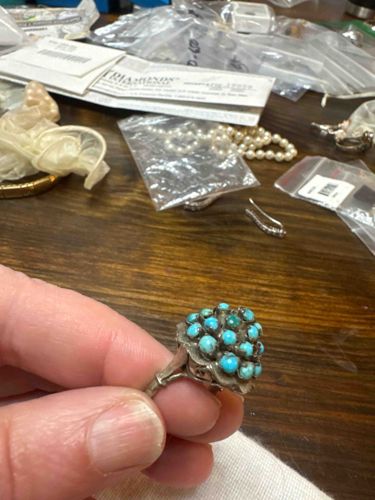
Victorian-Style Sterling Silver and Turquoise Cluster Mound Ring

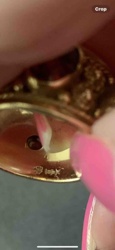
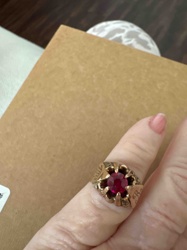
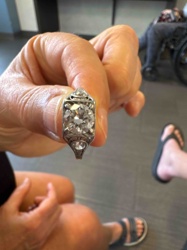
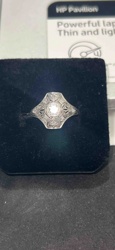
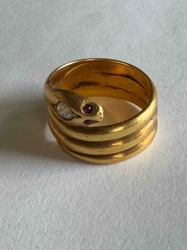
Submitted photo of Victorian-Style Sterling Silver and Turquoise Cluster Mound Ring
Photo submitted by the user — not generated by AI

User's notes

Antique silver and toquiose mound ring

These notes were written by the person who submitted this item. Appraiser.AI has not verified them, and the AI's identification and estimate may rely on them.

AI Estimated Value

Not an official valuation

$150 - $275

AI estimate as of February 14, 2026 · verify with a professional before acting

AI-Generated · Verify before acting

Everything on this page is generated by AI for informational purposes only. AI can make mistakes — the AI may misidentify items or misattribute them (artist, maker, brand, designer, origin, era). This is not an official valuation and should not be used for insurance, sale, tax, estate, legal, or lending purposes — or any decision requiring a certified appraisal. It is not an authoritative claim about any person, brand, or rights holder — do not share or rely on it as a factual statement about a third party. Always consult qualified professionals before making financial decisions.

This analysis also relies on unverified notes provided by the user, which may be incomplete or inaccurate and could affect the result.

Read the full disclaimer

AI Item Analysis

This is an intricate antique-style mound ring featuring a dense cluster of sky-blue turquoise cabochons. The ring is constructed with a tiered, three-dimensional 'mound' or 'beehive' center, a design popular in the Victorian era through the mid-20th century. The individual turquoise stones are small, round-cut pieces approximately 2-3mm in diameter, each secured within a silver bezel or prong setting. The metal appears to be sterling silver, exhibiting a significant dark grey patina in the recessed areas, which provides a high-contrast aesthetic that emphasizes the vibrant blue of the gemstones. The shank of the ring features decorative split-shoulder detailing where it meets the ornate gallery. The construction suggests hand-finishing, evidenced by the slight irregularities in the stone placement. Regarding condition, the piece shows visible signs of age including surface oxidation (tarnish) and some scuffing on the silver band. One or two of the turquoise stones appear to have a slight green shift, which is a common occurrence in genuine aged turquoise due to skin oil absorption over decades. There are no visible maker's marks or hallmarks on the exterior, though they may be present on the interior of the band. This piece exhibits characteristic craftsmanship of Southwestern or European revival jewelry, likely dating from the early to mid-20th century.
AI Appraisal Report

Based on my visual examination of the provided imagery, I have evaluated this Victorian-style sterling silver and turquoise mound ring. The piece features the classic 'beehive' or 'mound' construction, characterized by concentric tiers of small (approx. 2-3mm) turquoise cabochons. The presence of varied hues in the turquoise, specifically the greenish shift in certain stones, is a strong indicator of genuine turquoise aging through the absorption of skin oils, which lends the piece authentic vintage character. The heavy patina in the recesses offers excellent contrast, typical of older sterling pieces, though without a visible '.925' or maker's mark in the images, I am making a provisional assumption of sterling finesse based on the oxidation patterns. The market for vintage turquoise cluster rings, particularly those mimicking Victorian aesthetics or potentially of Southwestern origin (often referred to as 'Fred Harvey era' or similar tourist trade styles), remains steady but accessible. This is likely a mid-20th-century revival piece rather than genuine heavy Victorian mourning jewelry, given the specific bezel work and shank construction. While not exceedingly rare, the intricate setting work commands a premium over simpler bands. Factors impacting value include the integrity of the setting (checking for loose stones is critical) and the lack of maker's marks, which prevents attribution to a specific collectible artist. My valuation assumes the metal is solid silver rather than plated base metal. For a definitive confirmation of value, an in-person acid test for silver purity and a microscopic inspection of the turquoise matrix to rule out dyed howlite or block turquoise would be required.

Keep exploring

More fine jewelry / antique rings appraisals

Get your items appraised

Instant AI-powered appraisal estimates from a photo

Browse More Appraisals