AI estimate as of July 23, 2026 · verify with a professional before acting
AI-Generated · Verify before acting
Everything on this page is generated by AI for informational purposes only. AI can make mistakes — the AI may misidentify items or misattribute them (artist, maker, brand, designer, origin, era). This is not an official valuation and should not be used for insurance, sale, tax, estate, legal, or lending purposes — or any decision requiring a certified appraisal. It is not an authoritative claim about any person, brand, or rights holder — do not share or rely on it as a factual statement about a third party. Always consult qualified professionals before making financial decisions.
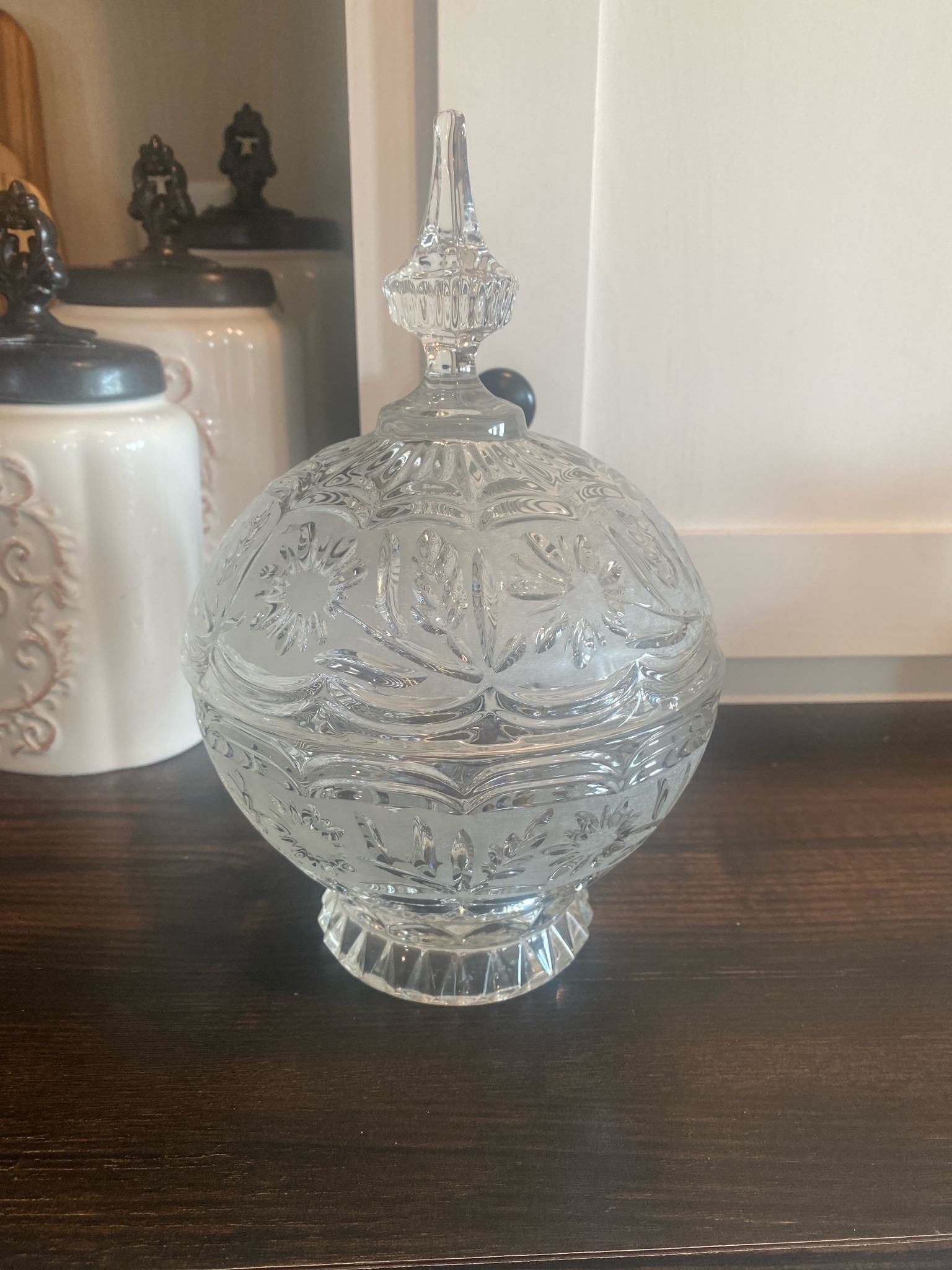
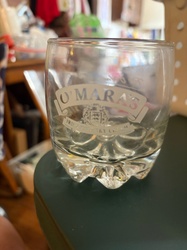
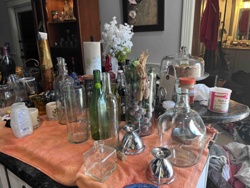
This object appears to be a clear cut glass or pressed glass covered dish, possibly intended as a candy dish or apothecary jar, featuring an ornate finial lid. The vessel is spherical or bulbous in form, supported by a short, pedestal-style base with multi-faceted cut details. The main body and lid exhibit a combination of clear geometric molded or cut glass patterns alongside frosted or etched floral and leaf motifs around the perimeter. The glass appears transparent and bright, showing light refraction consistent with lead crystal or heavy pressed glass, though material testing in person would be required to confirm composition. There are no visible maker's marks, signatures, or acid stamps detectable in the provided photograph, so any specific manufacturer attribution (such as Mikasa, Princess House, or Waterford) remains unverified. The piece appears to be in good visual condition with no obvious chips, cracks, or heavy scratching visible, although minor surface wear consistent with age and use may be present upon physical inspection. The design elements are stylistically consistent with mid-to-late 20th-century decorative glassware.
AI Appraisal Report
Based on what I can see in the provided image, this object is a mid-to-late 20th-century decorative clear glass covered dish featuring a combination of cut geometric patterns and frosted floral motifs with an ornate finial lid. The material shows light refraction typical of lead crystal or heavy pressed glass, but I cannot verify its exact chemical composition, weight, or sound resonance without a physical inspection. Furthermore, no maker's marks, signatures, or acid stamps are visible in the photo, making any specific brand attribution—such as to Princess House, Mikasa, or similar manufacturers—a working hypothesis rather than an established fact.
From a visual perspective, the piece appears to be in good secondary-market condition, free of obvious chips, cracks, or heavy clouding, though microscopic flea bites or base wear would need in-person examination to confirm.
My value estimate of $15 to $35 reflects general market conditions for unsigned, mass-produced mid-century decorative glassware of this style. Items of this type are widely available on the secondary market and generally appeal to casual decorators or table setting collectors rather than high-end crystal buyers. If a physical inspection were to reveal a recognized manufacturer's mark, or if provenance documentation could link it to a premier maker like Waterford, the value might shift slightly upward toward $40 to $60. Conversely, if in-person testing reveals significant surface scratching, flea bites along the inner rim, or lower-quality soda-lime glass composition, the fair market value would likely drop below $10. To establish a precise value, an in-person examination by a glass specialist would be required.