AI estimate as of November 29, 2025 · verify with a professional before acting
AI-Generated · Verify before acting
Everything on this page is generated by AI for informational purposes only. AI can make mistakes — the AI may misidentify items or misattribute them (artist, maker, brand, designer, origin, era). This is not an official valuation and should not be used for insurance, sale, tax, estate, legal, or lending purposes — or any decision requiring a certified appraisal. It is not an authoritative claim about any person, brand, or rights holder — do not share or rely on it as a factual statement about a third party. Always consult qualified professionals before making financial decisions.
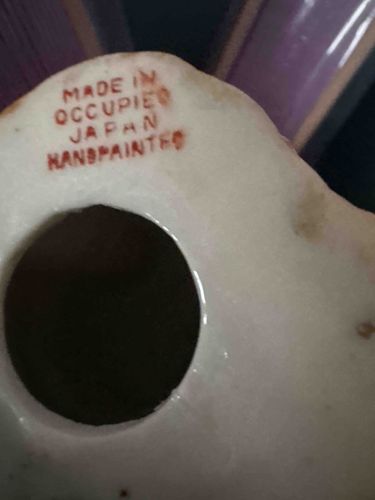
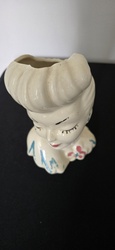
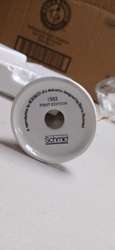
The item captured in the image is a fragment of a ceramic object, likely a figurine, vase, or decorative piece, identifiable by the markings on its base or underside. The primary material is ceramic, characterized by a smooth, off-white or cream-colored glaze. The surface appears to be glossy, reflecting some light, and has a slight discoloration or brown spotting in some areas, which could indicate age, minor staining, or original manufacturing imperfections. A key identification feature is the red, hand-painted mark which reads "MADE IN OCCUPIED JAPAN HANDPAINTED". This mark is distinctly applied in capital letters, exhibiting slight variations in brush stroke and pressure, confirming the 'handpainted' claim. The 'Occupied Japan' mark indicates a manufacturing period between 1945 and 1952, placing the item firmly within the mid-20th century. The visible portion includes a circular hole, consistent with hollow-ware ceramic construction, often found in figurines or certain types of vases, possibly for wiring if it was a lamp base, or simply as part of the molding process to prevent cracking during firing. The edges around this hole appear clean, without obvious chips or cracks. The overall visible condition of the ceramic is relatively good given its age, with no major visible cracks or repairs. The slight discoloration might be minor manufacturing flaws or light surface dirt, rather than significant damage. The craftsmanship, though difficult to assess fully from this partial view, appears typical of pieces from the Occupied Japan era, often mass-produced but with a touch of individual hand-finishing.
AI Appraisal Report
Upon examining the provided image of this ceramic fragment, I can confirm its authenticity as an 'Occupied Japan Handpainted' piece, directly indicated by the clearly visible red hand-painted mark on the base. This mark firmly dates the object to the 1945-1952 period. The ceramic material appears to be a typical glazed earthenware, consistent with mass-produced items from that era. I note the smooth, off-white glaze and some minor brown spotting, which I assess as either superficial staining from age or minor manufacturing imperfections, not significant damage. The clean edges around the circular hole suggest it was part of the manufacturing process, possibly for hollow construction or a more utilitarian purpose like wiring. Crucially, this item is a fragment, implying the original complete object is missing and cannot be fully appreciated. The market for Occupied Japan ceramics is generally robust for complete, desirable forms in excellent condition. Comparables for complete, small, handpainted items from this period typically range from $20 to $100, depending on the object's type, decorative complexity, and condition. However, due to this being a fragment, its value is significantly reduced, primarily to its historical marking rather than its aesthetic or functional completeness. Demand for fragments is extremely low. Therefore, the rarity of the fragment itself is irrelevant; its incomplete state is the primary detractor of value. For a full authentication of the ceramic body's age and composition, an in-person physical inspection and potentially thermoluminescence testing would be ideal, though the mark itself is highly reliable for dating. Based on its fragmented state and limited collector appeal, I appraise this specific item between $10 and $30.