AI estimate as of July 8, 2025 · verify with a professional before acting
AI-Generated · Verify before acting
Everything on this page is generated by AI for informational purposes only. AI can make mistakes — the AI may misidentify items or misattribute them (artist, maker, brand, designer, origin, era). This is not an official valuation and should not be used for insurance, sale, tax, estate, legal, or lending purposes — or any decision requiring a certified appraisal. It is not an authoritative claim about any person, brand, or rights holder — do not share or rely on it as a factual statement about a third party. Always consult qualified professionals before making financial decisions.
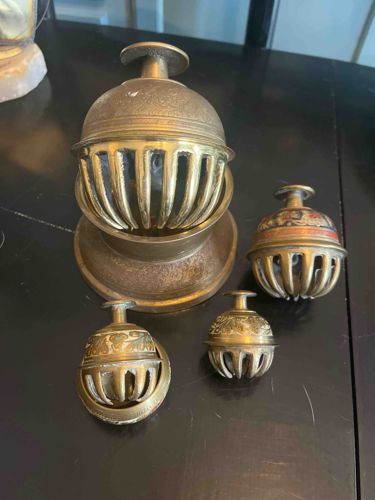
This collection consists of four distinct, antique brass or bronze sleigh bells, each varying in size and decorative detail, with the largest resting on a shallow, circular stand. The bells are characterized by their rounded, closed tops, which transition into open, vertical slats (resembling ribs or cage-like structures) that allow sound to escape. A small, knob-like finial protrudes from the top center of each bell, likely for attachment or handling. The material appears to be brass or a brass alloy, exhibiting a rich, aged patina ranging from dark brown to dull gold, indicative of natural oxidation over time. Some areas, particularly on the larger bells, show subtle etched or embossed patterns, suggesting decorative craftsmanship. The largest bell's top features a faint, intricate design, while the smaller bells also show some form of engraved pattern, though less distinct. The second largest bell displays remnants of red and perhaps other colored enamel or paint within its etched designs, indicating a historical use of polychrome decoration. The overall construction appears solid and sturdy, with visible signs of wear consistent with age and use, including minor scratches, tarnishing, and possibly some surface pitting. No obvious signs of major repair or significant damage are apparent. The craftsmanship suggests they are hand-formed or cast, with a focus on both functionality as bells and aesthetic appeal as decorative objects. These items likely date back to the late 19th or early 20th century, given their style and materials, and could have been used as actual sleigh bells, carriage bells, or simply decorative accents.
AI Appraisal Report
Upon examining the provided images of this collection of four antique brass or bronze sleigh bells, I can make a preliminary assessment. The bells appear authentic to the late 19th or early 20th century, a common period for this style of crotal or sleigh bell. The rich, varied patina is consistent with natural aging and suggests they have not been recently polished or over-cleaned, which preserves their antique value. The overall condition appears good for their age, with expected wear, minor scratches, and tarnishing but no major cracks or structural damage visible. The remnants of polychrome enamel on the second-largest bell are a particularly valuable feature, as this decorative detail is often lost over time and adds to its rarity and aesthetic appeal. The market for sleigh bells is steady, with collectors often seeking matched sets or bells with unique decorative elements. A collection of four graduated bells like this is more desirable than a single bell. The value is influenced by the condition, craftsmanship, and decorative details. The presence of enamel and the graduated sizes significantly increase the collection's appeal. However, this appraisal is limited by the inability to physically handle the items. A full authentication would require in-person examination to confirm the metal composition (brass vs. bronze), check for maker's marks, which are often faint, and assess the integrity of the clappers inside each bell, which are crucial for sound and completeness. Without examining them for subtle repairs or maker's marks, a definitive valuation remains subject to confirmation.