Paleolithic Biface Chert Hand Axe Scraper
Archaeological Artifacts / Prehistoric Stone Tools

Paleolithic Biface Chert Hand Axe Scraper

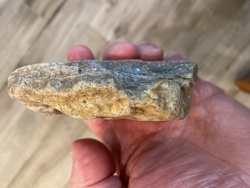
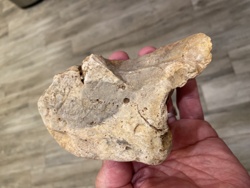
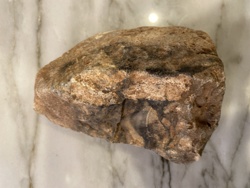
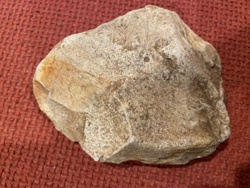
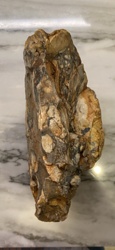
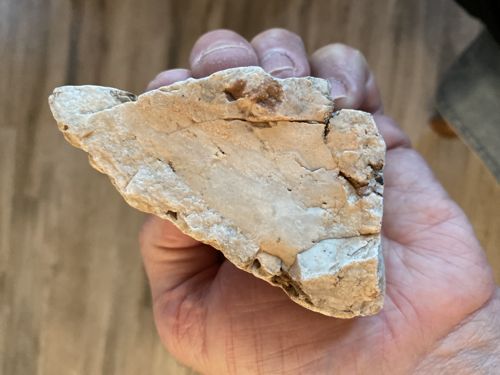
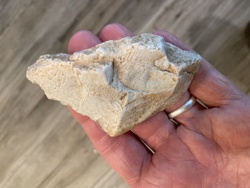
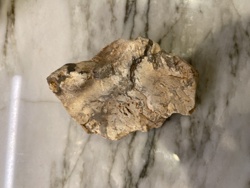
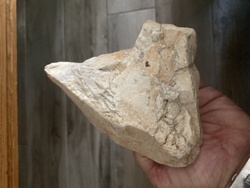
A prehistoric lithic tool, specifically a biface hand axe/scraper crafted from light-colored chert. The item measures approximately 3 inches in length by 2 inches in width, exhibiting a sub-triangular or amygdaloid form. The raw material is an opaque, cream-to-tan chert with subtle reddish-brown mineral inclusions or staining on the upper dorsal surface. Its construction demonstrates percussion flaking along the margins to create workable edges, a common characteristic of Paleolithic lithic reduction. The texture appears weathered with significant patination, indicating substantial age and exposure to environmental elements. There are visible step fractures and irregular flake scars that suggest both manufacture and heavy use as a scraping or cutting implement. The condition is consistent with an archaeological find; it shows significant edge wear and some modern micro-chipping, although the primary shape and bulbous profile remain intact. The craftsmanship indicates functional prehistoric utility rather than fine ceremonial knapping, making it a representative example of utilitarian stone age technology from the Guthrie, Oklahoma region. No modern markings or signatures are present, consistent with its ancient origin and style period.
Estimated Value

$60-$120

Basic Information

Category

Archaeological Artifacts / Prehistoric Stone Tools

Appraised On

February 25, 2026

Estimated Value

$60-$120

Additional Details Provided By Owner

User Provided Information

A Paleolithic chert bi face hand axe scraper found in Guthrie OK measuring 3" x 2"

Item Description

A prehistoric lithic tool, specifically a biface hand axe/scraper crafted from light-colored chert. The item measures approximately 3 inches in length by 2 inches in width, exhibiting a sub-triangular or amygdaloid form. The raw material is an opaque, cream-to-tan chert with subtle reddish-brown mineral inclusions or staining on the upper dorsal surface. Its construction demonstrates percussion flaking along the margins to create workable edges, a common characteristic of Paleolithic lithic reduction. The texture appears weathered with significant patination, indicating substantial age and exposure to environmental elements. There are visible step fractures and irregular flake scars that suggest both manufacture and heavy use as a scraping or cutting implement. The condition is consistent with an archaeological find; it shows significant edge wear and some modern micro-chipping, although the primary shape and bulbous profile remain intact. The craftsmanship indicates functional prehistoric utility rather than fine ceremonial knapping, making it a representative example of utilitarian stone age technology from the Guthrie, Oklahoma region. No modern markings or signatures are present, consistent with its ancient origin and style period.
Get Your Items Appraised

Instant estimates of your treasures with AI-powered instant appraisals

Browse More Appraisals