Small Flint Pebble or Nodule
Geological Specimens / Minerals

Small Flint Pebble or Nodule

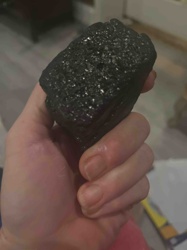
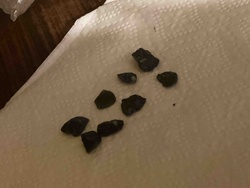
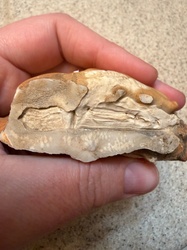
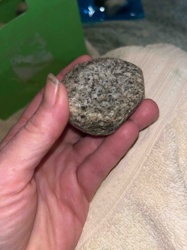
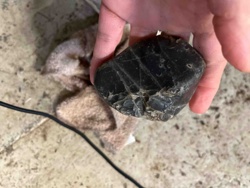
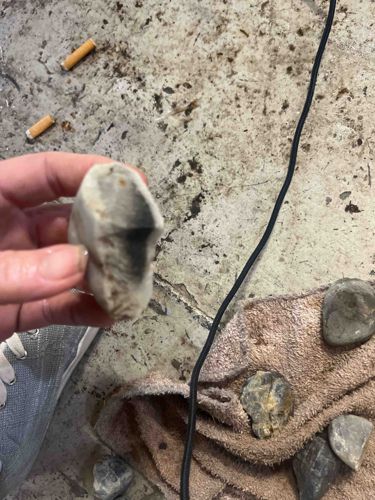
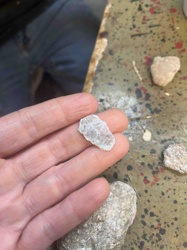
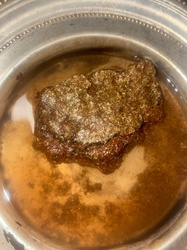
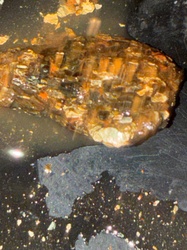
This item is a small, irregularly shaped geological specimen, likely a flint or chert pebble. It measures approximately 1 to 1.5 inches in length. The exterior exhibits a light gray and tan cortex, while a fractured surface reveals a darker gray to black interior, characteristic of silica-rich sedimentary rock. The stone shows signs of natural wear with rounded edges, suggesting it may have been water-borne or weathered over a long duration. There is a prominent concave fracture on one face that appears relatively fresh compared to the outer rind, showing the sharp, conchoidal (glass-like) breaking pattern typical of this material. Surface condition includes some dirt and minor staining consistent with being found outdoors or in a workshop environment. It lacks any definitive evidence of human modification, such as purposeful knapping or retouching that would classify it as a lithic tool; thus, it remains in its natural, unworked state. The presence of other small stones nearby suggests this is part of a larger collection of found minerals or geological curiosities. No maker's marks or cultural signatures are present, indicating a purely natural origin from the Cretaceous or older geological periods.
Estimated Value

$1 - $5

Basic Information

Category

Geological Specimens / Minerals

Appraised On

April 7, 2026

Estimated Value

$1 - $5

Item Description

This item is a small, irregularly shaped geological specimen, likely a flint or chert pebble. It measures approximately 1 to 1.5 inches in length. The exterior exhibits a light gray and tan cortex, while a fractured surface reveals a darker gray to black interior, characteristic of silica-rich sedimentary rock. The stone shows signs of natural wear with rounded edges, suggesting it may have been water-borne or weathered over a long duration. There is a prominent concave fracture on one face that appears relatively fresh compared to the outer rind, showing the sharp, conchoidal (glass-like) breaking pattern typical of this material. Surface condition includes some dirt and minor staining consistent with being found outdoors or in a workshop environment. It lacks any definitive evidence of human modification, such as purposeful knapping or retouching that would classify it as a lithic tool; thus, it remains in its natural, unworked state. The presence of other small stones nearby suggests this is part of a larger collection of found minerals or geological curiosities. No maker's marks or cultural signatures are present, indicating a purely natural origin from the Cretaceous or older geological periods.
Get Your Items Appraised

Instant estimates of your treasures with AI-powered instant appraisals

Browse More Appraisals