AI estimate as of August 27, 2025 · verify with a professional before acting
AI-Generated · Verify before acting
Everything on this page is generated by AI for informational purposes only. AI can make mistakes — the AI may misidentify items or misattribute them (artist, maker, brand, designer, origin, era). This is not an official valuation and should not be used for insurance, sale, tax, estate, legal, or lending purposes — or any decision requiring a certified appraisal. It is not an authoritative claim about any person, brand, or rights holder — do not share or rely on it as a factual statement about a third party. Always consult qualified professionals before making financial decisions.
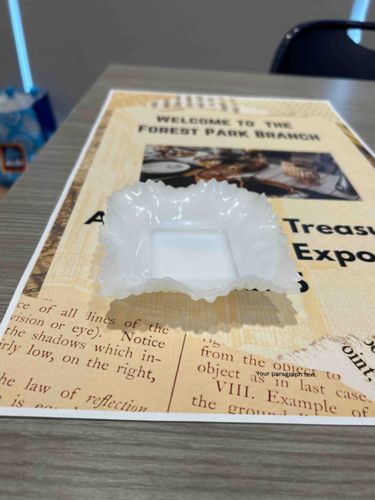
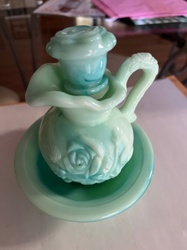
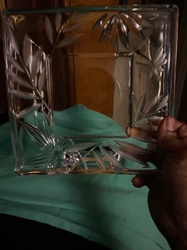
This item is a small, square-shaped dish or bowl, crafted from opaque white glass, commonly known as milk glass. Its most distinctive feature is the highly decorative, ruffled or fluted rim, which appears to be intricately molded with a floral or leaf-like pattern, giving it an organic, delicate edge. The interior of the dish features a smooth, flat bottom. The exterior sides also exhibit textured patterns, consistent with molded glass, though the specific details are not entirely clear from the image. The piece has a somewhat delicate appearance due to its ornate edge, suggesting it was intended for decorative purposes or serving small confections. There are no visible chips, cracks, or significant wear, indicating it is in good overall condition. Milk glass items were particularly popular from the late 19th through mid-20th centuries, often mass-produced, but the intricate molding suggests a certain level of craftsmanship. Without a maker's mark, precise manufacturing details or age are difficult to ascertain, but its style points towards a mid-20th century production, possibly from a company known for decorative glass such as Fenton or Westmoreland, though this is speculative.
AI Appraisal Report
Upon examining the provided image of this Milk Glass Square Ruffled Dish, I note its excellent visual condition; there are no chips, cracks, or significant wear apparent, which bodes well for its marketability. Its intricate ruffled rim with an apparent floral or leaf-like pattern speaks to a mid-20th-century aesthetic, characteristic of decorative milk glass pieces. The smooth interior and textured exterior are consistent with molded glass production from that era. Authenticity, based solely on this image, seems probable as a genuine milk glass item. However, without a physical inspection, specific maker's marks vital for definitive attribution (e.g., Fenton, Westmoreland) cannot be confirmed. Physical examination would permit me to ascertain the quality of the glass, detect any subtle imperfections, and search for faint marks often obscured in photographs. Furthermore, provenance documentation detailing its history of ownership would significantly bolster its authenticity and value. Scientific testing, while generally unwarranted for common milk glass, could confirm material composition if there were any doubts.
In terms of market conditions, mid-20th-century milk glass remains consistently popular among collectors, though it's generally not considered rare. Demand is steady for pieces in excellent condition with attractive designs. This specific square, ruffled form is a desirable variation. Comparable sales for similar well-preserved, decorative milk glass bowls typically range from $15 to $40. Factors impacting value include the absence of damage, the appealing design, and potential, though unconfirmed, attribution to a notable manufacturer. Given that this is a common decorative item, rarity is low, and thus the value is modest.