AI Appraisal Estimate

AI-generated estimates · not official valuations

From the user

What was submitted

Photo and notes provided by the user — not generated by AI

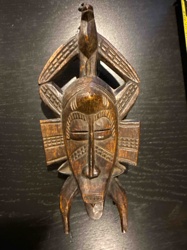
Submitted item photo
Submitted photo · May 25, 2026

User's notes

Wooden statue

AI analysis below

AI appraisal

AI analysis & estimate

AI-Generated · Verify before acting

Everything below is generated by AI for informational purposes only. AI can make mistakes — the AI may misidentify items or misattribute them (artist, maker, brand, designer, origin, era). This is not an official valuation and should not be used for insurance, sale, tax, estate, legal, or lending purposes — or any decision requiring a certified appraisal. It is not an authoritative claim about any person, brand, or rights holder — do not share or rely on it as a factual statement about a third party. Always consult qualified professionals before making financial decisions.

Note

This analysis also relies on unverified notes provided by the user, which may be incomplete or inaccurate and could affect the result.

Read the full disclaimer

AI Identification

·Not independently authenticated·Verify before acting

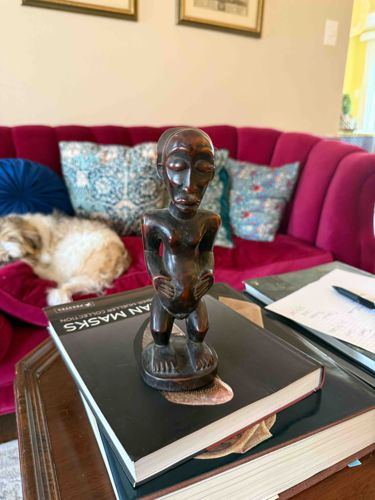
Bakongo Style African Wood Power Figure (Nkisi)

African Tribal Art & Collectibles

AI Estimated Value

·Not an official valuation·Verify before acting

$400 - $650

As of May 25, 2026

AI Item Analysis

·AI can make mistakes·Verify before acting
This is a hand-carved wooden statue representing a human figure, stylistically consistent with the Bakongo peoples of Central Africa. The figure is carved from a single piece of dense, dark hardwood and features a highly polished deep brown patina that appears aged and well-handled. The figure stands on an integrated elliptical base with large, simplified feet and toes. The anatomy is stylized with a large, elongated head, heavy lidded almond-shaped eyes, a broad nose, and distinctively carved lips. The hands are placed prominently on the slightly protruding abdomen, a gesture often associated with fertility or ancestral power. The torso is smoothed with soft muscular definition. Notably, the top of the head appears to have a slight depression or carved ridge that may have originally held ritual materials or served a symbolic purpose. The surface shows a high level of craftsmanship with smooth transitions and a rich sheen, though fine cracks (desiccation) are visible on the base and legs, typical of aged wood. There is a slight visible wear on the high points of the brow and shoulders. This piece likely dates to the mid-20th century and was created for either local ritual use or as an early export for the burgeoning mid-century African art market.
AI Appraisal Report

·AI can make mistakes·Verify before acting
I have conducted a visual examination of this African Wood Power Figure (Nkisi), carved in the tradition of the Bakongo peoples. The figure demonstrates classic stylistic markers, including the hand-to-abdomen gesture and the polished deep brown patina indicative of dense hardwood. While the craftsmanship is competent, several indicators suggest this piece likely dates to the mid-20th century, potentially serving as a high-quality 'atelier' piece intended for the early export market rather than a village-used ritual object. The desiccation cracks on the base are consistent with the natural aging of hardwood in varying climates, and the surface sheen suggests frequent handling or an applied wax finish common in decorative pieces. The market for mid-century Bakongo-style carvings remains stable, though price appreciation is strictly tied to provenance and evidence of ritual use. Without 'bilongo' (sacred medicinal material) present or a clear history of collection by a recognized colonial official or ethnographer, the item is valued as a decorative collectible rather than a museum-grade antiquity. Recent auction results for similar undocumented wood figures range from $350 to $800 depending on the size and wood density. Critically, this appraisal is based on photographic evidence alone. Identifying the difference between genuine 'sacrificial patina' (crusty layers of palm oil or blood) and synthetic aging requires physical inspection. To finalize authentication, I would require provenance documentation or Carbon-14 testing of the wood. An in-person examination under UV light would also be necessary to detect any hidden repairs or chemical stains used to simulate age. The presence of the head ridge suggests potential for higher value if it were proven to be a vessel for ritual power substances, but currently, it is valued as an aesthetic mid-century export.

Get your items appraised

Instant estimates of your treasures with AI-powered appraisals

Browse More Appraisals