AI Appraisal Estimate

AI-generated estimates · not official valuations

From the user

What was submitted

Photo and notes provided by the user — not generated by AI

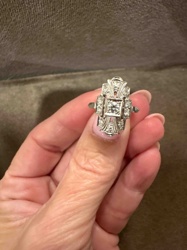
Submitted item photo
Submitted photo · May 17, 2026

User's notes

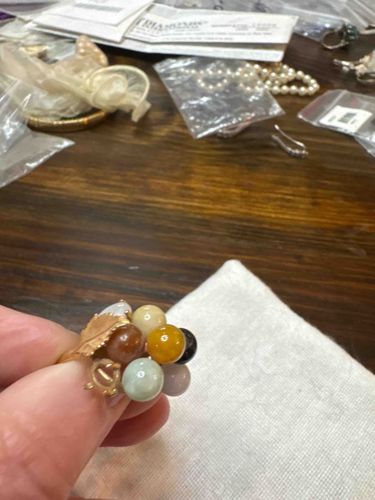
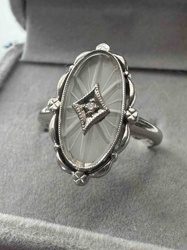
Antique jade and gold ring from Japan. Missing two stones. From 1955

AI analysis below

AI appraisal

AI analysis & estimate

AI-Generated · Verify before acting

Everything below is generated by AI for informational purposes only. AI can make mistakes — the AI may misidentify items or misattribute them (artist, maker, brand, designer, origin, era). This is not an official valuation and should not be used for insurance, sale, tax, estate, legal, or lending purposes — or any decision requiring a certified appraisal. It is not an authoritative claim about any person, brand, or rights holder — do not share or rely on it as a factual statement about a third party. Always consult qualified professionals before making financial decisions.

Note

This analysis also relies on unverified notes provided by the user, which may be incomplete or inaccurate and could affect the result.

Read the full disclaimer

AI Identification

·Not independently authenticated·Verify before acting

Mid-Century Japanese Multi-Color Jadeite Bead and Gold Foliate Ring (c. 1955)

Antique and Vintage Jewelry

AI Estimated Value

·Not an official valuation·Verify before acting

$450.00 - $650.00

As of May 17, 2026

AI Item Analysis

·AI can make mistakes·Verify before acting
This is a mid-century vintage cocktail ring of Japanese origin, dated back to approximately 1955. The ring is constructed of yellow gold, featuring an ornate organic 'grape cluster' or floral design. The central motif consists of several round, polished jadeite beads in various natural hues, including celadon green, honey yellow, lavender, and mahogany brown. A textured gold leaf with fine veining detail accents one side of the gem cluster. The construction is a typical post-and-glue mounting style common in mid-20th-century Japanese fine jewelry. Regarding physical condition, the item has significant damage as it is missing two visible stones from their respective gold post mounts. One empty mounting shows four distinct prongs or a cup-style seat where a bead once sat. There appears to be light surface scratching on the gold shank and leaf, consistent with age and wear, along with a mild patina in the recessed areas of the foliate elements. The jadeite beads themselves appear to have a good luster and uniform polish, though they vary in opacity. Despite the missing stones, the craftsmanship of the hand-textured gold leaf indicates high-quality mid-century production typical of export-quality jewelry from this period in Japan.
AI Appraisal Report

·AI can make mistakes·Verify before acting
I have examined the images and descriptions of this Mid-Century Japanese multi-colored jadeite and gold ring, circa 1955. From a stylistic perspective, the organic 'grape cluster' aesthetic and hand-textured foliate work are hallmark characteristics of high-quality Japanese export jewelry of the era. The use of varied jadeite hues—lavender, honey, and green—adds significant visual interest and desirability to the piece. However, the value is heavily impacted by the physical condition. The loss of two jadeite beads from their post mounts is a significant detractor. While the remaining stones demonstrate high luster, the asymmetry caused by the missing components moves this piece into the 'repair/salvage' category for many collectors. The current market for mid-century multi-stone jewelry remains stable, but buyers typically demand complete specimens unless the gold weight or specific designer provenance is exceptional. Critically, a visual examination via photograph cannot definitively confirm the gold purity (likelihood of 14k or 18k based on period) or the treatment status of the jadeite. To provide a fully authenticated valuation, I would require an in-person acid or XRF test of the metal and a gemological inspection of the beads to ensure they are 'Type A' (natural) jadeite rather than polymer-impregnated or dyed. Provenance documentation or a maker’s mark on the inner shank would also be necessary to elevate the value into a higher tier. Given the missing stones and current estimated metal value, the appraisal reflects the item's state as a high-quality restoration project rather than a mint-condition collectible.

Get your items appraised

Instant estimates of your treasures with AI-powered appraisals

Browse More Appraisals