AI Appraisal Estimate

AI-generated estimates · not official valuations

From the user

What was submitted

Photo and notes provided by the user — not generated by AI

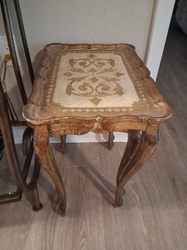
Submitted item photo
Submitted photo · May 30, 2026

User's notes

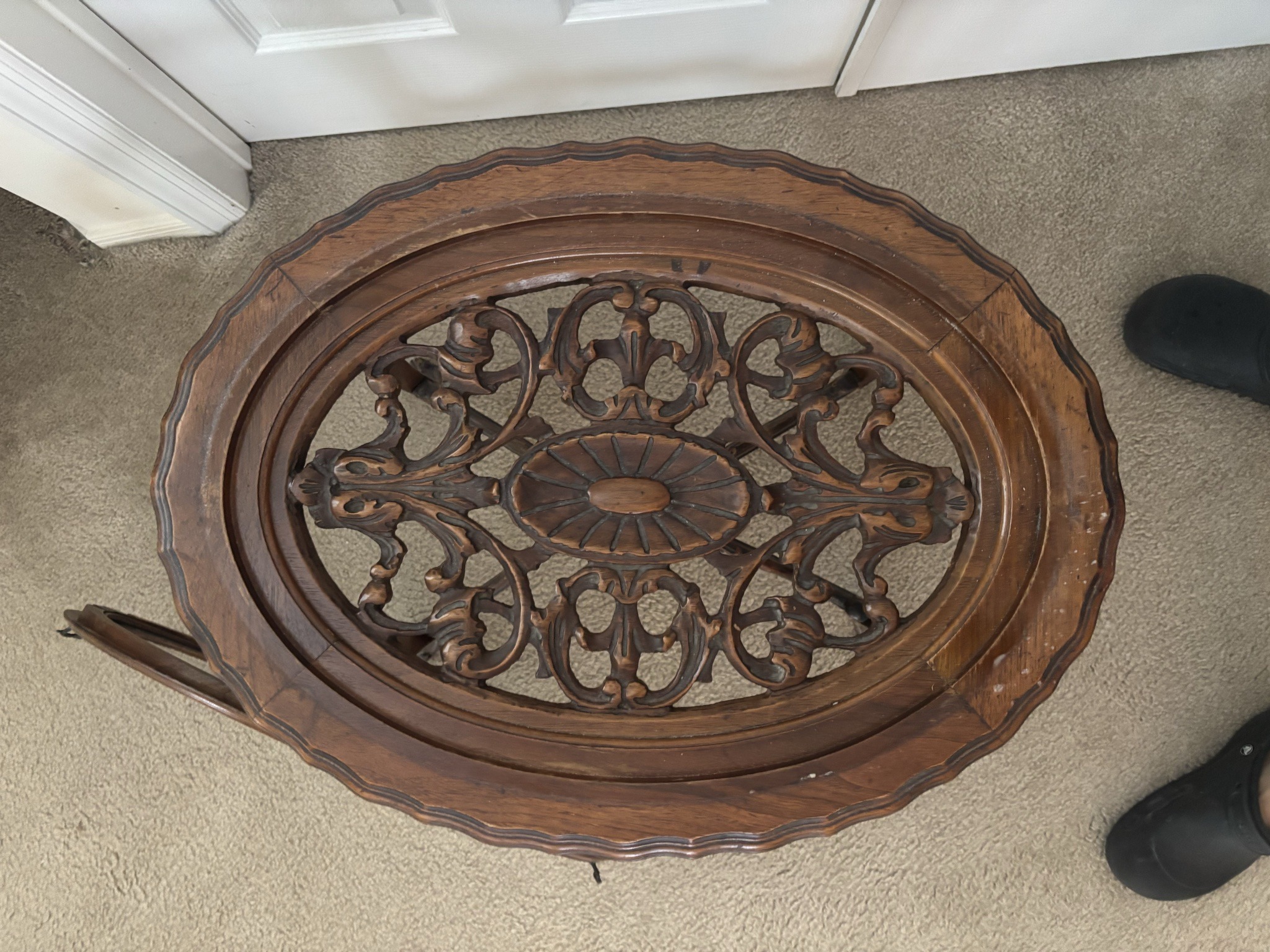
Antique end table with removable glass tray

AI analysis below

AI appraisal

AI analysis & estimate

AI-Generated · Verify before acting

Everything below is generated by AI for informational purposes only. AI can make mistakes — the AI may misidentify items or misattribute them (artist, maker, brand, designer, origin, era). This is not an official valuation and should not be used for insurance, sale, tax, estate, legal, or lending purposes — or any decision requiring a certified appraisal. It is not an authoritative claim about any person, brand, or rights holder — do not share or rely on it as a factual statement about a third party. Always consult qualified professionals before making financial decisions.

Note

This analysis also relies on unverified notes provided by the user, which may be incomplete or inaccurate and could affect the result.

Read the full disclaimer

AI Identification

·Not independently authenticated·Verify before acting

Carved Wood Oval Butler's Table with Scalloped Edge

Antique Furniture

AI Estimated Value

·Not an official valuation·Verify before acting

$450 - $650

As of May 30, 2026

AI Item Analysis

·AI can make mistakes·Verify before acting
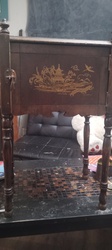
This is an oval antique-style end table, likely serving as a butler's or coffee table, featuring a distinctive removable glass tray design (tray not currently seated in the frame in the main view). The piece is constructed from a dark-toned hardwood, possibly walnut or mahogany, showcasing a warm medium-brown finish. The table top is characterized by a scalloped, pie-crust perimeter edge and a wide wooden apron. The central focus is a highly ornate, openwork decorative fretwork featuring pierced foliate scrolls and a central sunburst or lozenge-shaped medallion. This intricate carving is designed to be visible beneath a glass top. The construction exhibits traditional joinery with visible seams in the wood border. Condition-wise, the piece shows significant signs of age and wear; there are visible white scuff marks and finish losses on the right edge of the apron, along with general surface scratches throughout. A distinct crack or separation in the wood grain is visible on the inner-right border of the oval. The style is a 20th-century revival of 18th-century Chippendale or Queen Anne furniture, likely manufactured between 1920 and 1950. The craftsmanship is high-quality, though the visible wear and the missing glass/tray configuration suggest it may require minor restoration to return to its original luster.
AI Appraisal Report

·AI can make mistakes·Verify before acting
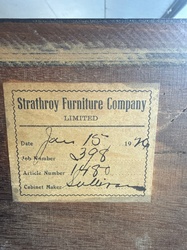
Upon my virtual examination of this Carved Wood Oval Butler’s Table, I have determined it to be a high-quality 20th-century revival piece, likely produced in the United States or England between 1920 and 1950. The piece draws heavy influence from Chippendale fretwork and Queen Anne forms. The craftsmanship of the pierced foliate scrolls and central sunburst medallion is impressive, indicating a superior manufacturer from the era. However, the condition presents several challenges: visible finish loss, white scuffing on the apron, and a notable grain separation on the inner-right border significantly detract from its 'mint' market potential. The missing glass tray, while common for this style, necessitates replacement or adjustment to ensure the table's utility. In the current market, mid-century traditional revival furniture remains steady, though values have plateaued compared to Mid-Century Modern trends. Comparable pieces in excellent condition typically hammer at auction between $800 and $1,200; however, given the required restoration and the 'as-is' state, a retail estimate of $450-$650 is appropriate. Limitations: This appraisal is based solely on digital imagery. To provide a definitive authentication or a higher 'insurance replacement' value, an in-person inspection is required to verify the wood species (distinguishing between solid mahogany and veneers), examine the underside joinery for maker’s marks, and assess the depth of the wood cracks. Provenance documentation or original sales receipts would further solidify the item's historical context and value.

Get your items appraised

Instant estimates of your treasures with AI-powered appraisals

Browse More Appraisals