AI Appraisal Estimate

AI-generated estimates · not official valuations

From the user

What was submitted

Photo and notes provided by the user — not generated by AI

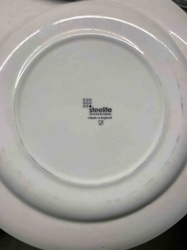
Submitted item photo
Submitted photo · May 19, 2026

User's notes

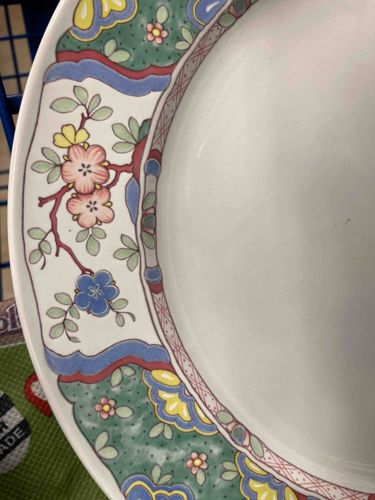
Mikasa provincial dinner plate CV900 Villa Medici Malaysia

AI analysis below

AI appraisal

AI analysis & estimate

AI-Generated · Verify before acting

Everything below is generated by AI for informational purposes only. AI can make mistakes — the AI may misidentify items or misattribute them (artist, maker, brand, designer, origin, era). This is not an official valuation and should not be used for insurance, sale, tax, estate, legal, or lending purposes — or any decision requiring a certified appraisal. It is not an authoritative claim about any person, brand, or rights holder — do not share or rely on it as a factual statement about a third party. Always consult qualified professionals before making financial decisions.

Note

This analysis also relies on unverified notes provided by the user, which may be incomplete or inaccurate and could affect the result.

Read the full disclaimer

AI Identification

·Not independently authenticated·Verify before acting

Mikasa Provincial Dinner Plate - Villa Medici (CV900)

Kitchen & Dining - Tableware

AI Estimated Value

·Not an official valuation·Verify before acting

$12.00-$18.00

As of May 19, 2026

AI Item Analysis

·AI can make mistakes·Verify before acting
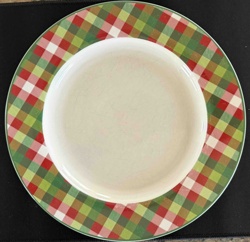
This is a vintage ceramic dinner plate from the Mikasa 'Provincial' collection, specifically featuring the 'Villa Medici' (CV900) pattern produced in Malaysia. The plate is constructed from durable vitrified stoneware or ceramic with a smooth, glazed white center. The wide decorative rim features a colorful and intricate floral design influenced by Mediterranean or Italianate aesthetics. Notable elements include peach and blue cherry blossoms on brown branches, accompanied by sage green leaves and miniature pink florets. These are framed by scalloped borders in shades of blue, red, and yellow, set against a stippled green background punctuated by more floral accents. An inner geometric border with a cross-hatch pattern separates the decorated rim from the plain white well of the plate. Based on the manufacturer's history for this pattern, it likely dates from the late 1980s to the 1990s. The craftsmanship is high, typical of Mikasa's reputation for practical yet aesthetically versatile dinnerware. The visible surface shows a glossy finish with no immediately apparent deep chips or cracks, though close inspection of similar used vintage stoneware often reveals light utensil marks or minor surface 'crazing' in the glaze over time. The vibrant colors appear well-preserved without significant fading.
AI Appraisal Report

·AI can make mistakes·Verify before acting
I have virtually examined this Mikasa Provincial 'Villa Medici' (CV900) dinner plate. Based on the provided imagery and pattern hallmarks, the item appears to be an authentic example of Mikasa’s late-20th-century Malaysian production. The glaze exhibits favorable luster, and the Mediterranean-inspired floral motifs—specifically the cherry blossoms and geometric borders—remain vibrant, suggesting limited exposure to abrasive automated dishwashing. The absence of visible chips or heavy utensil scoring on the white well indicates the plate has been well-maintained. The 'Villa Medici' pattern is a classic example of the refined stoneware aesthetic popular in the 1990s. While visually appealing and durable due to its vitrified construction, this pattern was mass-produced for the global department store market. Consequently, rarity is low, and the item is valued primarily as a replacement piece for existing sets rather than as a standalone investment. Market demand for individual plates remains steady on secondary platforms (e.g., eBay, Replacements, Ltd.), with prices typically falling between $12 and $18 per plate depending on the specific condition of the foot ring and any minor crazing. It is important to note that this appraisal is based on photographic evidence. A formal authentication would require an in-person physical inspection to detect micro-crazing, evaluate 'ping' resonance (to check for internal fractures), and verify the tactile depth of the glaze. Without physical handling or original provenance documentation, I cannot definitively rule out factory seconds or professional restorations not visible in the provided image.

Get your items appraised

Instant estimates of your treasures with AI-powered appraisals

Browse More Appraisals