AI estimate as of September 22, 2025 · verify with a professional before acting
AI-Generated · Verify before acting
Everything on this page is generated by AI for informational purposes only. AI can make mistakes — the AI may misidentify items or misattribute them (artist, maker, brand, designer, origin, era). This is not an official valuation and should not be used for insurance, sale, tax, estate, legal, or lending purposes — or any decision requiring a certified appraisal. It is not an authoritative claim about any person, brand, or rights holder — do not share or rely on it as a factual statement about a third party. Always consult qualified professionals before making financial decisions.
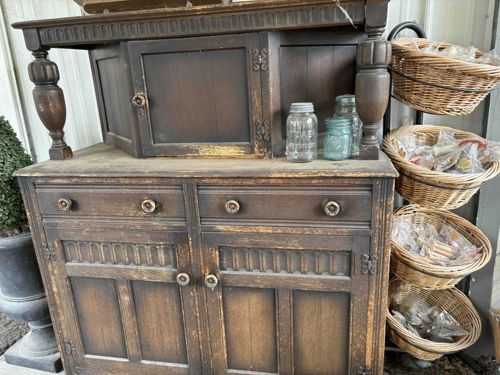
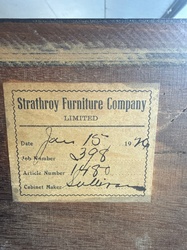
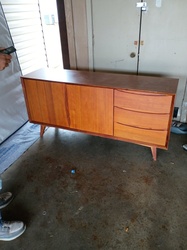
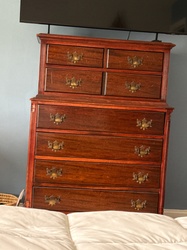
This appears to be an antique sideboard, likely constructed from a dark-stained hardwood such as oak or mahogany, exhibiting a rich, dark brown color with visible wood grain. The piece is composed of two main sections: a lower cabinet with drawers and larger doors, and an upper, smaller hutch or cupboard. The lower section features two drawers across the top, each with a decorative round pull that appears to be made of metal, possibly brass or an alloy, with a circular, possibly floral or sunburst motif. Beneath the drawers are two cabinet doors; these feature raised panels, with the top portion of each door having vertical reeding or fluting for decorative effect. The upper hutch sits directly on the lower cabinet, featuring a single central cabinet door with a similar decorative pull. Flanking the hutch cabinet are two turned wooden columns or balusters, providing support to a decorative top molding, which also displays fluting or reeding. The overall construction suggests a robust and solid build. Condition-wise, the piece shows significant signs of age and wear. The finish is heavily distressed, with areas where the dark stain has worn away, revealing lighter wood beneath, particularly on edges, drawer fronts, and the top surfaces, indicating extensive use and handling. There is also a layer of dust or grime visible on the top surface of both the lower cabinet and the hutch, suggesting it may have been stored or displayed in an open environment. No obvious structural damage like cracks or breaks are immediately apparent, but the finish wear is considerable. The hardware on the drawers and doors seems original or period-appropriate, contributing to its antique aesthetic. The style, characterized by turned elements, paneling, and reeding, points to a late 19th to early 20th-century period, possibly Arts and Crafts, Mission, or an early Colonial Revival style. No specific maker's marks or signatures are visible in the provided images. The craftsmanship, despite the wear, appears to be of good quality for its era, with well-joined components and decorative woodworking.
AI Appraisal Report
I have examined the provided image of this Antique Dark Wood Sideboard with Hutch. Authenticity, based solely on visual inspection, suggests it is indeed an antique piece, likely dating from the late 19th to early 20th century. The construction elements, such as turned columns, decorative reeding, raised panel doors, and the style of hardware, are consistent with periods like Arts and Crafts, Mission, or early Colonial Revival. The dark-stained hardwood, possibly oak or mahogany, further supports this assessment.
Condition is a significant factor in this appraisal. The finish is heavily distressed, with substantial wear, fading, and loss of stain particularly on edges and prominent surfaces. There's visible dust and grime, indicating a need for professional cleaning and restoration. While no major structural damage like cracks or breaks is immediately apparent, the overall wear dramatically impacts its aesthetic and, consequently, its market value. The hardware appears period-appropriate and original, which is a positive.
Market conditions for antique furniture vary, but similar sideboards in good, restored condition typically command higher prices. This piece, in its current 'as is' distressed state, falls into a category suitable for a buyer interested in restoration or a rustic aesthetic. Demand for this style is moderate but consistent, particularly for well-built examples. Rarity is not particularly high for this general type of furniture; while unique in its specific details, it represents a common form from its era.
Factors significantly impacting value are primarily the extensive finish wear and the need for restoration. If fully restored by a professional, its value could increase. However, the cost of such restoration would need to be factored in. Without an in-person examination, I cannot definitively ascertain the extent of any structural issues hidden by the finish, the type of wood, or the exact age through joinery inspection. Provenance documentation or scientific testing of the wood or finish would be required for full historical authentication and to potentially identify a specific maker, which could further influence value. Based on its current condition and visual assessment, I estimate its value to be in the range of $600-$900.