AI Appraisal Estimate

AI-generated estimates · not official valuations

From the user

What was submitted

Photo and notes provided by the user — not generated by AI

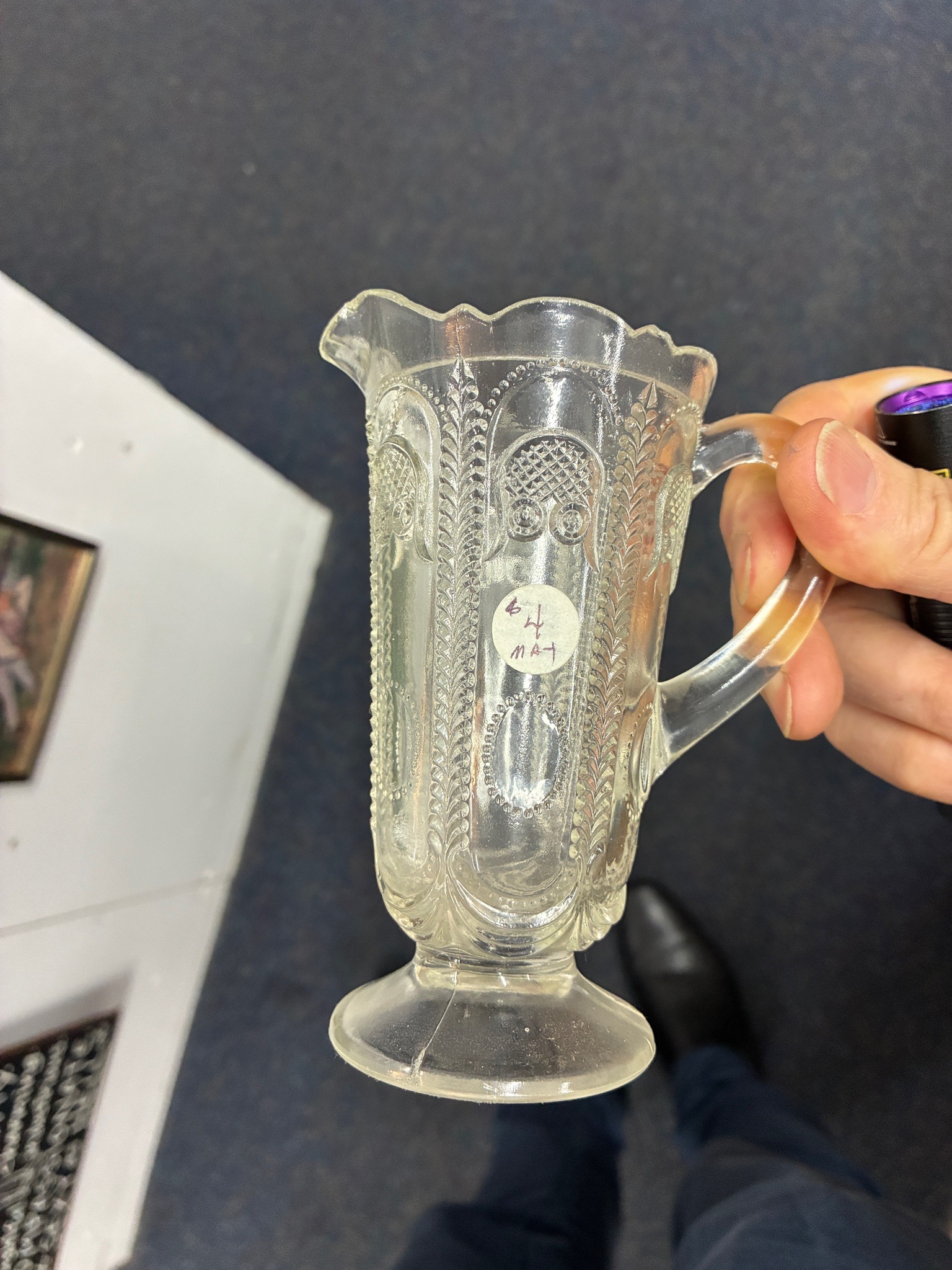
Submitted item photo
Submitted photo · May 26, 2026

User's notes

Smaller creamer jug

AI analysis below

AI appraisal

AI analysis & estimate

AI-Generated · Verify before acting

Everything below is generated by AI for informational purposes only. AI can make mistakes — the AI may misidentify items or misattribute them (artist, maker, brand, designer, origin, era). This is not an official valuation and should not be used for insurance, sale, tax, estate, legal, or lending purposes — or any decision requiring a certified appraisal. It is not an authoritative claim about any person, brand, or rights holder — do not share or rely on it as a factual statement about a third party. Always consult qualified professionals before making financial decisions.

Note

This analysis also relies on unverified notes provided by the user, which may be incomplete or inaccurate and could affect the result.

Read the full disclaimer

AI Identification

·Not independently authenticated·Verify before acting

Pressed glass creamer in the style of Early American Pattern Glass

Glassware

AI Estimated Value

·Not an official valuation·Verify before acting

$15 - $35

As of May 26, 2026

AI Item Analysis

·AI can make mistakes·Verify before acting
This item is a small footed glass creamer, which the owner identifies as a smaller creamer jug (user-supplied attribution unverified). It is constructed from colorless pressed glass and features an ornate relief pattern consisting of upright arches, stippled cross-hatching, and herringbone-like decorative bands. The vessel has a scalloped or ruffled top rim with a small integrated pouring spout and a simple applied-style curved handle. It stands on a flared circular pedestal base. Stylistically, the piece is consistent with Early American Pattern Glass (EAPG) from the late 19th or early 20th century. No etched or molded maker's marks are visible in the image to confirm a manufacturer; a small white circular sticker on the side bears handwritten notations that appear to be '64 MA+', which likely represents inventory or pricing information rather than a maker's mark. Visible condition issues include a prominent vertical crack or deep mold line extending through the foot/base. Given the lack of a visible trademark, the identification relies on the pressed glass manufacturing technique and Victorian-era aesthetic. A physical inspection would be required to determine if the glass contains manganese or lead, which can help narrow the production era.

AI Appraisal Report

·AI can make mistakes·Verify before acting
Based on the provided image, this item appears to be a small footer creamer in the style of Early American Pattern Glass (EAPG). The owner identifies the piece as a smaller creamer jug. From the visual evidence, the vessel exhibits characteristic Victorian-era motifs, including stippled cross-hatching and arch patterns. However, without a visible maker's mark, I cannot verify a specific manufacturer or exact production date from a photo alone. The value of $15 to $35 is estimated assuming the piece is a period-correct example of late 19th-century pressed glass. This estimate is significantly impacted by a visible vertical crack or deep mold line in the base; such structural flaws generally reduce the marketability and value among collectors of glassware. The presence of a hand-written inventory sticker suggests a previous secondary market history, likely in an estate or antique mall setting. To move beyond this working hypothesis, a physical inspection would be required to analyze the glass composition (such as testing for manganese or lead content via UV light or weight) and to determine if the line in the base is a benign manufacturing mold mark or a damaging stress crack. In the current market, decorative EAPG sets are common; if this item is later determined to be a mid-20th-century reproduction or a less desirable pattern, the value would likely fall toward the lower end of the range or below $10. Conversely, if it were documented as a rare pattern by a sought-after maker like Sandwich or Bakewell, Pears & Co., the value could increase, though the condition issue remains a primary constraint.

Get your items appraised

Instant estimates of your treasures with AI-powered appraisals

Browse More Appraisals