AI Appraisal Estimate

AI-generated estimates · not official valuations

From the user

What was submitted

Photo and notes provided by the user — not generated by AI

Submitted item photo
Submitted photo · June 12, 2026

User's notes

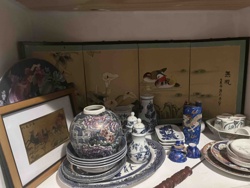
Japanese China, one cup has a chip on the rim

AI analysis below

AI appraisal

AI analysis & estimate

AI-Generated · Verify before acting

Everything below is generated by AI for informational purposes only. AI can make mistakes — the AI may misidentify items or misattribute them (artist, maker, brand, designer, origin, era). This is not an official valuation and should not be used for insurance, sale, tax, estate, legal, or lending purposes — or any decision requiring a certified appraisal. It is not an authoritative claim about any person, brand, or rights holder — do not share or rely on it as a factual statement about a third party. Always consult qualified professionals before making financial decisions.

Note

This analysis also relies on unverified notes provided by the user, which may be incomplete or inaccurate and could affect the result.

Read the full disclaimer

AI Identification

·Not independently authenticated·Verify before acting

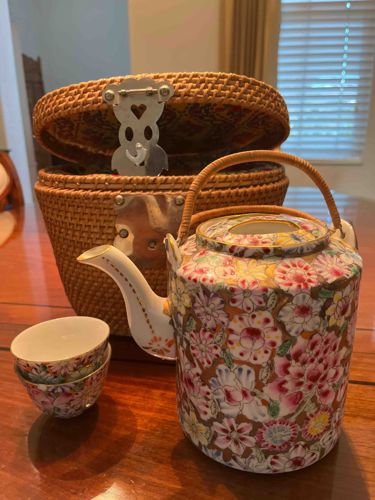
Vintage Japanese Rose Medallion Style Travel Tea Set with Wicker Carrier

Asian Antiques & Decorative Arts / Ceramics

AI Estimated Value

·Not an official valuation·Verify before acting

$125.00 - $175.00

As of June 12, 2026

AI Item Analysis

·AI can make mistakes·Verify before acting
This is a vintage Japanese porcelain travel tea set, likely dating from the mid-20th century. The set includes a tall, cylindrical teapot with a top-mounted swing handle wrapped in wicker or bamboo, and two small handleless tea cups (yunomi). The porcelain is decorated in a dense, 'Thousand Flowers' (Millefleurs) pattern, a style often associated with Rose Medallion or Famille Rose exports. The design features a vibrant array of hand-painted peonies, chrysanthemums, and various polychrome blossoms in shades of pink, yellow, blue, and white, set against a rich ochre or gold-toned ground. The teapot snout is accented with gold gilding and delicate orange floral motifs. The set is accompanied by a custom-fitted, woven rattan or wicker basket carrier, which features a padded interior lined with decorative fabric and polished metal hardware, including a heart-shaped latch. Condition-wise, the porcelain retains bright colors and clear details, though the user notes one cup has a visible chip on the rim. The wicker carrier shows natural age-related darkening but appears structurally intact. This type of 'basket teapot' was popular for travel or outdoor use, showcasing traditional Japanese craftsmanship combined with utility.
AI Appraisal Report

·AI can make mistakes·Verify before acting
Based on my examination of this Japanese millefleurs 'Thousand Flowers' travel tea set, I have determined it to be a mid-20th-century export set. The polychrome enamel work is vibrant, showcasing a dense floral arrangement typical of the Showa-era interpretation of the Chinese Famille Rose style. The inclusion of the original wicker-and-rattan carrier, lined with its period-appropriate padded fabric, adds significant decorative appeal and historical context as a 'picnic' or travel set. The porcelain appears to be of standard export quality. While the teapot retains its gilding and vibrant coloration, the chip on the rim of one of the yunomi cups is a significant detractor, reducing the set's value by approximately 30-40% compared to a mint-condition example. Market demand for mid-century Japanese ceramics remains steady for collectors of Chinoiserie and vintage kitchenalia, though it does not reach the high-valuation tiers of 19th-century or earlier Edo-period wares. Authentication via digital imagery has limitations. My assessment assumes the enamel is hand-painted over a transfer-print outline, typical for this period. To confirm authenticity and refine this valuation, an in-person inspection is required to check for 'Made in Japan' or 'Nippon' backstamps, which may be hidden by the basket or located on the teapot base. I would also need to examine the porcelain under a UV light to detect any hidden repairs to the spout or the second cup. Provenance documentation regarding the original purchase would further solidify its history. Without physical handling, I cannot definitively confirm the material of the handle wrapping or the specific type of metal used in the heart-shaped latch.

Get your items appraised

Instant estimates of your treasures with AI-powered appraisals

Browse More Appraisals