AI estimate as of June 17, 2025 · verify with a professional before acting
AI-Generated · Verify before acting
Everything on this page is generated by AI for informational purposes only. AI can make mistakes — the AI may misidentify items or misattribute them (artist, maker, brand, designer, origin, era). This is not an official valuation and should not be used for insurance, sale, tax, estate, legal, or lending purposes — or any decision requiring a certified appraisal. It is not an authoritative claim about any person, brand, or rights holder — do not share or rely on it as a factual statement about a third party. Always consult qualified professionals before making financial decisions.
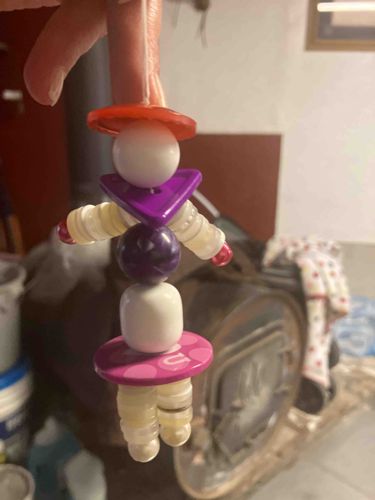
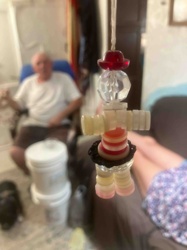
This is a handcrafted item resembling a stylized human figure, likely intended as a toy or decoration. It is constructed from a variety of repurposed materials, primarily plastic and possibly some wood or natural beads. The figure is strung together on a white string, holding the components in place. The 'head' appears to be a white plastic bead, capped by a large, translucent orange plastic disc resembling a hat. Below the head is a dark purple triangular piece, serving as the 'shoulders'. The 'arms' are fashioned from stacked, small, clear or translucent plastic buttons, with a small red plastic bead at the end of each arm acting as a 'hand'. The 'torso' is a smaller, dark purple, possibly faceted bead, followed by another white plastic bead. The 'waist' is a round, flat, pink plastic disc with pink polka dots and a light pink 'U' or horseshoe shape printed on its surface. The 'legs' are made from similar stacked clear or translucent plastic buttons as the arms, ending in a white plastic bead 'foot' on each leg. There are visible signs of wear and use on the plastic components, including some scratching and minor scuffing. The buttons used for the arms and legs show variations in size and style, suggesting they were sourced from different places. The craftsmanship is basic, indicative of a homemade or elementary-level craft project. There are no discernible manufacturer's marks, signatures, or stamps. Based on the materials and construction style, it appears to be a contemporary item, likely made within the last few decades.
AI Appraisal Report
Based on my visual examination of the provided image, this Button and Bead Figure appears to be a contemporary, handcrafted item, likely a toy or decorative piece. The construction method, utilizing string to assemble various plastic and possibly natural beads and buttons, is typical of elementary-level craft projects or repurposed material creations. The materials appear to be readily available and common. I observe visible wear and use marks, including scratching and scuffing on the plastic components, consistent with it being handled or played with. The inconsistent button sizes and styles further support the idea of mixed, possibly scavenged materials.
Authenticity verification from images alone is significantly limited. I can assess the apparent age based on the materials and style, which suggest it is not antique. However, without physical examination, I cannot definitively determine the exact age of the materials or rule out more specific origins or makers. In-person examination would allow for a tactile assessment of the materials, closer inspection of the wear patterns, and search for any faint markings not visible in the image. Provenance documentation, such as information on the maker, date of creation, or intended use, would be crucial for a more precise valuation and authentication. Scientific testing would be unnecessary for an item of this nature and value.
In terms of market conditions and comparables, handcrafted items of this type, particularly those without a known maker or significant artistic merit, are typically valued based primarily on sentimental or decorative appeal rather than collectible value. Demand for such items in the broader market is generally low. Rarity is not a significant factor as similar items could be easily replicated using common materials. Factors significantly impacting value are the materials (which are common and repurposed), the basic level of craftsmanship, and the lack of provenance or a recognized maker.
Considering these factors, the value falls into the category of nominal. It would appeal primarily to someone with a personal connection to the item or an appreciation for simple, homemade crafts.