Early 20th Century Oak Trestle Dining Table
Antique Furniture

Early 20th Century Oak Trestle Dining Table

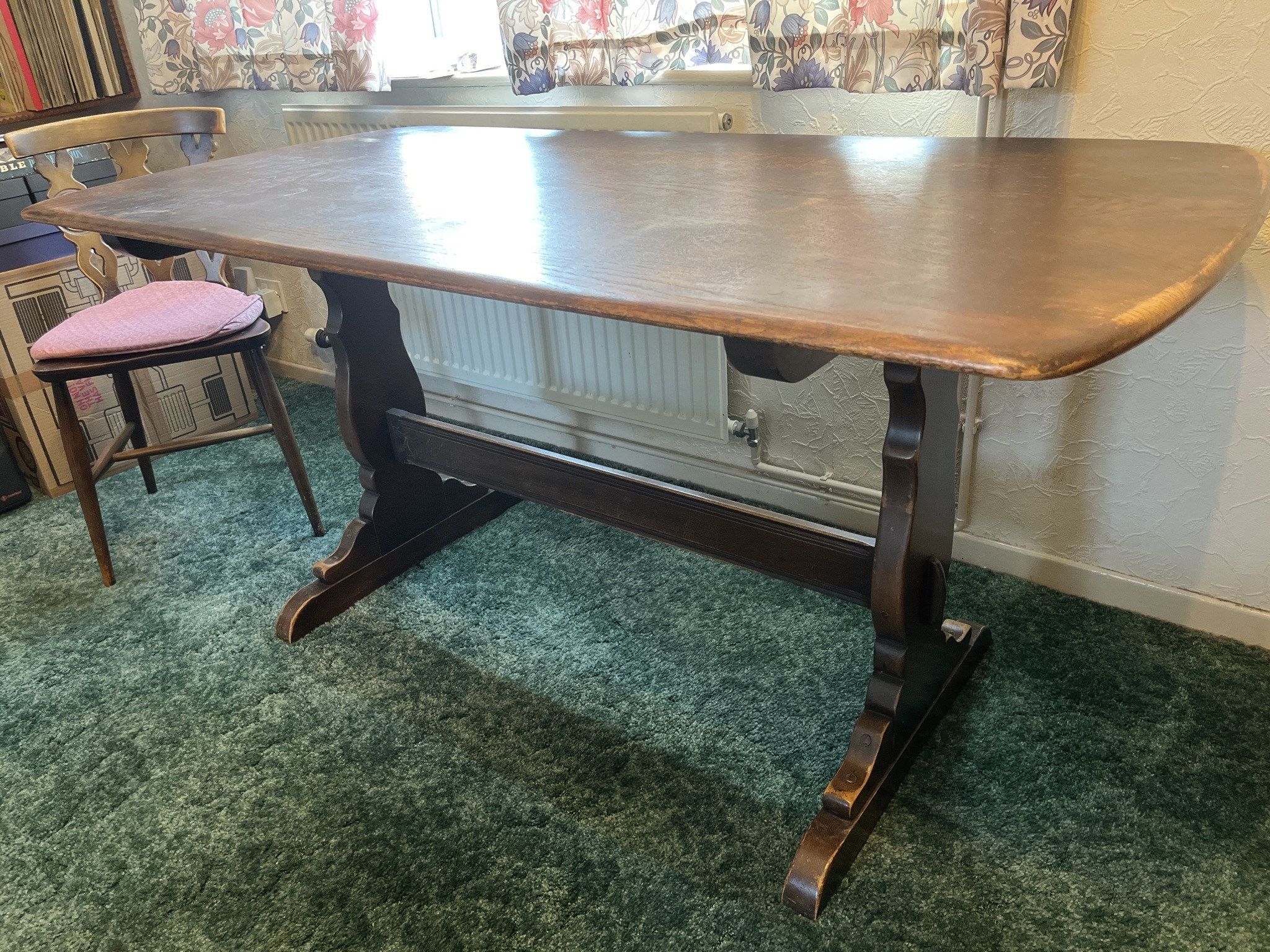
This is a rectangular trestle-style dining table constructed from solid oak with a dark-stained finish. The tabletop features softly rounded corners and a slight convex curve along the ends, suggesting a 'bowed' or 'boat' shape. The base consists of two heavy, vertical slab supports (stanchions) with distinctive scalloped or 'cyma-curved' decorative edges. These stanchions are joined by a low, sturdy central stretcher bar, which is secured through the uprights with visible joinery. The feet are integrated shoe-style bases that follow the same scrolled aesthetic as the uprights. In terms of condition, the piece shows significant evidence of age and use. There is notable finish loss and wear along the edges of the tabletop, exposing the lighter raw oak beneath the stain. The top surface exhibits some clouding or blanching in the finish, potentially from heat or moisture exposure over time. Minor scuffs and dings are visible along the base and feet, consistent with a utilitarian antique. This piece reflects a Revivalist or Arts and Crafts influence, likely dating from the early to mid-20th century. The craftsmanship is robust, designed for durability, featuring thick-cut timbers and classic mortise-and-tenon influenced construction.
Estimated Value

$450 - $700

Basic Information

Category

Antique Furniture

Appraised On

April 27, 2026

Estimated Value

$450 - $700

Additional Details Provided By Owner

User Provided Information

Antique oak dining table

Item Description

This is a rectangular trestle-style dining table constructed from solid oak with a dark-stained finish. The tabletop features softly rounded corners and a slight convex curve along the ends, suggesting a 'bowed' or 'boat' shape. The base consists of two heavy, vertical slab supports (stanchions) with distinctive scalloped or 'cyma-curved' decorative edges. These stanchions are joined by a low, sturdy central stretcher bar, which is secured through the uprights with visible joinery. The feet are integrated shoe-style bases that follow the same scrolled aesthetic as the uprights. In terms of condition, the piece shows significant evidence of age and use. There is notable finish loss and wear along the edges of the tabletop, exposing the lighter raw oak beneath the stain. The top surface exhibits some clouding or blanching in the finish, potentially from heat or moisture exposure over time. Minor scuffs and dings are visible along the base and feet, consistent with a utilitarian antique. This piece reflects a Revivalist or Arts and Crafts influence, likely dating from the early to mid-20th century. The craftsmanship is robust, designed for durability, featuring thick-cut timbers and classic mortise-and-tenon influenced construction.
Get Your Items Appraised

Instant estimates of your treasures with AI-powered instant appraisals

Browse More Appraisals