AI Appraisal Estimate

AI-generated estimates · not official valuations

From the user

What was submitted

Photo and notes provided by the user — not generated by AI

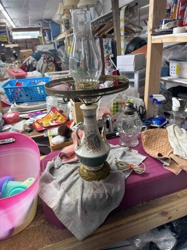
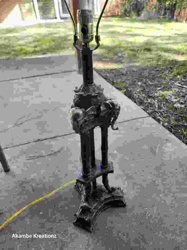
Submitted item photo
Submitted photo · June 17, 2026

User's notes

No additional notes provided.

AI analysis below

AI appraisal

AI analysis & estimate

AI-Generated · Verify before acting

Everything below is generated by AI for informational purposes only. AI can make mistakes — the AI may misidentify items or misattribute them (artist, maker, brand, designer, origin, era). This is not an official valuation and should not be used for insurance, sale, tax, estate, legal, or lending purposes — or any decision requiring a certified appraisal. It is not an authoritative claim about any person, brand, or rights holder — do not share or rely on it as a factual statement about a third party. Always consult qualified professionals before making financial decisions.

Read the full disclaimer

AI Identification

·Not independently authenticated·Verify before acting

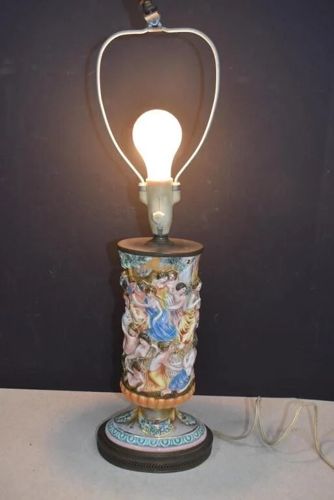
Capodimonte Style Relief Ceramic Table Lamp

Antique and Vintage Lighting

AI Estimated Value

·Not an official valuation·Verify before acting

$150 - $250

As of June 17, 2026

AI Item Analysis

·AI can make mistakes·Verify before acting
This is a vintage table lamp featuring a highly decorative, cylindrical ceramic body in the Capodimonte style. The central porcelain column is rendered in high relief, depicting a classical or mythological scene of several figures—predominantly female nymphs or Graces—intertwined in a dynamic, circular composition. The figures are hand-painted with a soft pastel palette including blues, yellows, and flesh tones, characteristic of mid-20th-century Italian ceramic work. The base of the ceramic portion features a gadrooned or fluted collar in a terracotta hue, leading down to a flared pedestal base decorated with a repeating teal and white geometric frieze. The entire ceramic assembly is mounted on a stepped metal base with an aged dark patina. Above the ceramic body sits a metal cap and a standard electrical socket with a cream-colored plastic shell, topped with a standard wire lampshade harp and an illuminated incandescent bulb. While no maker's mark is visible on the exterior, it likely originated from a factory in Italy during the mid-to-late 20th century. The condition appears fair to good; there is some visible grime on the high points of the relief and minor tarnish on the metal components, but the ceramic does not show obvious large-scale cracks or chips in the busy relief. The electrical cord is a standard plastic-jacketed wire, suggesting it may have been rewired or manufactured after the 1960s.
AI Appraisal Report

·AI can make mistakes·Verify before acting
I have virtually examined this Capodimonte-style relief ceramic table lamp. The piece displays the characteristic 'Neo-Classical' revival aesthetic popular in Italy during the mid-20th century. The high-relief depiction of nymphs shows fair hand-painted detail; however, the lack of a visible Crown 'N' mark and the specific teal geometric frieze suggest a more commercial production for the export market, likely circa 1960-1975, rather than a 19th-century Royal Manufactory piece. Condition appears stable, though I noted surface accumulation in the crevices of the relief and oxidation on the metal plinth. The wiring is modern, which increases utility but indicates a lack of period originality in the hardware. Market demand for ornate Italian ceramics has cooled significantly, as modern minimalist trends dominate the current interior design market. This style is currently viewed as 'decorative' rather than 'collectible.' Comparable sales for unmarked Italian relief lamps of this size typically fall within the $150 to $250 range at regional auctions. There are significant limitations to this remote appraisal. A physical inspection is required to check for 'flea bites' or hidden hairlines in the porcelain, which are common in such busy compositions and can devalue the piece by 30-50%. To confirm authenticity as a true Capodimonte (Doccia or Ginori) work rather than a 'Capodimonte-style' piece, I would need to inspect the underside for incised marks or factory signatures and verify the paste composition. Provenance documents such as original purchase receipts from Italian ceramic houses would be necessary to justify a higher valuation.

Get your items appraised

Instant estimates of your treasures with AI-powered appraisals

Browse More Appraisals