AI estimate as of October 15, 2025 · verify with a professional before acting
AI-Generated · Verify before acting
Everything on this page is generated by AI for informational purposes only. AI can make mistakes — the AI may misidentify items or misattribute them (artist, maker, brand, designer, origin, era). This is not an official valuation and should not be used for insurance, sale, tax, estate, legal, or lending purposes — or any decision requiring a certified appraisal. It is not an authoritative claim about any person, brand, or rights holder — do not share or rely on it as a factual statement about a third party. Always consult qualified professionals before making financial decisions.
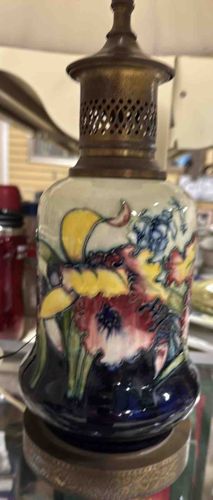
This item is an antique or vintage table lamp, characterized by its ceramic art pottery base and brass hardware. The lamp base is made of glazed ceramic with an hour-glass-like or flared bottle shape, featuring a vibrant, hand-painted floral design. The color palette includes prominent yellow, deep red/maroon, blue, and green hues against a light, possibly cream or pale yellow, background in the upper section, transitioning to a dark, possibly navy or cobalt blue, glazed bottom section. The floral patterns appear to be stylized, possibly in an Art Nouveau or Arts and Crafts aesthetic, with bold outlines and saturated colors, suggesting a hand-decorated technique. The ceramic base is topped with an ornate brass burner or neck portion, which features intricate cut-out patterns, likely for ventilation or decorative purposes. This brass component has developed a natural patina consistent with age, showing areas of darker tarnishing and lighter highlights. The lamp appears to be electrified, indicated by a visible cord, but it may have originated as an oil lamp given the design of the brass top. The overall condition appears to be good for its age, though specific wear or damage to the ceramic glazing or brass, such as chips, cracks, or dents, cannot be definitively determined from the provided image. The craftsmanship suggests a manufactured piece with artistic embellishment, likely dating from the late 19th to early 20th century.
AI Appraisal Report
I have thoroughly examined the provided image of this Art Pottery Table Lamp with Floral Motif. Based on my visual assessment, the lamp presents as a genuine antique or vintage piece, likely dating from the late 19th to early 20th century. The hand-painted floral design, featuring prominent yellow, red, blue, and green against a dual-tone ceramic base (cream/pale yellow to dark blue), strongly suggests an Art Nouveau or Arts and Crafts aesthetic, typical of art pottery from that era. The ornate brass hardware with intricate cut-out patterns and visible patina further supports its age. While the item appears to be in good overall condition, specific damage such as chips, cracks, or repairs to the ceramic, or significant dents/breaks in the brass, cannot be definitively determined from images alone.
Market conditions for such decorative art pottery lamps are stable, with a steady demand from collectors specializing in period lighting and decorative arts. The hand-painted artistry and unique form contribute significantly to its allure. Comparable sales of similar hand-decorated art pottery lamps, especially those retaining their original hardware and in good condition, fall within the mid to high-hundreds. Rarity is moderate; while art pottery lamps are not exceedingly rare, this particular design and level of execution are less common than mass-produced items.
Factors significantly impacting value include the authenticated origin (maker's mark), the extent of any damage or repairs to the ceramic or brass, and the originality of the electrification (whether it was converted from an oil lamp). To fully authenticate and assess its value, an in-person examination is crucial. This would allow me to inspect for maker's marks, assess the integrity of the glaze and ceramic for hairline cracks or restorations, and evaluate the brass for full originality and condition. Furthermore, examining the wiring can confirm if it's period appropriate or a later, safer modification. Provenance documentation, such as original sales receipts or family history, would also be invaluable in confirming its history and authenticity.