AI estimate as of October 20, 2025 · verify with a professional before acting
AI-Generated · Verify before acting
Everything on this page is generated by AI for informational purposes only. AI can make mistakes — the AI may misidentify items or misattribute them (artist, maker, brand, designer, origin, era). This is not an official valuation and should not be used for insurance, sale, tax, estate, legal, or lending purposes — or any decision requiring a certified appraisal. It is not an authoritative claim about any person, brand, or rights holder — do not share or rely on it as a factual statement about a third party. Always consult qualified professionals before making financial decisions.
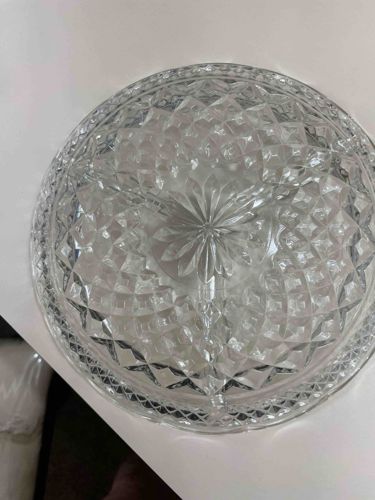
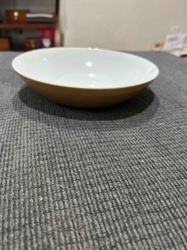
This is a clear, circular bowl crafted from pressed glass, exhibiting a brilliant, multifaceted design. The primary motif across the bowl's interior and exterior body is a repeating diamond or hobnail pattern, providing texture and enhancing light refraction. At the center of the bowl's base, a pronounced starburst or floral medallion design is molded, featuring radiating petals or points that create a focal point. The rim of the bowl is also decorated with a patterned edge, possibly a smaller diamond or crosshatch design, adding to its overall ornate appearance. The glass is transparent and colorless, typical of pressed glass items designed to mimic cut crystal. Given its construction, it likely has a good weight to it. There are no visible maker's marks or signatures in the provided image. Based on the common use of such patterns and manufacturing techniques, this bowl likely dates from the early to mid-20th century, a popular period for decorative pressed glass homewares. The craftsmanship appears to be of standard quality for pressed glass, with uniform patterns and no obvious defects such as chips, cracks, or significant wear visible from this angle. The numerous facets would allow it to sparkle and refract light beautifully when displayed. It could have been used as a serving dish, fruit bowl, or decorative centerpiece. Its overall appearance suggests a functional yet elegant piece, typical of the era's accessible luxury glass. The precise nature of the diamond pattern and the radial design in the center indicates it was created using a mold, a characteristic of pressed glass production.
AI Appraisal Report
Based on my visual examination of the provided image, this clear pressed glass bowl presents in what appears to be good to excellent condition. The diamond and starburst patterns are crisp and uniform, characteristic of well-made pressed glass from the early to mid-20th century. There are no visible chips, cracks, or significant abrasions from this perspective, which is crucial for glassware. The transparency and colorless nature of the glass reinforce its likely origin as a mass-produced decorative and functional item. Authenticity, in terms of it being genuine pressed glass, is strongly supported by the detailed patterns typical of mold-pressed manufacturing. However, without an in-hand inspection, I cannot fully assess surface wear, minor fleabites, internal fractures, or the precise weight and clarity, which can affect value. I also cannot verify the absence of any faint maker's marks that might be obscured by image resolution or angle.
In terms of market conditions, similar pressed glass bowls, while attractive, are relatively common. The demand for such items is generally steady but not exceptionally high. They typically appeal to collectors of vintage glassware or those seeking decorative household items. Rarity is low due to the mass-produced nature of pressed glass. Factors impacting value include the excellent apparent condition, desirable classic pattern, and versatility as a decorative or serving piece. However, the lack of a prominent maker, unique color, or particularly intricate/rare pattern keeps the value in the accessible range.
For full authentication and a definitive condition report, an in-person examination is essential to detect subtle flaws, assess tactile quality, and search for hidden marks. Provenance documentation, though unlikely for such a common item, would add to its history, but is not typically a major value driver for this category.