AI estimate as of August 31, 2025 · verify with a professional before acting
AI-Generated · Verify before acting
Everything on this page is generated by AI for informational purposes only. AI can make mistakes — the AI may misidentify items or misattribute them (artist, maker, brand, designer, origin, era). This is not an official valuation and should not be used for insurance, sale, tax, estate, legal, or lending purposes — or any decision requiring a certified appraisal. It is not an authoritative claim about any person, brand, or rights holder — do not share or rely on it as a factual statement about a third party. Always consult qualified professionals before making financial decisions.
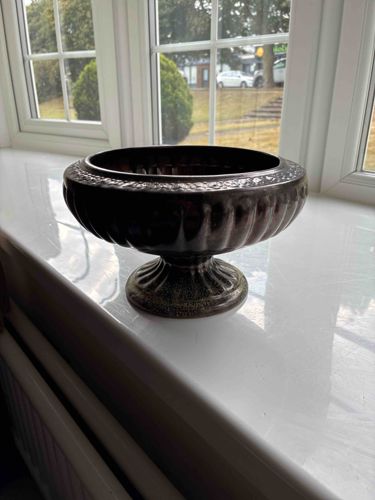
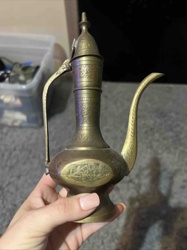
This item is a decorative bowl or urn, likely constructed from a metal alloy such as brass or bronze, or possibly a ceramic material with a metallic glaze, given its deep, dark, possibly patinated finish. The primary color is a rich, dark brown, verging on black in some areas, with subtle hints of lighter, possibly greenish or coppery tones, particularly visible on the footed base, suggesting an aged or distressed patina. The bowl features a classic, footed design. The main body of the bowl is relatively wide and shallow, characterized by evenly spaced vertical fluting or gadrooning, which adds a tactile and visual texture. The rim is adorned with a continuous band of intricate, raised relief ornamentation, possibly depicting a floral, foliate, or scroll motif, which appears to be uniform around the circumference. The circular foot is comparatively smaller, providing a stable base, and also exhibits its own set of vertical fluting, mirroring the main body's design but on a smaller scale. The surface of the foot also shows more pronounced signs of lighter speckling or distressing, contributing to its aged appearance. There are no immediately visible cracks, chips, or significant damage, though the piece exhibits an overall aged look consistent with its design. The craftsmanship suggests a manufactured item, possibly from the late 19th or early to mid-20th century, given its traditional styling and dark finish, mimicking older bronze or patinated metal forms. The quality appears good, with clear execution of the decorative elements, indicating a well-made piece likely intended for ornamental display, perhaps as a planter or a centerpiece.
AI Appraisal Report
Based on my visual examination of the Footed Decorative Bowl with Fluting and Ornate Rim, I assess its condition as good, displaying an intentional aged patina. There are no readily apparent chips, cracks, or significant damage, which is a positive factor. The dark, rich finish with subtle variations suggests either patinated metal, such as brass or bronze, or a ceramic with a metallic glaze designed to mimic these materials. The craftsmanship appears competent, with well-defined fluting and intricate rim ornamentation.
From an authenticity standpoint, based solely on the image, the piece appears to be a manufactured decorative item from the late 19th to mid-20th century, consistent with its traditional styling. It does not immediately present as a unique artisan piece or an antique of significant age where provenance would be critical for higher valuation. Market conditions for decorative bowls of this style are stable but not robust. Comparables in online marketplaces and local antique shops suggest similar items, often referred to as 'foot baths,' 'planters,' or 'centerpiece bowls,' typically retail in the $75 to $150 range depending on size, specific material confirmation, and selling venue. Demand for such pieces is moderate, appealing to those seeking traditional decor. Rarity is low; these types of mass-produced decorative items were common.
Key factors impacting value are the material (metal would be preferred over ceramic, assuming no significant silver content), and the absence of any maker's marks that would tie it to a notable manufacturer. While the overall condition is good, any significant scratches, dents, or loss of patina would diminish its appeal.
It is crucial to note the limitations of image-based appraisal. I cannot definitively confirm the material (metal vs. ceramic), weight, or true texture without a physical examination. In-person inspection would allow for tactile assessment, a closer look at the finish for touch-ups or repairs, and a search for manufacturer's marks or inscriptions. Provenance documentation could potentially elevate value if it linked the piece to a significant collection or historical context, but this is unlikely for an item of this type. Scientific testing, such as XRF analysis, would be necessary for precise material identification, especially if it were suspected of being a more valuable alloy.