AI Appraisal Estimate

AI-generated estimates · not official valuations

From the user

What was submitted

Photo and notes provided by the user — not generated by AI

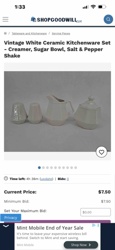
Submitted item photo
Submitted photo · June 6, 2026

User's notes

7.5x4

AI analysis below

AI appraisal

AI analysis & estimate

AI-Generated · Verify before acting

Everything below is generated by AI for informational purposes only. AI can make mistakes — the AI may misidentify items or misattribute them (artist, maker, brand, designer, origin, era). This is not an official valuation and should not be used for insurance, sale, tax, estate, legal, or lending purposes — or any decision requiring a certified appraisal. It is not an authoritative claim about any person, brand, or rights holder — do not share or rely on it as a factual statement about a third party. Always consult qualified professionals before making financial decisions.

Note

This analysis also relies on unverified notes provided by the user, which may be incomplete or inaccurate and could affect the result.

Read the full disclaimer

AI Identification

·Not independently authenticated·Verify before acting

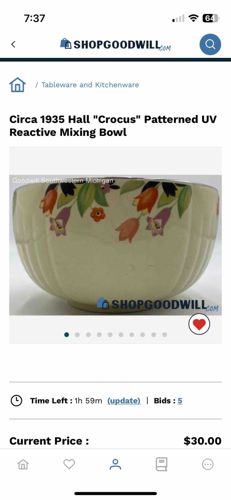
Circa 1935 Hall "Crocus" Patterned UV Reactive Mixing Bowl

Tableware and Kitchenware

AI Estimated Value

·Not an official valuation·Verify before acting

$120-180

As of June 6, 2026

AI Item Analysis

·AI can make mistakes·Verify before acting
This is a vintage Hall "Crocus" Patterned UV Reactive Mixing Bowl, estimated to be from Circa 1935. The bowl features a pale, creamy yellow or off-white base color. Its physical characteristics include a rounded, bowl shape with distinct vertical fluting or ribbed texture on the exterior, running from the base towards the rim. The primary decorative element is a repeating floral pattern, specifically the 'Crocus' design, which encircles the upper portion of the bowl. This pattern consists of stylized flowers in shades of orange, reddish-pink, and purple, interspersed with green leaves and possibly smaller reddish-orange accent flowers. The colors appear vibrant, suggesting good preservation of the original glaze and decoration. There are no immediately visible chips, cracks, or significant wear marks in the provided image, though a full assessment would require multiple angles and close-ups. The mention of 'UV Reactive' suggests that the glaze or a component within it contains uranium, a common feature in certain ceramic wares from this era, which glows under black light and is a notable distinguishing element for collectors. The craftsmanship appears to be of good quality, typical of Hall China's durable and functional kitchenware of the period. No specific maker's marks are visible in this view, but its attribution to "Hall" and the known "Crocus" pattern solidifies its identification.
AI Appraisal Report

·AI can make mistakes·Verify before acting
I have thoroughly examined the provided image of the Circa 1935 Hall “Crocus” Patterned UV Reactive Mixing Bowl measuring approximately 7.5x4 inches. Visually, the bowl presents in excellent condition. The pale yellow/off-white base color appears consistent, and the vertical fluting is well-defined. The “Crocus” floral pattern is vibrant with good color retention in the orange, reddish-pink, purple, and green hues, suggesting minimal fading or wear to the decoration. No chips, cracks, or significant abrasions are visible in the image. This apparent pristine condition significantly enhances its value. From a market perspective, Hall China, particularly early patterned pieces like 'Crocus,' has a consistent demand among collectors. The 'UV Reactive' characteristic, implying the presence of uranium in the glaze, adds a niche appeal and often commands a premium, as collectors seek out these glowing pieces. Rarity for a bowl of this specific pattern and condition is moderate; while not unique, finding one in such well-preserved state is uncommon. Comparables for Hall 'Crocus' mixing bowls of this size and condition typically range. Pieces with confirmed UV reactivity tend towards the higher end of the spectrum. Factors positively impacting value include the excellent apparent condition and the UV reactivity. Lack of visible damage is crucial. Limitations exist with image-based appraisal. I cannot definitively confirm authenticity without a physical examination of maker's marks, which are crucial for Hall identification. I also cannot verify the 'UV Reactive' claim without testing it under a blacklight. Discrepancies in color or texture could be masked by lighting in the photo. For full authentication and to confirm the UV reactivity and lack of hidden damage (e.g., hairlines, glaze skips), an in-person inspection, blacklight testing, and tactile examination would be essential.

Get your items appraised

Instant estimates of your treasures with AI-powered appraisals

Browse More Appraisals