AI Appraisal Estimate

AI-generated estimates · not official valuations

From the user

What was submitted

Photo and notes provided by the user — not generated by AI

Submitted item photo
Submitted photo · June 6, 2026

User's notes

100 years old

AI analysis below

AI appraisal

AI analysis & estimate

AI-Generated · Verify before acting

Everything below is generated by AI for informational purposes only. AI can make mistakes — the AI may misidentify items or misattribute them (artist, maker, brand, designer, origin, era). This is not an official valuation and should not be used for insurance, sale, tax, estate, legal, or lending purposes — or any decision requiring a certified appraisal. It is not an authoritative claim about any person, brand, or rights holder — do not share or rely on it as a factual statement about a third party. Always consult qualified professionals before making financial decisions.

Note

This analysis also relies on unverified notes provided by the user, which may be incomplete or inaccurate and could affect the result.

Read the full disclaimer

AI Identification

·Not independently authenticated·Verify before acting

Japanese Taisho Period Landscape Silk Painting (Nihonga)

Asian Fine Art & Paintings

AI Estimated Value

·Not an official valuation·Verify before acting

$1,200 - $1,800

As of June 6, 2026

AI Item Analysis

·AI can make mistakes·Verify before acting
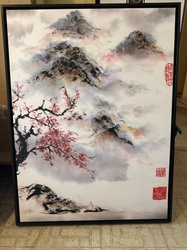
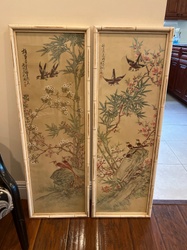
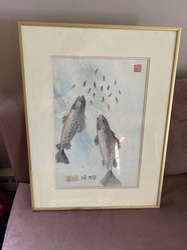
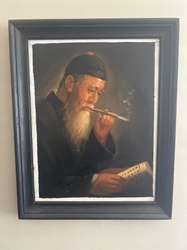
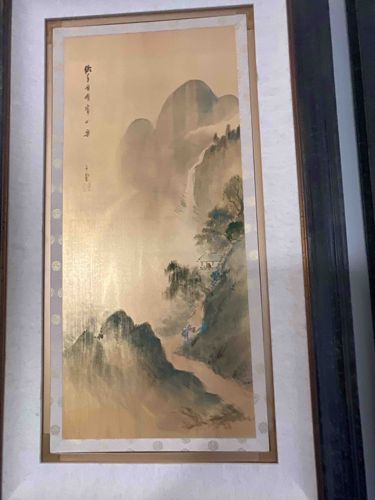
This is a vertical landscape painting executed on silk, consistent with the Nihonga style of the early 20th century (Taisho era, roughly 100 years old). The composition depicts a classic mountainous landscape with a misty waterfall, a winding path, and a small architectural structure (likely a scholar's hut or tea house) nestled among trees. The artist utilized a palette of soft earth tones, muted greens, and atmospheric washes of ink and pigments to create a sense of depth and ethereal beauty. The painting features vertical calligraphy on the upper left side, followed by two red cinnabar artist seals, which serve as the creator's mark. Structurally, the silk panel is mounted on a decorative paper backing with a pale patterned border featuring circular or floral motifs. It is housed in a contemporary gold-toned wooden frame under glass with a wide white mat. Regarding condition, there is visible age-related discoloration and foxing (small brown spots) across the silk surface, particularly in the upper atmospheric areas. The silk shows slight undulation, and the colors have likely softened over time due to light exposure. The craftsmanship demonstrates high technical skill in ink gradation (bokashi) and fine brushwork in the depiction of the foliage and figures.
AI Appraisal Report

·AI can make mistakes·Verify before acting
I have completed a visual analysis of the Taisho-period vertical landscape painting. The work demonstrates the hallmark characteristics of the Nihonga movement, specifically the blend of traditional monochrome ink techniques with the atmospheric washes of color popular in the early 20th century. The technical execution of the 'bokashi' (ink gradation) in the mist and the fine brushwork in the pine needles suggests a trained artist of the era. However, condition is a primary factor; the visible foxing and age-related discoloration on the silk substrate are significant. While consistent with a 100-year-old textile, these blemishes detract from the 'clean' aesthetic sought by many modern collectors and would require professional conservation to stabilize. The current frame, while protective, is a contemporary addition rather than an original scroll mounting, which slightly alters its traditional presentation. The market for Taisho-era landscapes remains steady, though values are heavily dependent on the identification of the artist seals. Unidentified or minor masters typically reach the $800-$1,500 range, while documented artists can command significantly more. This appraisal assumes the piece is an authentic period work rather than a later reproduction. Limitations: This evaluation is based on digital images alone, which cannot confirm the chemical composition of the pigments or the structural integrity of the silk. A full authentication requires an in-person macroscopic inspection of the artist seals against known databases, a review of provenance (transfer of ownership) documents, and a UV light examination to detect any previous restoration or over-painting. Scientific testing of the silk fibers would be necessary to definitively confirm the age of the base material.

Get your items appraised

Instant estimates of your treasures with AI-powered appraisals

Browse More Appraisals