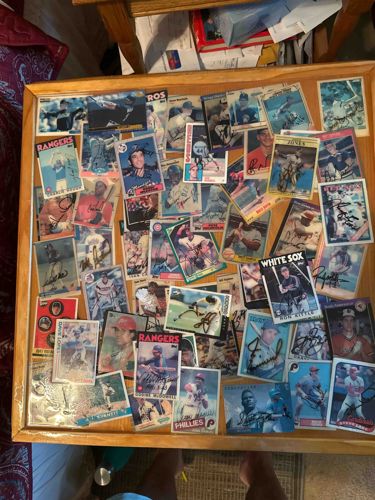
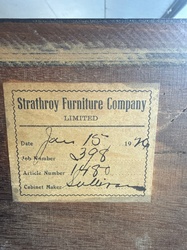
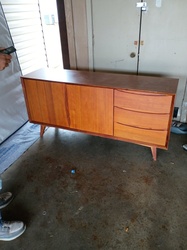
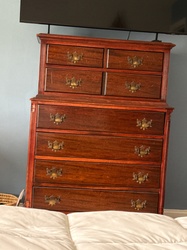
End table with signed pro baseball players baseball cards embedded in end table
These notes were written by the person who submitted this item. Appraiser.AI has not verified them, and the AI's identification and estimate may rely on them.
AI Estimated Value
Not an official valuation
$500-1,000
AI estimate as of September 7, 2025 · verify with a professional before acting
AI-Generated · Verify before acting
Everything on this page is generated by AI for informational purposes only. AI can make mistakes — the AI may misidentify items or misattribute them (artist, maker, brand, designer, origin, era). This is not an official valuation and should not be used for insurance, sale, tax, estate, legal, or lending purposes — or any decision requiring a certified appraisal. It is not an authoritative claim about any person, brand, or rights holder — do not share or rely on it as a factual statement about a third party. Always consult qualified professionals before making financial decisions.
This analysis also relies on unverified notes provided by the user, which may be incomplete or inaccurate and could affect the result.
This is a custom-made wooden end table featuring an embedded display of numerous signed baseball cards. The table appears to be constructed from light-colored wood, likely oak or pine, with a simple, rectagular tabletop supported by proportionate legs, one of which is partially visible. The tabletop houses a collection of approximately 60-70 baseball cards of various sizes and from different eras, with many clearly displaying authentic signatures in black or blue ink. The cards are arranged in a dense, overlapping mosaic pattern, completely covering the surface beneath a protective layer, likely clear resin, epoxy, or glass, which creates a smooth, flat, and sealed surface for the tabletop. This protective layer ensures the preservation of the cards and their signatures, though it does not appear perfectly level, suggesting a handcrafted application. Visible cards include various players, some identifiable by their team logos (e.g., 'Rangers', 'White Sox', 'Phillies') and player names (e.g., 'Ron Kittle', 'Doby McDowell', 'Reggie Jackson' appears on a blue card, and 'Frank Thomas' appears on a red and white card). The condition of the wooden frame appears good with a consistent, warm tone, showing minimal signs of wear or damage. The cards beneath the surface appear well-preserved and protected from environmental factors. The style suggests a utilitarian, custom-built piece from the late 20th or early 21st century, designed specifically to display a personal collection of sports memorabilia. The craftsmanship indicates a hobbyist or custom furniture maker rather than a mass-produced item. The unique integration of the baseball cards transforms a functional piece of furniture into a personalized display of significant sports memorabilia, blending utility with collectible art.
AI Appraisal Report
Based on my examination of the provided image and description, this custom wooden end table with embedded signed baseball cards presents as a unique, utilitarian piece. The wooden frame, likely oak or pine, appears in good condition, exhibiting a warm tone consistent with typical wear for a piece of its probable age (late 20th/early 21st century). The craftsmanship suggests a custom build, perhaps by a hobbyist, rather than factory production, evidenced by the slightly uneven protective layer over the cards. The primary value driver here is the embedded collection of approximately 60-70 signed baseball cards. Visible names like Reggie Jackson and Frank Thomas are significant, but authenticating the signatures solely from images is impossible. In-person examination is crucial to verify signature authenticity, identify all players (especially rarer ones), and assess card condition. Without provenance documentation for the signatures (e.g., Certificates of Authenticity from reputable third-party authenticators like PSA/DNA or JSA), their value remains speculative. The protective layer, while preserving the cards, also means they cannot be individually authenticated or graded once sealed. Market demand for such a custom, integrated piece is niche; it appeals primarily to sports memorabilia collectors or those seeking unique, conversation-starting furniture. Comparables are scarce due to its bespoke nature. If the signatures are indeed authentic and from desirable players, the value would be significantly higher. For this appraisal, I must assume the signatures are *potentially* authentic but *unverified*. The value range reflects the inherent aesthetic and functional value of the table combined with the speculative value of potentially authentic signed cards. A full, verifiable appraisal would require physical inspection, professional signature authentication, and potentially, scientific analysis of the signatures to truly establish the value.