AI estimate as of July 24, 2025 · verify with a professional before acting
AI-Generated · Verify before acting
Everything on this page is generated by AI for informational purposes only. AI can make mistakes — the AI may misidentify items or misattribute them (artist, maker, brand, designer, origin, era). This is not an official valuation and should not be used for insurance, sale, tax, estate, legal, or lending purposes — or any decision requiring a certified appraisal. It is not an authoritative claim about any person, brand, or rights holder — do not share or rely on it as a factual statement about a third party. Always consult qualified professionals before making financial decisions.
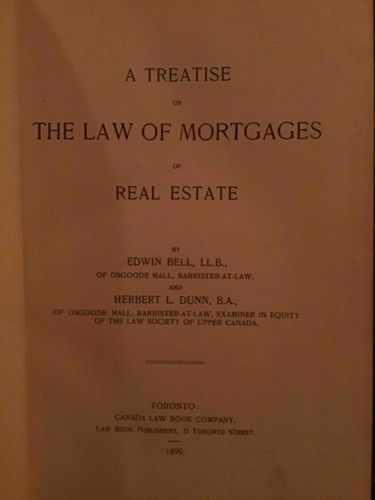
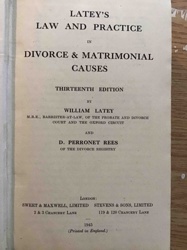
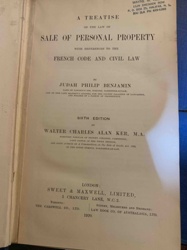
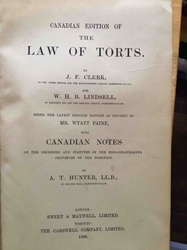
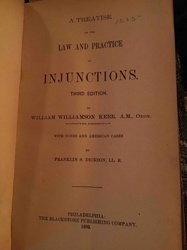
The item is the title page of an antique or vintage legal treatise entitled "A TREATISE ON THE LAW OF MORTGAGES OF REAL ESTATE." The page itself appears to be made of aged paper, exhibiting a uniform yellowish-brown or cream hue, suggesting natural discoloration over time rather than direct staining, indicating its age and potential provenance. The text is printed in black ink, primarily in a serif font, and is centrally aligned on the page. The general condition of the paper appears good, with no immediately visible tears, creases, or major foxing, though the image quality makes it challenging to discern minor imperfections. The printing is clear and legible. The authors are identified as "EDWIN BELL, LL.B., OF OSGOODE HALL, BARRISTER-AT-LAW." and "HERBERT L. DUNN, B.A., OF OSGOODE HALL, BARRISTER AT-LAW, EXAMINER IN EQUITY OF THE LAW SOCIETY OF UPPER CANADA." Below the authors' names, there is a short, horizontally centered line or rule, acting as a separator. The publishing details are clearly stated as "TORONTO: CANADA LAW BOOK COMPANY. LAW BOOK PUBLISHERS, 12 TORONTO STREET." The publication year, "1890," is prominently displayed at the very bottom center of the page. This date firmly places the item in the late 19th century, making it an antique book. The overall presentation is typical of legal publications from that era, focusing on clear information delivery. The quality of the paper and print appears to be robust, indicating a well-produced book for its time, likely intended for professional use and frequent consultation.
AI Appraisal Report
Based on my visual examination of the title page of “A TREATISE ON THE LAW OF MORTGAGES OF REAL ESTATE” from 1890, the condition appears good for its age. The uniform yellowish-brown hue suggests natural aging of the paper, consistent with a late 19th-century publication. There are no visible tears, creases, or significant foxing discernible from the image, and the print remains clear and legible. This indicates a well-preserved example, likely stored in favorable conditions. Authenticity of the title page, based solely on this image, seems high; the typography, publishing details, and overall presentation are consistent with known legal texts from the Canada Law Book Company of that era.
However, it is crucial to note that this appraisal is limited to the visual information provided. A full assessment of the book’s condition, and thus its value, would require physical examination of the entire volume, including binding integrity, completeness of pages, presence of marginalia or other damage, and any signs of restoration. Provenance documentation, such as prior ownership history, could also enhance value.
Regarding market conditions, vintage legal texts, while historically significant, generally do not command high prices unless they are exceedingly rare, first editions of landmark works, or possess unique historical associations (e.g., author's copy, famous jurist's library). This particular treatise, while antique, falls into a niche market. Demand is primarily from legal historians, specialized collectors of Canadian legal literature, or institutions. It is not considered a high-demand item for the general antique book market. Rarity for such a common legal topic is moderate; while a specific 1890 Canadian treatise isn't ubiquitous, similar works exist. Factors that could significantly impact value include the overall physical condition of the entire book, if it were part of a notable legal library, or if it contained significant annotations from a prominent legal figure. Without these, its value is primarily as a historical artifact.
For full authentication of the entire volume and a more precise valuation, I would require an in-person examination to inspect all pages for completeness and condition, assess the binding, check for repairs, and verify the physical properties of the paper and printing. Scientific testing for paper composition or ink analysis would only be necessary if there were specific concerns regarding authenticity or alteration, which are not apparent from this image alone.