Paleolithic Petrified Wood/Opalized Bi-face Hand Axe and Scraper
Prehistoric Lithic Artifacts

Paleolithic Petrified Wood/Opalized Bi-face Hand Axe and Scraper

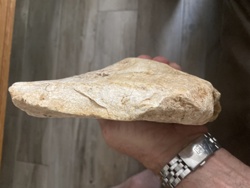
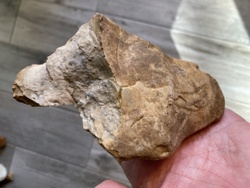
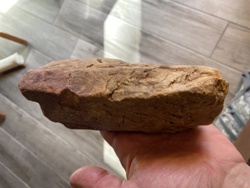
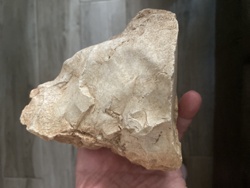
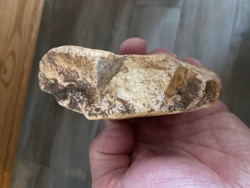
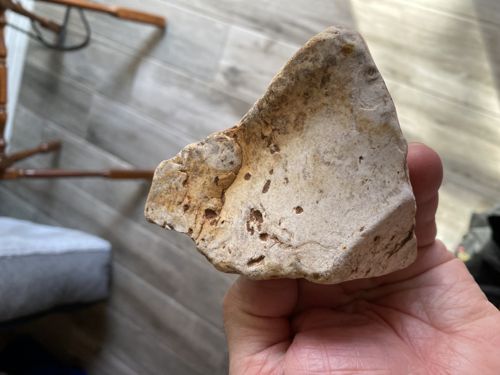
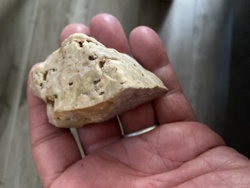
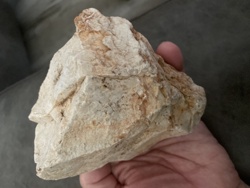
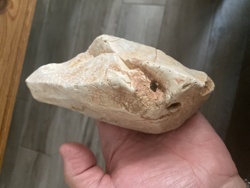
This artifact is a prehistoric lithic tool, identified as a bi-face hand axe and scraper, measuring approximately 4 inches by 3 inches. It is reportedly crafted from petrified wood or an opalized lithic material typical of the Oklahoma region. The object exhibits a distinctive sub-triangular or cordiform shape. The surface shows a milky, cream-colored patina with secondary ferruginous (iron-rich) staining, presenting as yellowish-tan mottled spots. Significant features include visible flake scars along the margins, indicating intentional secondary retouching to create a sharp working edge. One end tapers to a broad, pointed bit, while the base is thicker, likely to serve as a hand-hold for percussion or scraping tasks. The texture is variably smooth and pitted, with small inclusions and surface cavities that suggest weathering and geological age. While the edges show heavy rounding and weathering, the overall structural integrity remains intact with no modern fractures visible. The craftsmanship demonstrates the transition from pebble tools to more refined bi-facial reduction techniques, suggesting a Paleolithic or Early Archaic origin. The lack of standardized symmetry indicates a utilitarian tool intended for heavy-duty butchering or wood processing rather than a ceremonial piece.
Estimated Value

$450 - $700

Basic Information

Category

Prehistoric Lithic Artifacts

Appraised On

February 25, 2026

Estimated Value

$450 - $700

Additional Details Provided By Owner

User Provided Information

Paleolithic petrified opal bi face hand axe scraper tool found in Guthrie OK measuring 4" x 3"

Item Description

This artifact is a prehistoric lithic tool, identified as a bi-face hand axe and scraper, measuring approximately 4 inches by 3 inches. It is reportedly crafted from petrified wood or an opalized lithic material typical of the Oklahoma region. The object exhibits a distinctive sub-triangular or cordiform shape. The surface shows a milky, cream-colored patina with secondary ferruginous (iron-rich) staining, presenting as yellowish-tan mottled spots. Significant features include visible flake scars along the margins, indicating intentional secondary retouching to create a sharp working edge. One end tapers to a broad, pointed bit, while the base is thicker, likely to serve as a hand-hold for percussion or scraping tasks. The texture is variably smooth and pitted, with small inclusions and surface cavities that suggest weathering and geological age. While the edges show heavy rounding and weathering, the overall structural integrity remains intact with no modern fractures visible. The craftsmanship demonstrates the transition from pebble tools to more refined bi-facial reduction techniques, suggesting a Paleolithic or Early Archaic origin. The lack of standardized symmetry indicates a utilitarian tool intended for heavy-duty butchering or wood processing rather than a ceremonial piece.
Get Your Items Appraised

Instant estimates of your treasures with AI-powered instant appraisals

Browse More Appraisals