AI Appraisal Estimate

AI-generated estimates · not official valuations

From the user

What was submitted

Photo and notes provided by the user — not generated by AI

Submitted item photo
Submitted photo · May 23, 2026

User's notes

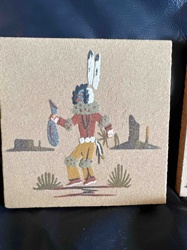
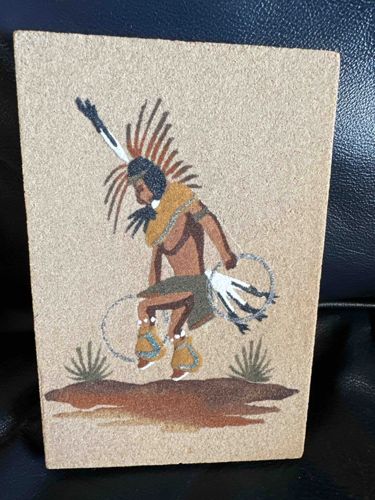
Navajo sand painting 4”x6” L sandman dancer

AI analysis below

AI appraisal

AI analysis & estimate

AI-Generated · Verify before acting

Everything below is generated by AI for informational purposes only. AI can make mistakes — the AI may misidentify items or misattribute them (artist, maker, brand, designer, origin, era). This is not an official valuation and should not be used for insurance, sale, tax, estate, legal, or lending purposes — or any decision requiring a certified appraisal. It is not an authoritative claim about any person, brand, or rights holder — do not share or rely on it as a factual statement about a third party. Always consult qualified professionals before making financial decisions.

Note

This analysis also relies on unverified notes provided by the user, which may be incomplete or inaccurate and could affect the result.

Read the full disclaimer

AI Identification

·Not independently authenticated·Verify before acting

Navajo Hoop Dancer Sand Painting

Native American Art & Collectibles

AI Estimated Value

·Not an official valuation·Verify before acting

$45 - $75

As of May 23, 2026

AI Item Analysis

·AI can make mistakes·Verify before acting
This is a 4x6 inch Navajo sand painting depicting a traditional ceremonial hoop dancer. The piece is constructed using finely ground, naturally colored sands and minerals adhered to a rigid fiberboard or particleboard base. The central figure is shown in a dynamic, crouched pose expressive of movement, holding two large white hoops. The dancer is adorned with a detailed feather headdress, an ochre-colored cape or collar, and a green kilt with white accents. The color palette consists of earthy tones including terracotta, deep brown, charcoal black, ochre, and sage green, set against a neutral tan sand background. Below the dancer, a stylized ground line is represented with brown and red sand, flanked by two small desert shrubs or succulents. The application of sand shows precise linework, particularly in the thin hoops and the delicate feathers of the headdress, indicating a high level of craftsmanship common in mid-to-late 20th-century Navajo souvenir art. The condition appears excellent with no visible sand loss, cracking, or moisture damage to the substrate. While no maker's mark is visible on the front, these items often featured a commemorative label or artist signature on the reverse.

AI Appraisal Report

·AI can make mistakes·Verify before acting
I have examined the 4x6 inch sand painting depicting a Navajo Hoop Dancer. This piece demonstrates high technical proficiency for small-scale tourist or 'souvenir' art, likely dating from the 1970s to the 1990s. The execution of the sand application—particularly the fine lines in the feathers and the symmetry of the hoops—indicates an experienced hand. The use of natural earth minerals on a particleboard substrate is consistent with authentic Navajo production from this era. The condition is excellent, showing no signs of 'shedding' or moisture-related warping, which often plagues these works. The market for small-format Navajo sand paintings is currently stable but saturated. These were produced in significant quantities for the Southwest tourism trade. While aesthetically pleasing, their value is limited by their small size and the lack of a visible signature from a renowned master artist. Comparable sales at auction and in specialty Southwest galleries typically fall within the $40 to $85 range. A signature or a 'Sandman' label on the reverse would anchor the value toward the higher end of this estimate. Authenticity cannot be definitively verified without physical inspection. To confirm this is a genuine Navajo-made item rather than a commercial imitation, I would need to examine the reverse for specific artist hallmarks or tribal affiliation labels. Scientific testing of the adhesive and minerals would be required to rule out modern synthetic pigments, and provenance documentation (such as a bill of sale from a recognized Trading Post) would be necessary to elevate its status from a decorative collectible to a documented piece of Native American heritage.

Get your items appraised

Instant estimates of your treasures with AI-powered appraisals

Browse More Appraisals