AI estimate as of July 5, 2025 · verify with a professional before acting
AI-Generated · Verify before acting
Everything on this page is generated by AI for informational purposes only. AI can make mistakes — the AI may misidentify items or misattribute them (artist, maker, brand, designer, origin, era). This is not an official valuation and should not be used for insurance, sale, tax, estate, legal, or lending purposes — or any decision requiring a certified appraisal. It is not an authoritative claim about any person, brand, or rights holder — do not share or rely on it as a factual statement about a third party. Always consult qualified professionals before making financial decisions.
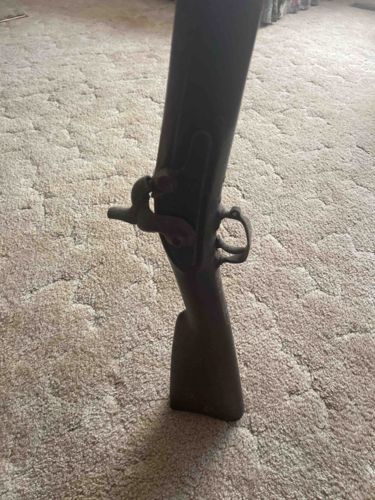
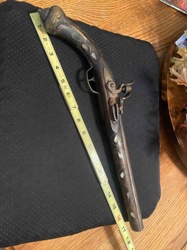
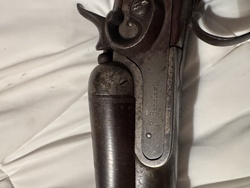
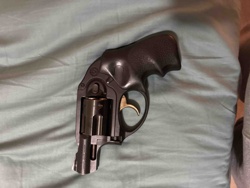
The item appears to be an antique firearm, specifically the mid-section near the lock plate and trigger guard of what is likely a musket, rifle, or fowling piece. The visible components include the wooden stock, a dark metal lock plate, a prominent hammer, and a trigger guard. The wood finish appears dark, possibly stained or naturally aged, showing a smooth, worn patina rather than a fresh polish. There are no obvious carvings or intricate checkering visible on the stock in this partial view, suggesting a practical or military design rather than a highly ornamental sporting arm. The metal components, including the hammer and trigger guard, also exhibit a dark, aged finish, consistent with bluing or natural oxidation over time. There are no obvious signs of severe damage such as cracks in the wood or significant rust on the metal, though the lighting makes it difficult to ascertain minute details of wear or surface pitting. The construction appears robust, typical of firearms from the muzzleloader era. The style of the hammer and trigger guard suggests it could date from the late 18th to mid-19th century. No manufacturer's marks or serial numbers are discernible from this image. The overall impression is one of a well-preserved antique, possibly a functional piece or one that has been carefully decommissioned. The craftsmanship appears utilitarian and sturdy, prioritizing function over elaborate decoration.
AI Appraisal Report
I have carefully examined the provided image of what appears to be the mid-section of an antique musket, rifle, or fowling piece. Based on the visual evidence, the item seems to be in good, well-preserved antique condition. The wooden stock exhibits a dark, aged patina consistent with original finish and decades of handling, with no visible cracks or major gouges in this partial view. The metal components, including the lock plate, hammer, and trigger guard, show an aged, dark finish indicative of bluing or natural oxidation over time, with no immediately apparent severe rust or pitting from the image. The robust construction and styling of the hammer and trigger guard suggest an origin from the late 18th to mid-19th century, characteristic of the muzzleloader era.
Market conditions for antique firearms of this type are generally stable, with a consistent demand from collectors of military and historical artifacts. While not exceptionally rare, a well-preserved piece in good condition holds value. Factors impacting value include the lack of visible significant damage, and the apparent originality of the components. However, significant limitations exist in appraising from images alone. I cannot definitively assess authenticity without an in-person examination to check for restorations, repairs, or 'marriages' of components. Identifying specific maker's marks, proof marks, or serial numbers, which are crucial for precise dating and attribution, is impossible from this image. Surface pitting and bore condition (if applicable to a full firearm) cannot be determined. Full authentication would require detailed physical inspection, blacklight examination of the wood finish, magnet tests for metal types, and a thorough search for hidden markings. Provenance documentation, if available, would also significantly enhance its value and confirm its history.