AI estimate as of November 15, 2025 · verify with a professional before acting
AI-Generated · Verify before acting
Everything on this page is generated by AI for informational purposes only. AI can make mistakes — the AI may misidentify items or misattribute them (artist, maker, brand, designer, origin, era). This is not an official valuation and should not be used for insurance, sale, tax, estate, legal, or lending purposes — or any decision requiring a certified appraisal. It is not an authoritative claim about any person, brand, or rights holder — do not share or rely on it as a factual statement about a third party. Always consult qualified professionals before making financial decisions.
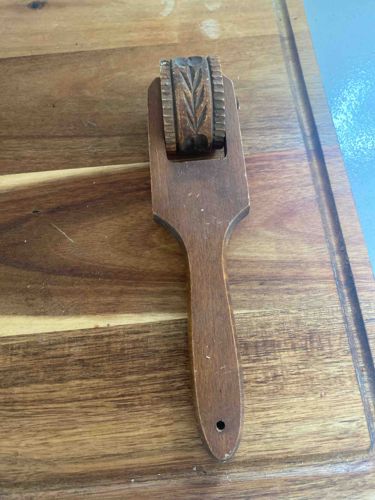
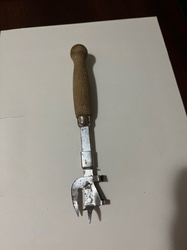
This is a vintage wooden pastry or fondant decorating wheel, likely used for adding decorative edges to baked goods or confections. The item is constructed entirely from wood, exhibiting a rich, medium-brown tone with visible grain patterns indicative of natural wood. It consists of two primary parts: a handle and a rolling wheel. The handle is slender and slightly curved, tapering towards the end where a small, circular hole is drilled, presumably for hanging. The rolling wheel is housed in a carved slot at the opposing end of the handle. This wheel features a deeply carved decorative pattern, resembling a stylized leaf or feather motif running along its circumference. On either side of the carved central pattern, the wheel has a series of fine, parallel ridges, giving it a textured edge. The overall construction appears simple yet sturdy.
The condition of the item indicates age and use. There are visible signs of wear, including minor scuffs and scratches on the handle and the edges of the wheel's housing. The wood has developed a warm patina over time, enhancing its vintage appeal. No significant damage such as cracks or breaks are immediately apparent. The craftsmanship is functional, with the carving on the wheel showing a good level of detail, suggesting it was produced by a skilled artisan or through a quality manufacturing process of its time. There are no discernible maker's marks, signatures, or stamps visible in the provided image. Based on its style and material, it likely dates from the mid-20th century, possibly earlier.
AI Appraisal Report
I have examined the provided image of this vintage wooden pastry or fondant decorating wheel. My visual assessment indicates a genuine vintage kitchen utensil, likely dating from the mid-20th century, possibly earlier, based on its construction, materials, and design. The item is in good vintage condition, exhibiting minor scuffs and scratches consistent with age and use, but no significant damage or repairs. The wood has developed a pleasing patina, which enhances its antique aesthetic. The craftsmanship, particularly the detailed carving on the wheel, suggests quality manufacture. The absence of maker's marks is common for utilitarian items of this period.
Market comparables for similar vintage wooden kitchen utensils, including decorating wheels, rolling pins, and specialty pastry tools, typically fall within a modest range. While there is a niche market for vintage kitchenalia, individual pieces like this, without historical provenance or association with a famous maker, generally do not command high prices. Demand is moderate, driven by collectors of vintage kitchenware, prop masters, or individuals seeking unique functional decor.
Factors impacting value include its good condition, attractive wood patina, and the intricate carved pattern on the wheel, which adds to its visual appeal. The lack of maker's marks prevents attribution to a specific artisan or manufacturer, which could elevate its value. As such, the value is primarily decorative and utilitarian.
It is crucial to note the limitations of verifying authenticity and condition solely from images. A physical inspection would allow me to thoroughly examine the wood for internal damage, assess the functionality of the rolling mechanism, verify the type of wood used, and inspect for any subtle repairs or alterations not visible in photographs. Provenance documentation, if available, would also provide a more definitive historical context. Without in-person examination, full authentication of material composition and an exhaustive condition assessment are not possible.